
Energy Storage Busbar Applications
BusbarMFG is an engineering-first custom busbar manufacturer located in Dongguan, Guangdong, China. We build drawing-based copper and aluminum busbars and battery interconnect components used in energy storage systems (ESS), as well as EV, power electronics, c
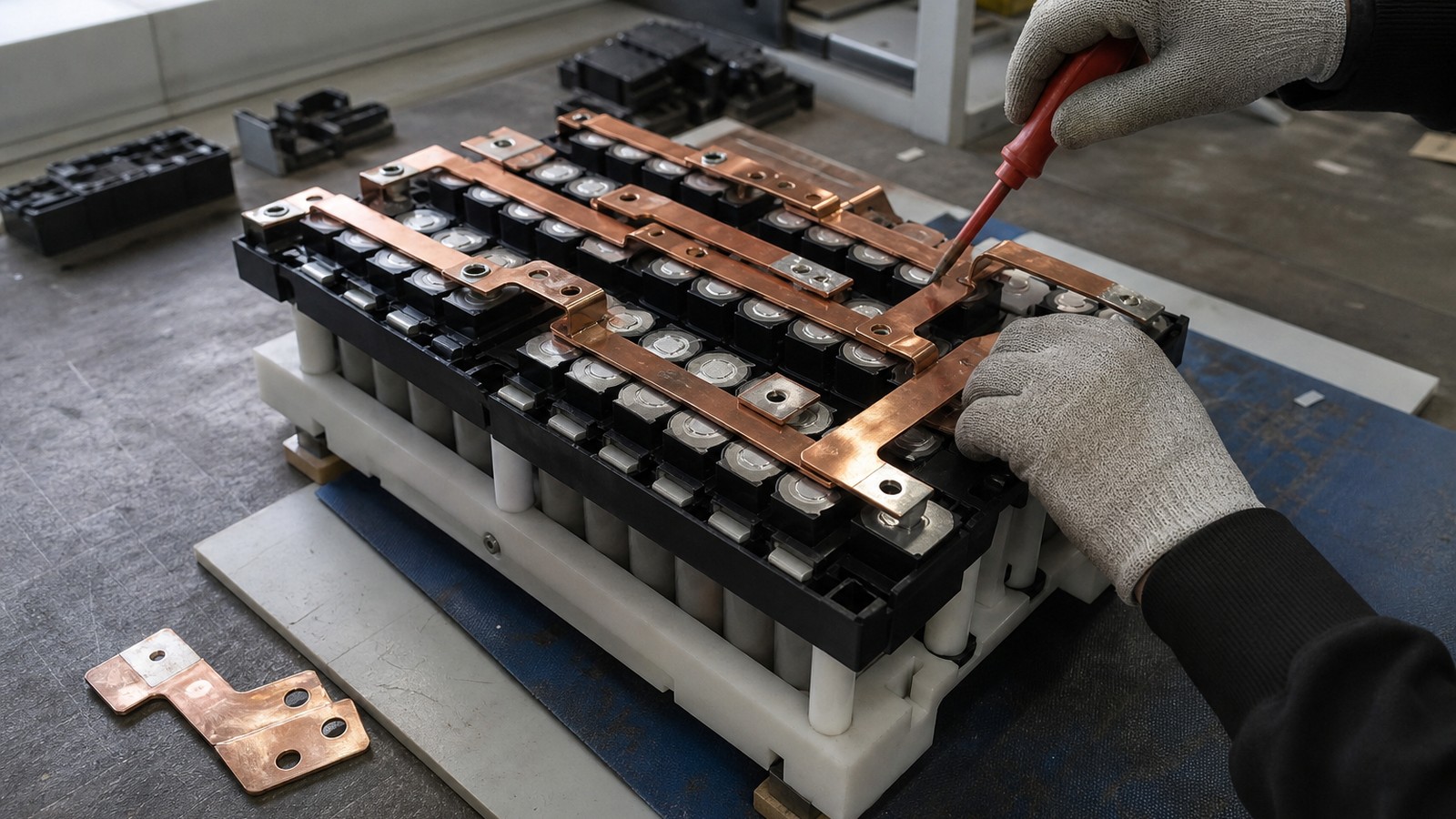
Custom busbar manufacturing
Engineering details are organized around material, tolerance, surface finish, inspection, and production readiness.
Use the inquiry module to send drawings, quantities, standards, and delivery targets for a practical manufacturing review.
Service Details
BusbarMFG is an engineering-first custom busbar manufacturer located in Dongguan, Guangdong, China. We build drawing-based copper and aluminum busbars and battery interconnect components used in energy storage systems (ESS), as well as EV, power electronics, charging equipment, switchgear, and industrial power distribution.
Our workflow starts with your drawing and application requirements. We support engineering review, prototypes or validation batches, and transition to repeat production as requirements are confirmed.
Where Busbars Fit in Energy Storage Systems
Engineering-led ESS OEMs and integrators use BusbarMFG for drawing-based parts across the storage stack:
- Module interconnects and battery busbars: cell-to-module and module-to-module connections designed for high current and consistent assembly.
- Pack and rack main DC busbars: positive/negative distribution and return bars, including ground/earthing bars.
- DC link/intermediate busbars: low-inductance distribution between battery, PCS/inverter, DC/DC, and UPS.
- Fuse, contactor, and BDU interconnects: short, robust links with defined interfaces and insulation requirements.
- String combiner and distribution bars: compact layouts for cabinet and containerized ESS.
- Service and maintenance jumpers: flexible or insulated links to support field assembly variation and vibration.
Product Options for ESS Programs
BusbarMFG manufactures parts to customer drawings and specifications. Common ESS-focused configurations include:
- Copper busbars
- Solid, flat, or formed parts in bare copper or with tin, nickel, or silver plating.
- Suitable for high-current, compact assemblies requiring consistent contact performance.
- Aluminum busbars
- Lightweight, cost-competitive options when evaluating copper-to-aluminum tradeoffs.
- Plating and interface considerations reviewed for long-term joint performance.
- Flexible busbars
- Copper foil or braided structures, optionally insulated, to accommodate vibration and assembly tolerance stack-ups.
- Insulated busbars
- Heat-shrink, coated, or sleeved designs for compact electrical spacing and controlled creepage and clearance.
- Laminated busbars
- Multilayer structures used to reduce inductance in PCS/inverter and high slew-rate power paths.
- Custom busbar assemblies
- Drawing-based busbar and high-current interconnect components integrated to your layout and interface requirements.
Note: CCS-integrated busbars, overmolded products, welding, stamping, forming, and other specialized processes are reviewed against the actual project and confirmed during technical review before they are represented as available production services.
Engineering Considerations for Energy Storage Busbars
Our engineering review focuses on manufacturability and application performance:
- Electrical and thermal
- Current path width and thickness relative to allowable temperature rise.
- Low-inductance layouts for DC links and fast-switching power electronics.
- Short-circuit force robustness and mechanical support.
- Insulation and spacing
- Creepage/clearance targets, slotting, and edge conditioning.
- Heat-shrink, coatings, or sleeves selected to match assembly and service environment.
- Interfaces and assembly
- Holes, slots, and fastener surfaces; plating to match torque and corrosion requirements.
- Provision for BMS sense connections or measurement points as defined on the drawing.
- Materials and plating
- Copper vs. aluminum tradeoffs for weight and cost, reviewed with appropriate plating options.
- Tin, nickel, or silver plating selection based on environment, temperature, and contact strategy.
- Mechanical features
- Bend radii and formed geometry to fit routing constraints.
- Flexible sections to manage vibration or thermal expansion when required by the application.
We do not publish generic tolerances or lead times. Project-specific requirements are confirmed during technical review.
From Drawing to Production-Ready Busbars
- Engineering-first RFQ
- Share drawings or models, material and plating/insulation requirements, quantity, application details, and target date.
- We assess manufacturability and prepare an engineering quotation.
- Prototype and validation
- Programs often start with prototypes or validation batches to confirm electrical, thermal, and assembly performance.
- Repeat production
- As specifications solidify, we support repeat production with a focus on dimensional consistency, plating/insulation quality, and delivery transparency.
BusbarMFG values drawing confidentiality and supports engineering and sourcing teams through NPI, redesign, localization, and supplier replacement projects.
Who We Serve
- Core customers
- Energy storage system integrators, battery module and pack manufacturers, PCS/inverter and UPS OEMs, power supply companies, and electrical distribution equipment manufacturers.
- Geography
- Priority markets include the United States, Canada, Germany and wider Europe, the United Kingdom, and Australia, with secondary focus on Japan, Korea, and internationally oriented Southeast Asia.
- Typical roles
- Electrical, mechanical, and battery engineers; power electronics engineers; R&D/NPI managers; sourcing and procurement managers.
High-priority inquiries include relevant applications, usable drawings or technical data, meaningful order potential, defined timelines, and an engineering or sourcing decision-maker.
How to Specify Your ESS Busbar
To speed review and reduce iteration, include:
- Drawing/model with all critical dimensions and tolerances.
- Material (copper or aluminum), thickness, and plating preference (tin, nickel, silver, or bare).
- Insulation approach (heat-shrink, coating, sleeve) and target creepage/clearance.
- Interface details: hole sizes, slotting, contact surfaces, and mating hardware guidelines.
- Electrical/thermal targets and any environmental constraints.
- Quantity by phase (prototype, validation, pilot, and anticipated steady-state).
- Application context and target date.
Frequently Asked Questions
- When should we consider laminated busbars in ESS?
- Laminated busbars help reduce loop inductance in DC links and inverter/PCS connections, improving switching behavior and EMI performance. They are useful when packaging is tight and current slew rates are high.
- Copper or aluminum for a rack busbar?
- Copper offers high conductivity and compact cross-sections; aluminum can lower weight and cost. We review plating, joint design, and galvanic considerations during engineering to align with your interfaces and environment.
- What insulation options are common for ESS?
- Heat-shrink, coatings, and sleeves are typical. Selection depends on assembly process, creepage/clearance, service temperature, and maintenance requirements.
- Can you support prototype-to-production transitions?
- Yes. Many ESS programs begin with prototypes or validation batches and progress to repeat production as requirements are confirmed through technical review.
- Do you publish standard lead times or certifications?
- BusbarMFG does not publish unverified certifications, equipment lists, tolerances, lead times, production capacity, or customer claims. Project-specific requirements are confirmed during technical review.
Start Your Engineering RFQ
Share your drawing and requirements to begin a manufacturability and application review. Provide material, plating or insulation details, quantity, application context, and target date so we can prepare an engineering quotation aligned with your ESS program.
Note: Specialized processes such as CCS-integrated busbars, overmolded products, welding, stamping, and forming are evaluated against your project and confirmed as available production services only after technical review.
Request Pricing for Energy Storage Busbar Applications
Share drawings, material grade, tolerance, surface finish, quantity, and delivery schedule. BusbarMFG will review the requirement and respond with the next step.
Engineering RFQ
Upload Your Drawing
Share drawings or models, material, plating or insulation requirements, quantity, application, and target date. We will review the technical requirements before confirming manufacturing options.
Email: info@busbarmfg.com
Address: Huali Industrial Park, Xianghe Road, Dalang Town, Dongguan City, Guangdong Province, China