
Busbar Engineering and DFM
Engineering-first Busbar Engineering and DFM support for custom copper and aluminum busbars and battery interconnect components. We work from your drawings and application requirements to deliver manufacturable designs, high-quality prototypes, and a clear pat
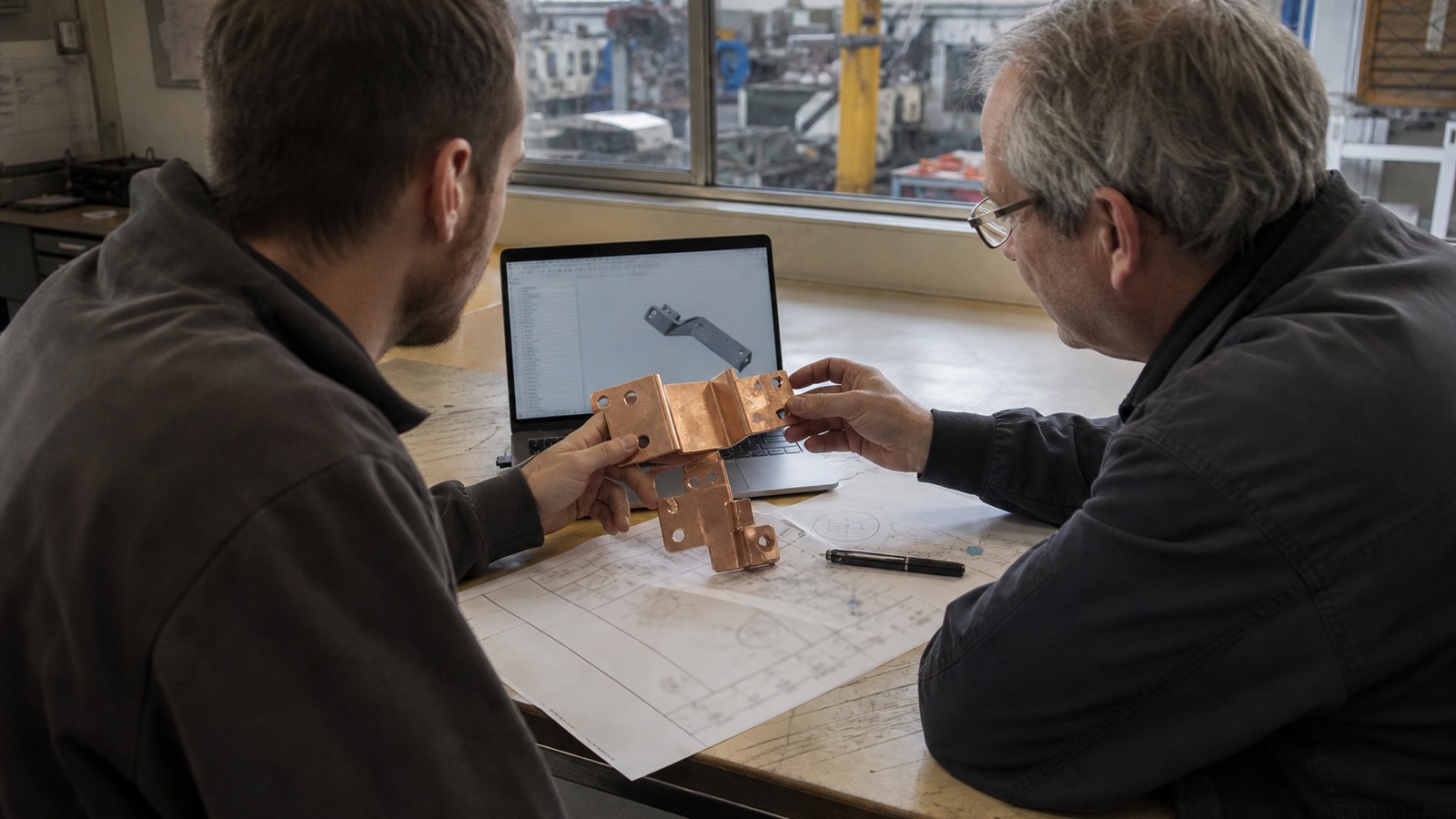
Custom busbar manufacturing
Engineering details are organized around material, tolerance, surface finish, inspection, and production readiness.
Use the inquiry module to send drawings, quantities, standards, and delivery targets for a practical manufacturing review.
Service Details
Engineering-first Busbar Engineering and DFM support for custom copper and aluminum busbars and battery interconnect components. We work from your drawings and application requirements to deliver manufacturable designs, high-quality prototypes, and a clear path to repeat production.
BusbarMFG is based in Dongguan, Guangdong, China. We serve engineering-led B2B buyers building EV battery systems, ESS, power electronics, charging equipment, switchgear, and industrial power distribution assemblies.
---
Why BusbarMFG
- Engineering-first approach: practical, drawing-based Busbar Engineering and DFM grounded in production reality.
- Application-focused: EV battery packs, ESS, inverters, PCS/UPS, chargers, distribution equipment, and industrial power.
- Prototype to production: start with prototypes or validation builds and scale as requirements are confirmed.
- Confidentiality by default: drawing privacy and technical review discipline for OEM programs.
Project-specific tolerances, process capability, and lead times are confirmed during technical review. We do not publish unverified certifications, equipment lists, or customer claims.
---
Who We Serve
- Core customers: EV and ESS OEMs, battery module/pack manufacturers, inverter and power electronics companies, charging equipment OEMs, and electrical distribution equipment manufacturers.
- Priority geographies: United States, Canada, Europe (including Germany and UK), Australia; secondary focus on Japan, Korea, and export-oriented Southeast Asia.
- Typical buyer roles: Electrical/Mechanical/Battery/Power Electronics Engineers, R&D/NPI Managers, Sourcing and Procurement leaders.
- Common triggers: new platform launches, supplier replacement, copper-to-aluminum cost/weight reduction, cable-to-busbar redesign, tighter packaging, low-inductance needs, prototype-to-pilot transitions.
---
What Busbar Engineering and DFM Covers
Our Busbar Engineering and DFM support is built around your drawings, models, and application constraints:
- Material selection: copper (solid, laminated, flexible) and aluminum; tradeoffs for current, weight, and cost.
- Thickness and geometry: cross-section sizing for current density and temperature rise; bend and form strategies.
- Plating and surface treatments: tin, nickel, silver or bare; mating interfaces and corrosion considerations.
- Insulation options: heat-shrink, coatings, sleeves, and over-insulation strategies for compact assemblies.
- Bends and holes: manufacturability, edge quality, countersinks/counterbores, slotting, reliefs, and alignment.
- Interfaces: bolts, studs, inserts, press-fit hardware, and alignment features for repeatable assembly.
- Connection methods: bolted joints, and review of welding or other specialized joining processes as required.
- Thermal and inductance considerations: laminated busbar stackups and layout for compact, low-inductance designs.
- Vibration and compliance: flexible busbars (foil, braid, or insulated flex) to accommodate movement and tolerance stack-up.
- Coexistence with cables: hybrid interconnect strategies and transition design to reduce risk and total installed cost.
- DFM risks and controls: tolerance stacks, datum schemes, and practical inspection plans aligned to production.
Specialized processes (e.g., CCS integrated busbars, overmolding, specific welding techniques, or custom stamping/forming approaches) must be reviewed against the project and confirmed before they are represented as available for production.
---
Product Scope We Engineer
- Copper busbars: solid, flat, or formed; bare or plated (tin, nickel, silver per requirement).
- Flexible busbars: copper foil stacks, braided connectors, insulated flexible structures.
- Insulated busbars: heat-shrinked, coated, sleeved, or otherwise insulated configurations.
- Laminated busbars: multilayer constructions for compact packaging and low-inductance power distribution.
- Battery busbars: high-current module and pack interconnects for EV and energy storage applications.
- Aluminum busbars: weight- and cost-optimized high-current distribution alternatives.
- Custom busbar assemblies: drawing-based busbar parts and related high-current interconnect components.
---
DFM and Design Guidance Highlights
Use these points as a starting checklist; final specifications are confirmed during technical review.
- Current and thermal:
- Size cross-section for current density and allowable temperature rise.
- Evaluate hotspot risk at interfaces and bends; consider laminated stacks for low inductance.
- Material and plating:
- Copper grades and aluminum options reviewed against conductivity, cost, and joining methods.
- Plating (tin, nickel, silver) selected for mating interface, corrosion environment, and service life.
- Insulation strategy:
- Heat-shrink, sleeves, or coatings evaluated for creepage/clearance, assembly fit, and rework practicality.
- Define masked areas and inspection surfaces early to streamline production.
- Bends and forming:
- Define bend radii and relief features suitable for the selected material and thickness.
- Consider bend sequence, forming dies, and access for downstream assembly.
- Holes and interfaces:
- Standardize hole families and slot features; specify countersinks/counterbores where needed.
- Align datum schemes and tolerance stacks to ensure interchangeability across builds.
- Flexible sections:
- Use foil or braid flex to absorb vibration, assembly variation, and thermal expansion.
- Insulated flex for compact routing near sensitive components.
- Assembly and service:
- Access for torque tools, inspection probes, and field service; define torque targets and surface prep.
- Plan for hardware, locking methods, and rework allowances.
- Risk and inspection:
- Identify critical-to-quality features; align measurement methods with realistic production inspection.
---
EV, ESS, and Power Electronics Considerations
- EV battery interconnects:
- Cell-to-busbar and module-to-module links; alignment features for pack assembly.
- Plating and insulation schemes compatible with battery chemistries and pack environments.
- Energy storage systems:
- Compact routing in cabinets; thermal and inductance management for PCS/inverter interfaces.
- Power electronics:
- Laminated and insulated busbars for low-inductance DC links and high-frequency switching.
- Consistent hole patterns and stack-ups for repeatable power module integration.
- Switchgear and industrial power:
- Distribution panels, transformer connections, drives, and control cabinets with space and temperature constraints.
---
From Drawing to Production: How We Work
1. RFQ and technical data
- Provide drawings or models, material and plating/insulation preferences, quantity, application, and target date.
- Include context: current and thermal targets, packaging constraints, and interface standards.
2. Engineering review and DFM
- Manufacturability review covering materials, stack-ups, bends, holes, insulation, and interfaces.
- Identify risks, alternatives, and cost/lead implications; confirm specialized process feasibility as needed.
3. Prototypes and validation
- Build prototypes or validation batches aligned to your EVT/DVT/PVT stages.
- Feedback loop with dimensional checks and functional assessments.
4. Production alignment
- Confirm repeat-production requirements, inspection plans, and delivery schedules.
- Transition to repeat builds as specifications stabilize.
Lead times, tolerances, and capacity are project-specific and confirmed during review.
---
What You Receive
- Practical DFM feedback focused on manufacturability and risk reduction.
- Suggestions for materials, plating, insulation, and connection methods aligned to your application.
- Prototype and validation support with clearly documented changes and learnings.
- A production-oriented approach for consistent quality and delivery transparency.
---
Request Pricing for Busbar Engineering and DFM
Share drawings, material grade, tolerance, surface finish, quantity, and delivery schedule. BusbarMFG will review the requirement and respond with the next step.
Contact BusbarMFG
Get in touch with our engineering team for custom busbar manufacturing inquiries. We provide precision-engineered solutions for your power distribution needs.
Huali Industrial Park, Xianghe Road, Dalang Town, Dongguan City, Guangdong Province, China