
Busbar Surface Treatment
Engineering-first busbar surface finishing for EV battery systems, energy storage, power electronics, charging equipment, switchgear, and industrial power distribution. BusbarMFG manufactures drawing-based copper and aluminum busbars and battery interconnect c
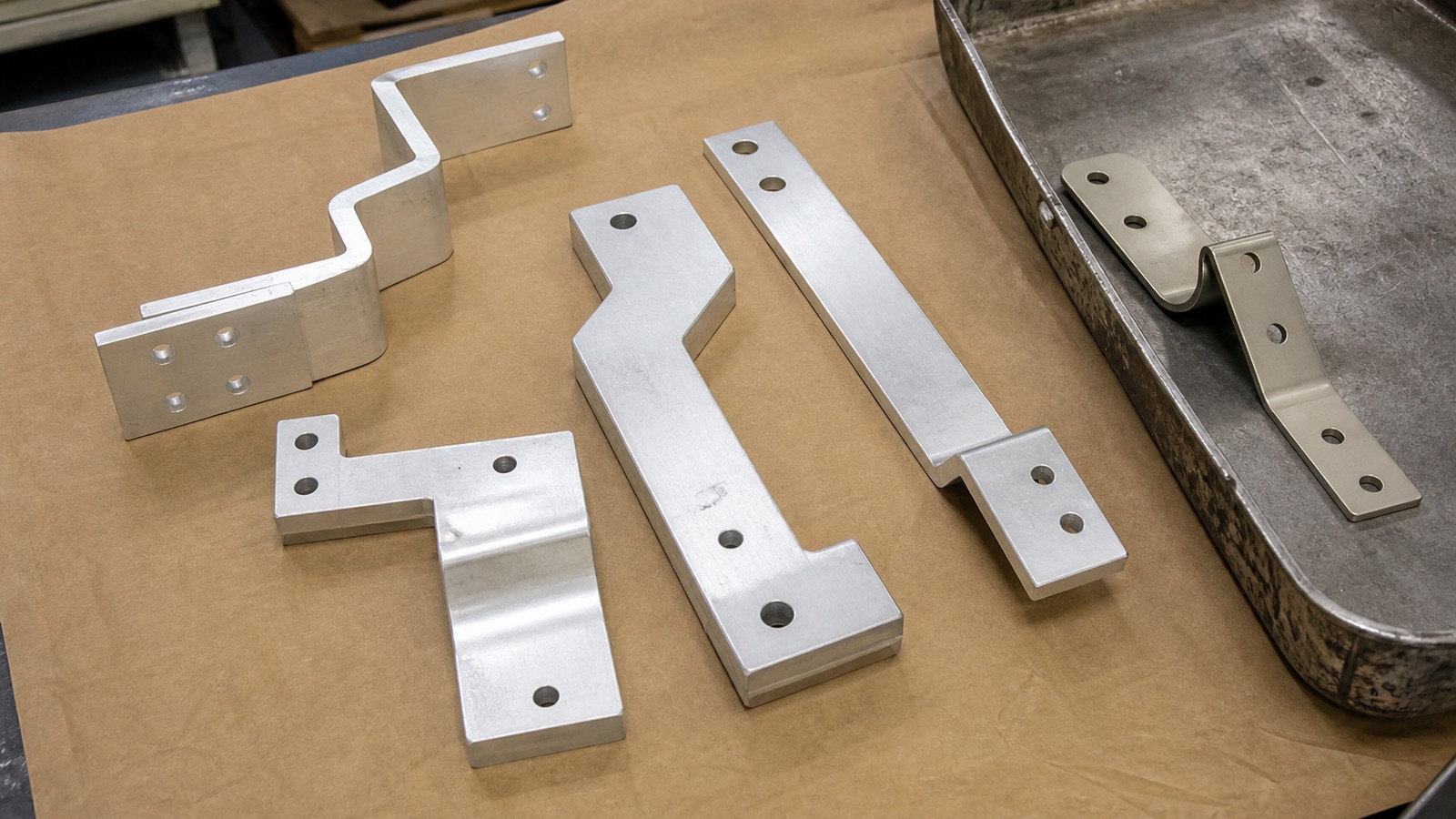
Custom busbar manufacturing
Engineering details are organized around material, tolerance, surface finish, inspection, and production readiness.
Use the inquiry module to send drawings, quantities, standards, and delivery targets for a practical manufacturing review.
Service Details
Engineering-first busbar surface finishing for EV battery systems, energy storage, power electronics, charging equipment, switchgear, and industrial power distribution. BusbarMFG manufactures drawing-based copper and aluminum busbars and battery interconnect components with application-driven plating, insulation, and finishing selected during technical review.
Who We Serve
- EV and ESS OEMs: battery module/pack, PCS/inverter, UPS, charger manufacturers
- Power electronics and electrical distribution: power supplies, switchgear, panels, motor drives
- Engineering-led teams with drawings/models and defined application requirements progressing from prototype to repeat production
What “Busbar Surface Treatment” Covers
Surface treatments for busbars are selected to control electrical contact resistance, corrosion behavior, solder/weld compatibility, insulation adhesion, and assembly repeatability. Typical treatments include:
- Metallic plating: tin, nickel, silver
- Conversion and anti-oxidation treatments (project-specific review, especially for aluminum)
- Insulation systems: heat-shrink, coatings, sleeves, laminated structures (masking where needed)
- Mechanical finishing: deburring, edge conditioning, hole and bend surface preparation
- Cleaning and packaging: degreasing, oxide control, protection during transit
All selections are confirmed against the actual project requirements during engineering review.
---
Copper Busbar Surface Treatments
- Bare copper
- Lowest contact resistance when clean and freshly prepared
- Susceptible to oxidation; suitable where immediate assembly or controlled environment is ensured
- Tin plating
- Widely used for bolted joints and general-purpose interconnects
- Promotes low and stable contact resistance; good for mass production assembly
- Matte tin is often preferred for whisker mitigation; bright tin may be used based on project requirements
- Optional nickel barrier underlayer can improve diffusion resistance and solderability durability
- Nickel plating
- Hard, wear-resistant, and corrosion-resistant surface
- Useful as a barrier layer or for high-temperature environments and repeated mating/unmating
- Silver plating
- Very low contact resistance and excellent high-frequency performance
- Suitable for high-current, low-inductance assemblies and elevated temperature ranges
- Requires consideration of tarnish; contact design and environment drive selection
Plating thickness, porosity targets, and masked areas are defined by drawing and application requirements.
---
Aluminum Busbar Surface Treatments
- Bare aluminum
- Lightweight, cost-effective; naturally passivates
- Joint design must account for oxide film and galvanic pairing with fasteners and mating materials
- Plated aluminum (application-dependent)
- Tin or nickel over properly prepared aluminum may be considered for bolted joints
- Requires appropriate pretreatment (e.g., zincate-based processes) and careful galvanic design
- Feasibility and reliability are confirmed per project
- Conversion coatings (project-specific)
- Selected to balance corrosion protection, conductivity at interfaces, and downstream process compatibility
- Anodizing is typically insulating and used only with defined masking or non-current-carrying areas
Aluminum treatments are reviewed case-by-case to ensure joint reliability and long-term performance.
---
Insulated and Laminated Busbar Surface Considerations
- Insulated busbars (heat-shrink, coated, sleeved)
- Surface preparation supports adhesion and electrical integrity
- Masking strategies preserve contact pads and mounting points
- Creepage/clearance, edge condition, and film overlap are confirmed during review
- Laminated busbars
- Metallic surfaces on connection pads may be plated to meet contact and corrosion requirements
- Adhesion to insulation films and layer stack-up are coordinated with finish selection
- Low-inductance designs benefit from appropriate pad plating and post-laminate finishing
---
Interface Preparation: Bolted, Welded, and Press-Fit
- Bolted joints
- Plating choice influences torque stability, fretting resistance, and long-term contact resistance
- Surface roughness, burr-free edges, hole finish, and washer/fastener pairing affect joint reliability
- Masking or selective plating can be used to control friction characteristics on fastener surfaces
- Welded joints (e.g., laser or ultrasonic on battery interconnects)
- Finish must be compatible with the chosen welding process and energy settings
- Plating selection and thickness near weld zones are reviewed to avoid porosity or contamination
- Project-specific feasibility and welding process compatibility are confirmed during technical review
- Press-fit or spring contacts
- Hardness, coating ductility, and thickness uniformity are key to repeatable insertion forces and contact stability
---
How We Select a Surface Treatment
During engineering review, we assess:
- Electrical: required contact resistance, current density, inductance sensitivity, and thermal environment
- Mechanical: assembly method (bolt/weld/press-fit), abrasion risk, and mating material pairing
- Environmental: humidity, condensation, corrosive agents, and expected life
- Materials: copper vs. aluminum selection, galvanic implications, fastener choices
- Manufacturing: forming sequence, masked areas, edge conditioning, hole quality, and pad flatness
- Insulation integration: adhesion, creepage, clearance, and film compatibility
- Validation path: prototype, test plan, and transition to repeat production
---
Typical Applications
- EV battery module and pack busbars, sense tabs, and terminal pads
- ESS DC distribution, PCS and inverter DC links, UPS battery interconnects
- Charging equipment DC terminals, rectifier outputs, and low-inductance links
- Switchgear and industrial power distribution assemblies with compact routing
---
Request Pricing for Busbar Surface Treatment
Share drawings, material grade, tolerance, surface finish, quantity, and delivery schedule. BusbarMFG will review the requirement and respond with the next step.
Engineering RFQ
Upload Your Drawing
Share drawings or models, material, plating or insulation requirements, quantity, application, and target date. We will review the technical requirements before confirming manufacturing options.
Email: info@busbarmfg.com
Address: Huali Industrial Park, Xianghe Road, Dalang Town, Dongguan City, Guangdong Province, China