
Busbar Welding
BusbarMFG provides engineering-first support for Busbar Welding projects across EV battery systems, energy storage, power electronics, charging equipment, switchgear, and industrial power distribution. We transform customer drawings and application requirement
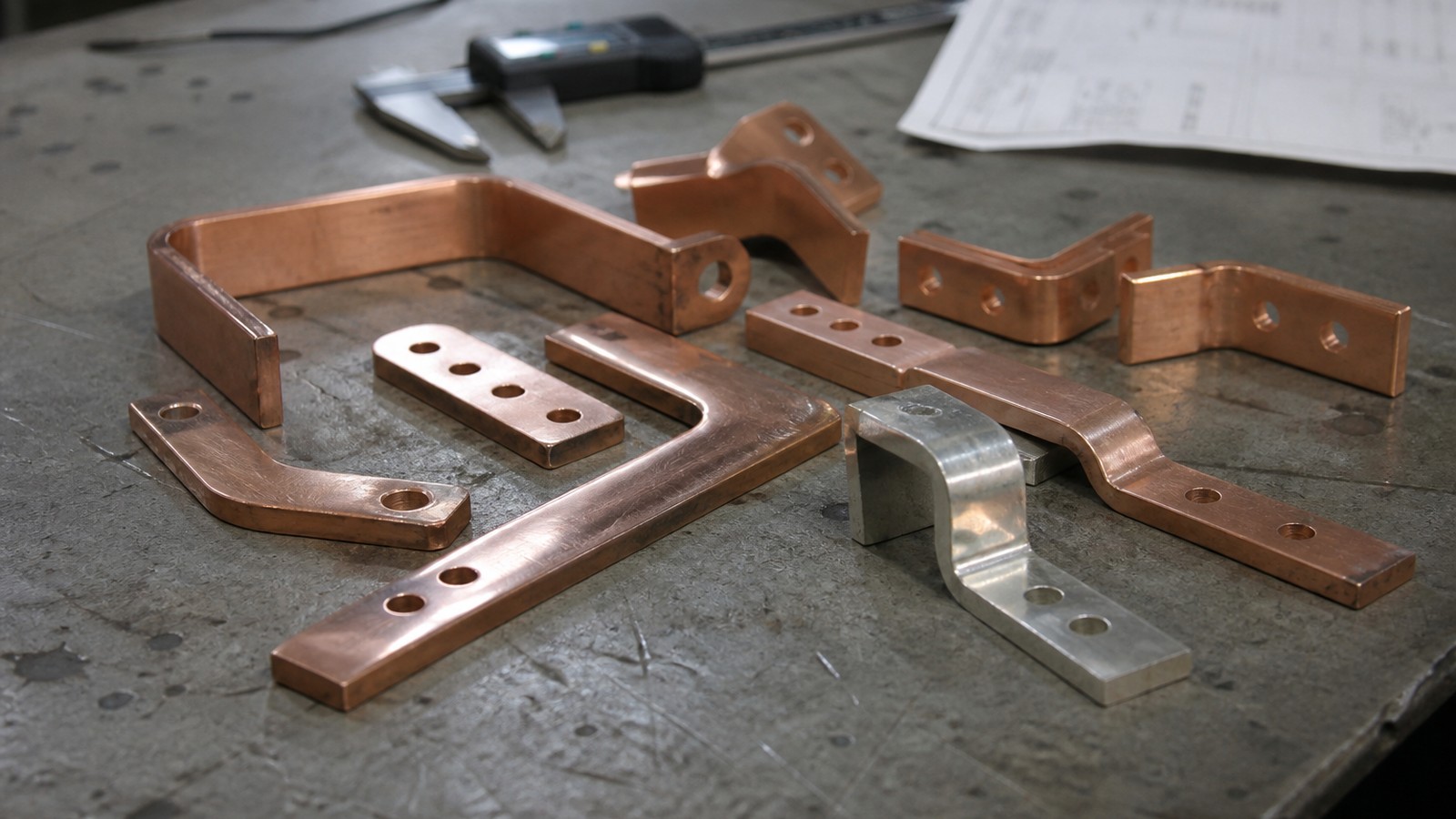
Custom busbar manufacturing
Engineering details are organized around material, tolerance, surface finish, inspection, and production readiness.
Use the inquiry module to send drawings, quantities, standards, and delivery targets for a practical manufacturing review.
Service Details
BusbarMFG provides engineering-first support for Busbar Welding projects across EV battery systems, energy storage, power electronics, charging equipment, switchgear, and industrial power distribution. We transform customer drawings and application requirements into manufacturable welded busbar assemblies and interconnects, progressing from prototypes to repeat production as requirements are confirmed.
Welding is reviewed against the actual project to confirm feasibility, process selection, and quality controls during our technical review. Our goal is to help engineering-led teams reduce risk, compress development timelines, and achieve consistent electrical and mechanical performance in welded busbar components.
What We Weld
We support drawing-based welded constructions that integrate with your high-current assemblies, including:
- Copper busbars and busbar assemblies: solid, flat, or formed copper parts with weld joints such as lap, tab, and projection features.
- Aluminum busbars: lightweight welded busbar components for cost and mass reduction initiatives.
- Battery busbars and interconnects: welded links, tabs, and foil stacks used in EV and ESS modules and packs.
- Flexible busbars: welded transitions between flexible braids/foils and solid busbars for vibration accommodation and assembly tolerance.
- Laminated busbar terminations: welded posts, terminals, or interlayer connections within low-inductance structures.
- Insulated busbar assemblies: welded conductors subsequently insulated by heat-shrink, coatings, sleeves, or other methods per drawing.
Note: CCS-integrated busbars, overmolded products, and other specialized constructions are reviewed and confirmed during project-specific engineering evaluation.
Process Selection for Busbar Welding
BusbarMFG evaluates your drawings, materials, and application requirements to align the weld method with electrical, thermal, and mechanical needs. Depending on the project, the following approaches may be considered and confirmed during technical review:
Resistance and Projection Welding
- Typical use: copper-to-copper or aluminum-to-aluminum joints, busbar lap joints, studs or bosses with projections.
- Benefits: repeatable nugget formation, suitable for many high-current copper joints where access is available.
- Considerations: joint geometry, projection features, clamping access, and surface preparation influence quality.
Ultrasonic Welding (Foil, Tab, and Thin Sections)
- Typical use: copper or aluminum foil stacks, battery tab-to-busbar welding, thin laminated layers.
- Benefits: low heat input, suitable for joining thin conductive interfaces with limited distortion.
- Considerations: material stack-up, oxide control (especially with aluminum), and tooling sonotrode patterns.
Brazing and Solder-Based Joining
- Typical use: select copper joints or mixed materials where wetting and capillary action are advantageous.
- Benefits: can accommodate complex joint interfaces where fusion welding is challenging.
- Considerations: flux and cleanliness, wetting compatibility with plating, and post-cleaning requirements.
Fusion Welding (Laser, TIG/MIG) – Project Dependent
- Typical use: application-specific copper or aluminum joints with appropriate access and heat management.
- Benefits: localized fusion, potential for precise bead placement with suitable fixturing.
- Considerations: reflectivity and thermal conductivity of copper/aluminum, heat input control, and joint design.
Final process selection is validated during the engineering review and may involve prototypes or validation samples to confirm performance.
Design for Manufacturability (DFM) for Busbar Welding
To achieve robust, repeatable Busbar Welding outcomes, our engineering team reviews:
- Material and temper: ETP or OF copper, aluminum grades, and their effect on weldability and resistance.
- Thickness and stack-up: compatible thickness ranges for the chosen weld method and mechanical support.
- Joint design: lap widths, projection features, access for electrodes or tooling, and fixturing surfaces.
- Plating and insulation: plating removal or masking in the weld zone; post-weld plating or insulation strategy.
- Cu–Al transitions: use of intermediate layers or specific methods to mitigate intermetallic growth where applicable.
- Surface preparation: oxide management, especially for aluminum; cleanliness and contact resistance control.
- Current and thermal requirements: joint resistance, temperature rise, and mechanical load cases aligned with application needs.
- Assembly interfaces: holes, bends, offsets, and tolerances for integration with downstream assemblies.
- Validation plan: destructive testing, electrical resistance checks, and environmental conditioning aligned with project requirements.
We support early DFM feedback to reduce redesign loops and shorten qualification timelines.
Quality and Validation
Project-specific quality controls are established during technical review. Typical validation activities may include:
- Mechanical tests: peel, tensile, torsion, and pull tests to characterize weld strength.
- Electrical resistance: joint resistance measurements to assess current-carrying performance.
- Cross-sections and micrographs: weld nugget size, penetration, porosity, and intermetallic assessment as applicable.
- Environmental conditioning: thermal cycling, vibration exposure, or other application-driven evaluations.
- Dimensional checks: verification of features affecting assembly fit and insulation coverage.
BusbarMFG emphasizes prototype quality and consistency, plating and insulation quality, and transparency throughout the validation process.
Request Pricing for Busbar Welding
Share drawings, material grade, tolerance, surface finish, quantity, and delivery schedule. BusbarMFG will review the requirement and respond with the next step.
Engineering RFQ
Upload Your Drawing
Share drawings or models, material, plating or insulation requirements, quantity, application, and target date. We will review the technical requirements before confirming manufacturing options.
Email: info@busbarmfg.com
Address: Huali Industrial Park, Xianghe Road, Dalang Town, Dongguan City, Guangdong Province, China