
21700 Battery Busbar
Engineering-first, drawing-based 21700 battery busbars and interconnect components for EV and energy storage modules. From DFM review and prototypes through repeat production, BusbarMFG supports engineering-led OEM teams building reliable, compact, and low-imp
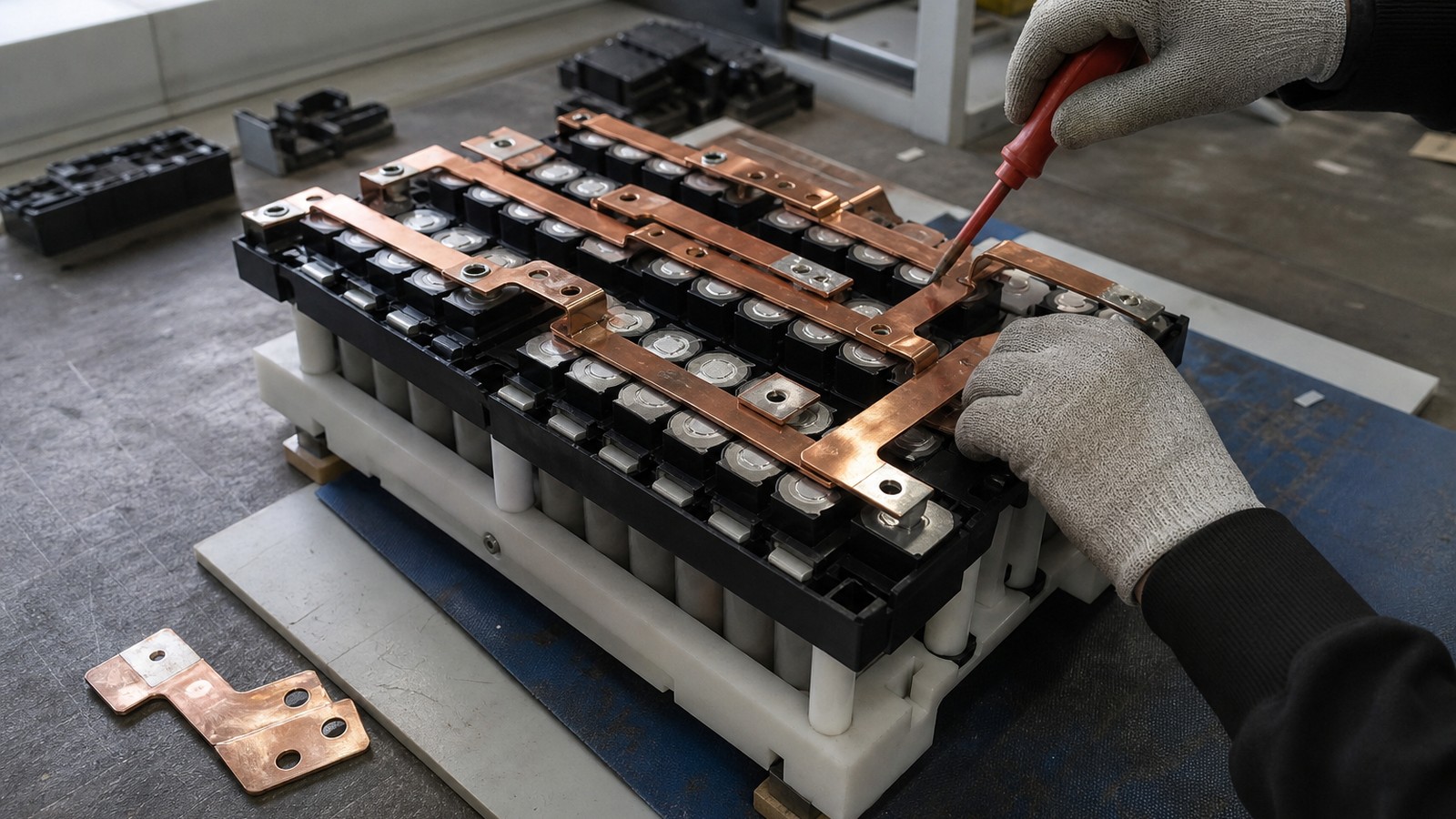
Custom busbar manufacturing
Engineering details are organized around material, tolerance, surface finish, inspection, and production readiness.
Use the inquiry module to send drawings, quantities, standards, and delivery targets for a practical manufacturing review.
Service Details
Engineering-first, drawing-based 21700 battery busbars and interconnect components for EV and energy storage modules. From DFM review and prototypes through repeat production, BusbarMFG supports engineering-led OEM teams building reliable, compact, and low-impedance 21700 packs.
BusbarMFG is based in Dongguan, Guangdong, China. We manufacture copper and aluminum busbars and battery interconnect components used in EV battery systems, energy storage, power electronics, charging equipment, switchgear, and industrial power distribution.
Why BusbarMFG for 21700 Modules
- Engineering-first workflow: manufacturability review of material, thickness, bends, holes, insulation, plating, and interfaces per your drawing.
- Battery-focused scope: solid, flexible, insulated, and laminated busbars; module current collectors; inter-group links; and pack terminals.
- Prototype to production path: validation samples, pilot lots, and repeat orders aligned with your build schedule.
- Transparent technical collaboration: drawing confidentiality, practical DFM feedback, and clear confirmation of project-specific requirements.
Note: CCS-integrated busbars, overmolded components, welding methods, stamping/forming details, and other specialized processes are reviewed against the actual project and confirmed before being represented as available production services.
Typical 21700 Busbar Components We Support
- Cell-to-cell and parallel-group interconnect plates or combs
- Series links, crossovers, and busbar jumpers between groups/rows
- Module-level current collectors and take-off terminals
- Voltage sense tabs, signal tails, and provisions for sensing harnesses
- Integrated fuse-link features per drawing
- Flexible interconnects to accommodate tolerance stack-up and vibration
- Insulated busbars for compact, touch-safe assemblies
- Laminated busbars for low-inductance power distribution within the module
Materials, Plating, and Insulation
- Materials
- High-conductivity copper busbars for low resistance and compact layouts
- Aluminum busbars for weight and cost optimization programs
- Plating (as specified on your drawing)
- Tin, nickel, or silver plating on copper busbars where required
- Nickel plating commonly considered for weldability or corrosion control
- Insulation options
- Heat-shrink, coated, sleeved, or other specified insulation approaches
Project-specific feasibility, stack-up, and process selections are confirmed during engineering review.
Design Considerations for 21700 Interconnects
- Electrical and thermal
- Current density, temperature rise targets, and loop inductance
- Voltage sense routing and stable measurement points
- Mechanical and assembly
- Cell pitch, weld window access, and tolerance stack-up across the module
- Hole patterns, slots, tabs, and interfaces to cell holders or frames
- Forming and bend radii, assembly clearances, and fastener strategies
- Surface and joining
- Plating compatibility with the intended joining method
- Evaluation of laser welding, resistance welding with interlayers, or mechanical joining per the project
- Insulation and safety
- Creepage/clearance, dielectric selection, and abrasion or vibration considerations
- Touch-safe requirements, labeling, and color coding if specified
Share your constraints and targets in the RFQ so our engineers can align recommendations with your platform goals.
Copper vs. Aluminum for 21700 Busbars
- Choose copper when:
- Minimizing resistive losses and heat is paramount
- You need compact layouts with tight thermal margins
- Consider aluminum when:
- Weight and cost reduction are key
- You can accommodate larger cross-sections or dedicated joining strategies
We can review mixed-material strategies (e.g., copper in high-current zones, aluminum elsewhere) and confirm feasibility during technical review.
Flexible, Insulated, and Laminated Options
- Flexible busbars
- Copper foil stacks or braided flex to manage vibration, assembly variation, and tolerance accumulation
- Insulated busbars
- Heat-shrink, coatings, or sleeves for compact, touch-safe architectures
- Laminated busbars
- Multilayer, low-inductance distribution where switching dynamics and EMI demand tighter control
Capabilities and stack-ups are confirmed against your drawing and application.
How We Work: From Drawing to Production-Ready Busbars
1. Technical RFQ
- Send drawings/models, material and plating/insulation requirements, quantity, application, and target date.
2. Engineering DFM Review
- We assess manufacturability: material, thickness, bends, holes, insulation, plating, weld/bolt interfaces, and assembly sequence.
3. Prototype or Validation Batches
- Build samples for fit, electrical and thermal validation, and process confirmation.
4. Repeat Production
- Transition to scheduled orders as requirements mature and are confirmed.
BusbarMFG does not publish unverified certifications, equipment lists, tolerances, lead times, production capacity, or customer claims. Project-specific requirements are confirmed during technical review.
What to Include in Your RFQ
- PDF drawing(s) and 3D model (STEP preferred)
- Material and plating, insulation type and thickness
- Target currents/temperature rise and any inductance or EMI constraints
- Joining method assumptions (e.g., weld type, mechanical fasteners)
- Quantity by phase (prototype, pilot, and expected repeat orders)
- Application notes, test requirements, and target date
Providing complete information up front accelerates DFM feedback and quoting.
Request Pricing for 21700 Battery Busbar
Share drawings, material grade, tolerance, surface finish, quantity, and delivery schedule. BusbarMFG will review the requirement and respond with the next step.
Engineering RFQ
Upload Your Drawing
Share drawings or models, material, plating or insulation requirements, quantity, application, and target date. We will review the technical requirements before confirming manufacturing options.
Email: info@busbarmfg.com
Address: Huali Industrial Park, Xianghe Road, Dalang Town, Dongguan City, Guangdong Province, China