
Bare Copper Busbar
Engineering-first custom bare copper busbars for EV battery systems, energy storage, power electronics, charging equipment, switchgear, and industrial power distribution. From drawing review to prototypes and production-ready parts.
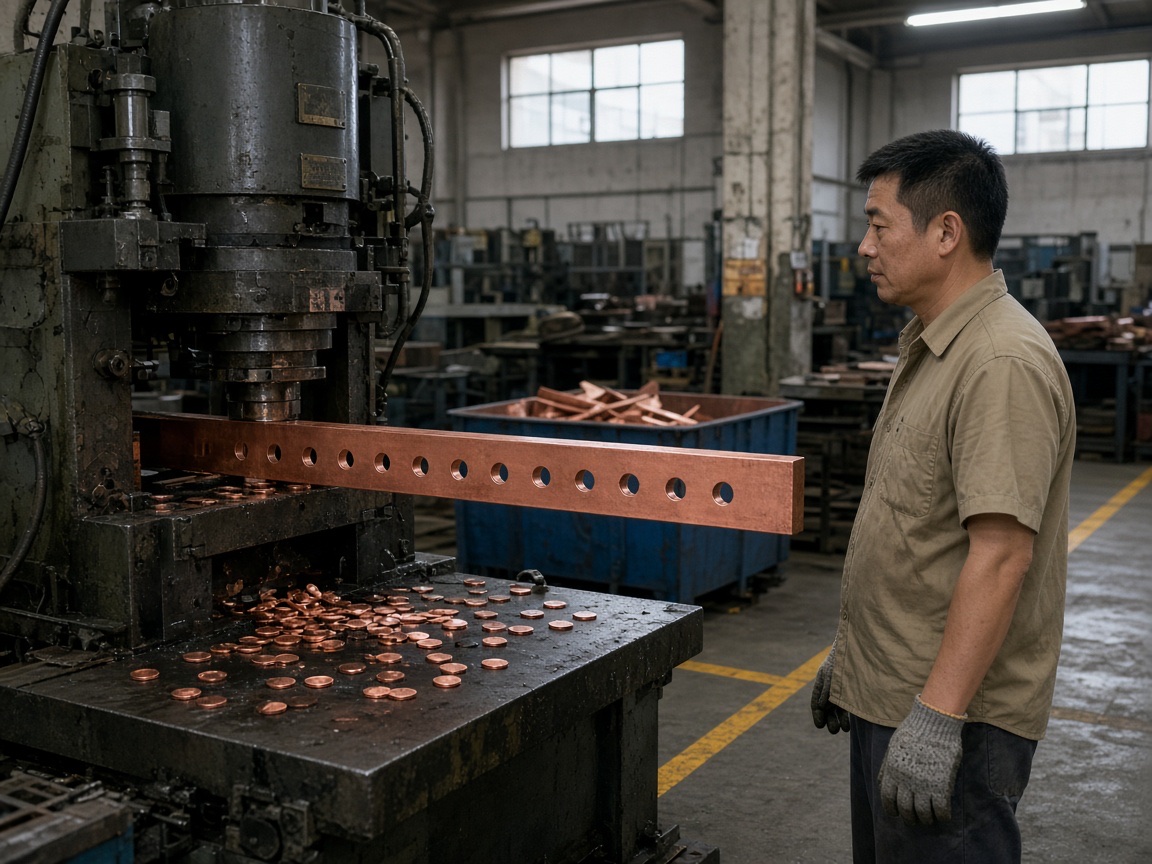
Custom busbar manufacturing
Engineering details are organized around material, tolerance, surface finish, inspection, and production readiness.
Use the inquiry module to send drawings, quantities, standards, and delivery targets for a practical manufacturing review.
Service Details
Engineering-first custom bare copper busbars for EV battery systems, energy storage, power electronics, charging equipment, switchgear, and industrial power distribution. From drawing review to prototypes and production-ready parts.
BusbarMFG manufactures drawing-based copper busbars in Dongguan, Guangdong, China for engineering-led OEMs in the United States, Canada, Europe, the United Kingdom, Australia, and internationally. We focus on confidential technical review, manufacturability feedback, and consistent prototype-to-production support.
What Is a Bare Copper Busbar?
Bare copper busbars are solid, flat, or formed copper conductors supplied without plating. They are selected when maximum conductivity, straightforward assembly, and cost efficiency are priorities, and when environmental exposure is controlled or short-term oxidation is acceptable.
Common use cases include:
- EV and ESS battery module and pack interconnects
- Inverters, rectifiers, UPS, and power supply DC links
- PCS and high-current power electronics
- Charging equipment and DC distribution
- Switchgear, distribution panels, transformer connections, and industrial control cabinets
If your application requires enhanced corrosion resistance, improved solderability over time, or lower contact resistance stability in varied environments, consider tin-, nickel-, or silver-plated copper busbars. We review plating needs during engineering evaluation.
Why Choose Bare Copper Busbars?
- High conductivity and low resistance where short electrical paths or controlled environments are present
- Cost-effective compared to plated alternatives when oxidation risk is managed
- Straightforward integration for press-fit, bolted, or welded connections
- Efficient heat dissipation due to copper’s thermal properties
- Suitable for prototyping, validation builds, and controlled-environment production assemblies
Engineering considerations for bare copper:
- Oxidation and contact resistance over life: evaluate environment, service life, and mating surfaces
- Mechanical interfaces: hole size, slot geometry, countersinks, and press-fit requirements per drawing
- Bends and formed features: radii, angles, and stacking clearances to meet packaging needs
- Thermal performance: cross-section, allowable temperature rise, and airflow or enclosure constraints
- Insulation strategy: heat shrink, coating, sleeves, or barrier materials where required by creepage/clearance
From Drawing to Production-Ready Busbars
Our workflow starts with your drawing and application requirements:
- Engineering review: material selection, thickness, bends, holes, interfaces, insulation, and plating (if any)
- Prototypes or validation batches to confirm fit, function, and assembly
- Repeat production once requirements are validated and documentation is stable
We emphasize drawing confidentiality, DFM response, prototype quality, dimensional consistency, and delivery transparency. CCS integrated busbars, overmolded products, welding, stamping, forming, and other specialized processes are reviewed against the actual project and confirmed capability before they are represented as available production services.
Product Scope for Bare Copper Busbars
- Solid or flat copper busbars per drawing
- Formed and multi-bend parts for compact assembly routing
- Battery interconnect components for EV and ESS modules and packs
- Custom busbar assemblies with related high-current interconnect elements
- Optional insulation: heat-shrink, coatings, sleeves, or other configurations where needed
Note: When project requirements demand plating (e.g., tin for corrosion resistance, nickel or silver for specific interface needs), we review these options during technical evaluation.
Materials and Surfaces
- Copper grade: per your specification (commonly ETP C110 or oxygen-free copper when required)
- Surface condition: bare copper as-manufactured; optional deburring and edge conditioning per drawing
- Contact surfaces: controlled finishes or contact geometry per application requirements
- Packaging and handling: defined during project review to align with cleanliness and handling needs
Who We Serve
BusbarMFG focuses on engineering-led B2B buyers with recurring NPI, redesign, localization, or supplier switch programs:
- EV battery module and pack manufacturers
- ESS integrators and power electronics OEMs (inverters, PCS, UPS, power supplies)
- Charging equipment OEMs
- Switchgear and industrial power distribution manufacturers
- Automation and control cabinet builders
Typical stakeholders include Electrical Engineers, Mechanical Engineers, Battery Pack Engineers, Power Electronics Engineers, R&D/NPI Managers, Sourcing and Commodity Managers, and Procurement Managers.
Bare Copper vs. Alternatives
- Bare copper vs. tin-plated copper: bare reduces upfront cost and maximizes conductivity; tin improves corrosion resistance and long-term contact stability
- Copper vs. aluminum: copper enables smaller cross-sections and lower resistance; aluminum offers weight and cost advantages in certain programs
- Bare copper vs. laminated busbars: bare solid bars are straightforward and robust; laminated busbars suit compact packaging and low-inductance needs
We review tradeoffs during technical evaluation to match your performance, assembly, and cost objectives.
RFQ Checklist (Engineering Review)
To enable an efficient technical review and quoting process, please include:
- 2D drawings and/or 3D models (with revision level)
- Material and copper grade (e.g., C110, OFE) and thickness
- Surface requirement: bare copper or plating/insulation if applicable
- Critical dimensions, bend details, hole callouts, and interfaces
- Application and operating environment (temperature, vibration, corrosion exposure)
- Quantity and build plan (prototype, validation, and anticipated ramp)
- Target date or program milestones
- Any special packaging, labeling, or inspection requirements
BusbarMFG uses this information to assess manufacturability and prepare an engineering quotation. Project-specific requirements are confirmed during technical review. BusbarMFG does not publish unverified certifications, equipment lists, tolerances, lead times, production capacity, or customer claims.
Request Pricing for Bare Copper Busbar
Share drawings, material grade, tolerance, surface finish, quantity, and delivery schedule. BusbarMFG will review the requirement and respond with the next step.