
Battery Busbar
BusbarMFG is an engineering-first custom manufacturer of drawing-based battery busbars and high-current interconnect components. We serve EV battery modules and packs, energy storage systems (ESS), and power electronics platforms requiring reliable copper or a
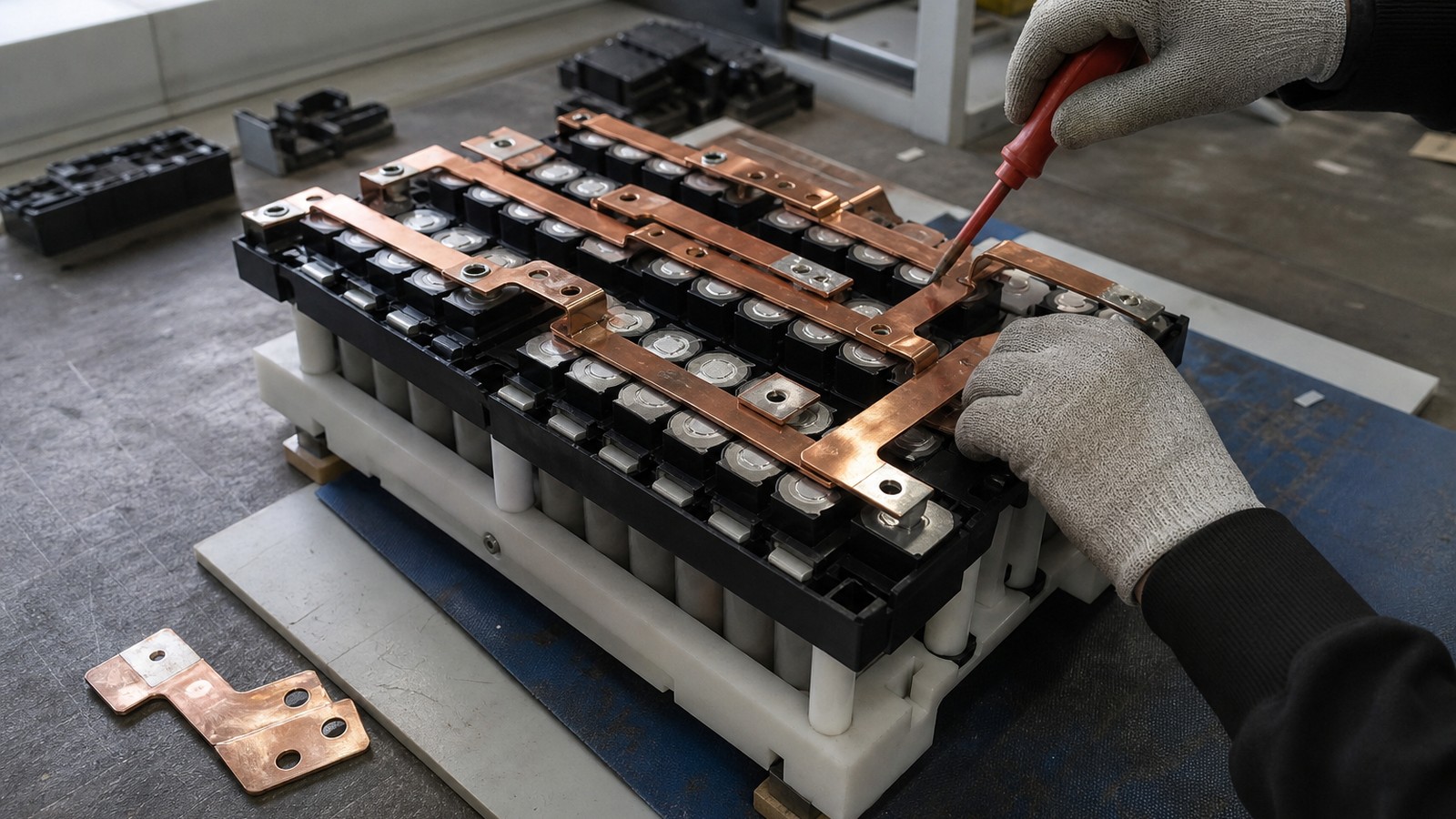
Custom busbar manufacturing
Engineering details are organized around material, tolerance, surface finish, inspection, and production readiness.
Use the inquiry module to send drawings, quantities, standards, and delivery targets for a practical manufacturing review.
Service Details
BusbarMFG is an engineering-first custom manufacturer of drawing-based battery busbars and high-current interconnect components. We serve EV battery modules and packs, energy storage systems (ESS), and power electronics platforms requiring reliable copper or aluminum interconnects with defined plating, insulation, bends, holes, and interfaces.
Based in Dongguan, Guangdong, China, we support engineering-led OEM teams moving from prototype to validation and repeat production. Our focus is manufacturability, dimensional consistency, plating and insulation quality, and delivery transparency—aligned with technical RFQs and project timelines.
From Drawing to Production-Ready Battery Busbars
Every project starts with your drawings and application requirements. Our engineering review can include:
- Material and thickness selection (copper or aluminum)
- Plating (tin, nickel, silver) and surface prep
- Insulation approach (heat-shrink, coated, sleeved, laminated)
- Bends, holes, slots, and interface geometry
- Connection methods and assembly considerations
- Thermal, current, and packaging constraints
Programs typically begin with prototypes or validation batches and progress toward repeat production as requirements are confirmed.
Applications
Battery busbars from BusbarMFG are used across:
- EV modules and packs: cell-to-cell, module-to-module, and pack-level interconnects
- Energy Storage Systems (ESS): string and rack distribution, PCS links, battery cabinet routing
- Power electronics: inverters, UPS, and high-current DC distribution in compact enclosures
- Charging equipment and electrical distribution: low-inductance, tight packaging power paths
Product Scope for Battery Busbars
- Copper busbars: solid, flat, or formed parts in bare copper or with specified tin, nickel, or silver plating
- Aluminum busbars: lightweight options for cost and mass reduction programs
- Flexible busbars: foil stacks, braided links, or insulated flexible structures for vibration and assembly variation
- Insulated busbars: heat-shrink, coated, sleeved, or laminated configurations for compact, protected assemblies
- Laminated busbars: multilayer, low-inductance interconnects for power-dense battery and PCS designs
- Custom busbar assemblies: drawing-based battery interconnect components and related high-current parts
Note: CCS integrated busbars, overmolded products, welding, stamping, forming, and other specialized processes must be reviewed against the actual project and confirmed capability before they are represented as available production services.
Who We Serve
Engineering-led B2B buyers in:
- EV battery module and pack manufacturing
- Energy storage system integration
- Inverter, PCS, UPS, and power supply OEMs
- Charging equipment and industrial electrical distribution
Typical teams: Electrical, Mechanical, Battery Pack, and Power Electronics Engineers; R&D/NPI Managers; Sourcing/Commodity/Procurement Managers. Priority markets include North America, Europe, the UK, Australia, and internationally oriented APAC manufacturers.
Engineering Review Checklist
To accelerate technical evaluation, share:
- Drawings or 3D models with revision level
- Material (copper/aluminum), thickness, and plating requirements
- Insulation type, areas to mask, creepage/clearance targets
- Hole sizes, slot patterns, and bend details (angles, radii, tolerances)
- Interfaces: fasteners, terminals, busbar-to-module/pack mating features
- Electrical and thermal requirements: current, duty cycle, temperature rise targets
- Quantity, application context, and target date
Design Considerations for Battery Busbars
- Current density and temperature rise: size cross-section to meet electrical load and thermal limits
- Thermal path and hot spots: minimize localized resistance increases at bends, transitions, and interfaces
- Inductance and EMI: consider laminated busbars or parallel paths for low-inductance distribution in high di/dt systems
- Plating selection:
- Tin: common, cost-effective, good for corrosion resistance and assembly
- Nickel: higher temperature stability and wear resistance
- Silver: highest conductivity, used selectively for performance-critical interfaces
- Insulation strategy:
- Heat-shrink, sleeves, or coatings for compact routing and protection
- Laminated constructions for dielectric separation between parallel conductors
- Define creepage/clearance and any areas to mask for grounding or thermal contact
- Mechanical robustness:
- Flexible links for vibration and tolerance stack-up
- Formed features to aid repeatable assembly, service loops, and strain relief
- Connection methods:
- Bolted and fastened interfaces, press-fit features, or busbar-to-terminal mating
- Welding or other specialized joining methods subject to engineering review and capability confirmation
Flexible and Laminated Battery Busbars
- Flexible busbars: used between modules and frames to absorb vibration, thermal expansion, and assembly variation; available as foil stacks, braided links, or insulated flexible structures per drawing and review
- Laminated busbars: multilayer constructions with dielectric separation to minimize inductance, improve EMI performance, and enable compact routing; specify dielectric type, thickness, and required creepage/clearance
Prototyping, Validation, and Repeat Production
- Prototype and validation batches aligned to your NPI schedule
- Iterative DFM feedback on manufacturability and assembly
- Transition to repeat production once requirements are confirmed and stable
BusbarMFG does not publish unverified certifications, equipment lists, tolerances, lead times, production capacity, or customer claims. Project-specific requirements are confirmed during technical review.
Request Pricing for Battery Busbar
Share drawings, material grade, tolerance, surface finish, quantity, and delivery schedule. BusbarMFG will review the requirement and respond with the next step.
Contact BusbarMFG
Get in touch with our engineering team for custom busbar manufacturing inquiries. We provide precision-engineered solutions for your power distribution needs.
Huali Industrial Park, Xianghe Road, Dalang Town, Dongguan City, Guangdong Province, China