
Copper Foil Busbar
Engineering-first flexible copper foil busbars for EV battery systems, energy storage, and power electronics applications.
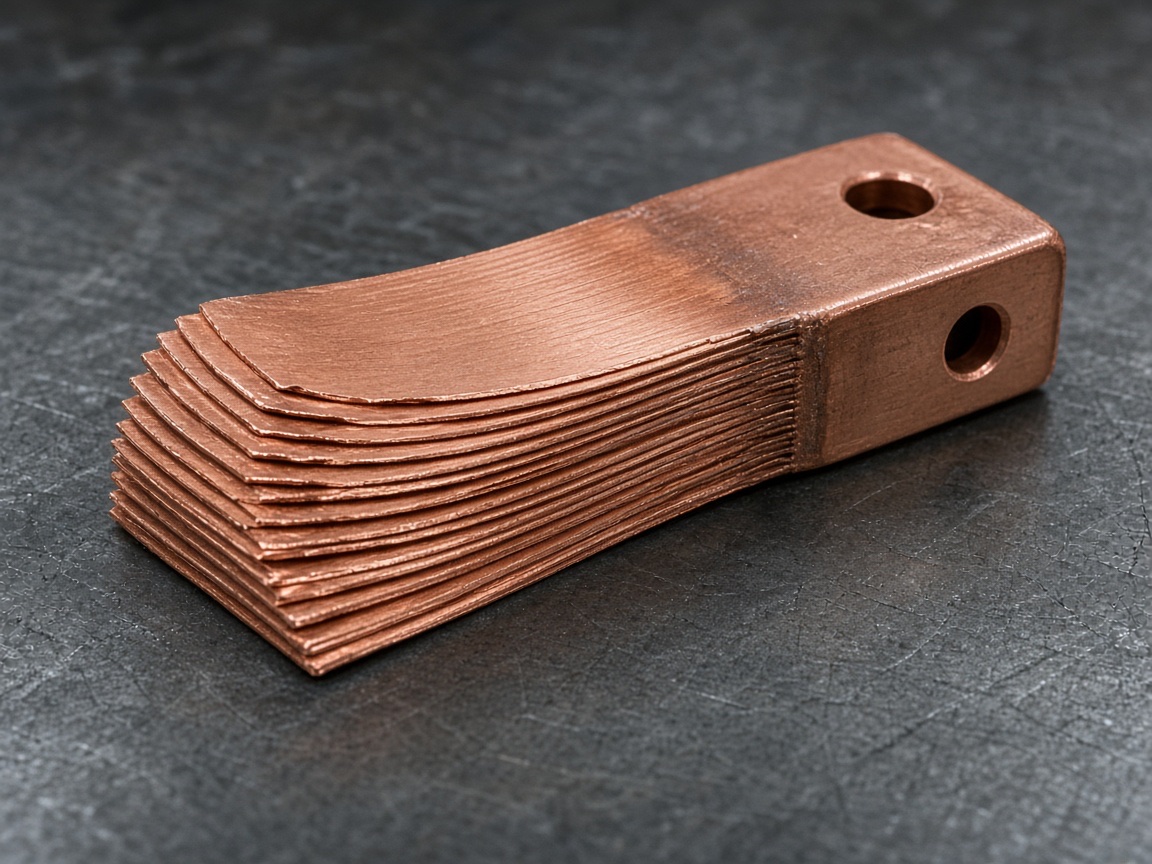
Custom busbar manufacturing
Engineering details are organized around material, tolerance, surface finish, inspection, and production readiness.
Use the inquiry module to send drawings, quantities, standards, and delivery targets for a practical manufacturing review.
Service Details
Engineering-first flexible copper foil busbars for EV battery systems, energy storage, and power electronics applications.
BusbarMFG manufactures drawing-based Copper Foil Busbar assemblies and related flexible interconnects used where vibration, installation tolerance, and compact routing call for compliant, low-impedance current paths. We work from your drawings and application requirements to deliver prototypes through repeat production as your program advances.
Who We Serve
- EV battery module and pack makers, ESS integrators, inverter and PCS manufacturers, UPS and power supply OEMs, charging equipment companies, and electrical distribution equipment manufacturers.
- Engineering-led teams in the US, Canada, Europe, the UK, Australia, and internationally oriented manufacturers in Asia seeking responsive DFM, prototype quality, and production consistency.
What Is a Copper Foil Busbar?
A Copper Foil Busbar (often called a flexible busbar or copper foil jumper) is a stack of thin copper foils or laminations that forms a flexible, low-inductance electrical connection. Compared to cables, Copper Foil Busbars can provide:
- Controlled geometry for repeatable assembly and shorter electrical path length
- Reduced inductance and improved EMI behavior in DC link or high-current switching paths
- Compliance to vibration and assembly variation without introducing cable strand termination variability
- Compact packaging with optional insulation and plating tailored to your assembly interfaces
Common applications include module-to-module links, pack-to-inverter jumpers, DC link connections, and high-current jumpers in switchgear and industrial power distribution.
From Drawing to Production-Ready
Our workflow begins with your drawing or model and application details:
1. Engineering review: material selection, foil stack configuration, thickness, bend strategy, holes/slots, interfaces, plating, and insulation.
2. Prototypes or validation batches to confirm fit, assembly, and performance in your environment.
3. Transition to repeat production with project-specific requirements confirmed.
BusbarMFG does not publish generic or unverified certifications, equipment lists, tolerances, lead times, capacity, or customer claims. These items are established during technical review per project.
Copper Foil Busbar Configurations
We manufacture to your specification. Typical options include:
- Conductor materials:
- Copper foil flexible stacks and hybrid configurations as defined in your drawing
- Bare copper or plated (tin, nickel, or silver) on contact surfaces or per full part coverage as required
- Stack and geometry:
- Foil count and individual foil thickness per design
- Straight jumpers, formed ends, offset patterns, localized flex zones, and integrated stiffened sections
- Interfaces:
- Holes, slots, and interface pads for bolted joints
- Surface preparation and plating to suit torque and contact resistance objectives
- Insulation:
- Heat-shrink, coated, sleeved, or other insulation types specified by your design
- Partial or full insulation coverage with defined keep-out zones for contact surfaces
- Laminated and hybrid structures:
- Where compact packaging or low-inductance distribution is required, copper foil sections can be combined with laminated or insulated busbar sections as defined in your drawing
Specialized processes such as overmolding or CCS-integrated assemblies are subject to project review and capability confirmation before being represented as available for production.
Where Copper Foil Busbars Fit
- EV and ESS battery interconnects: module links, series/parallel jumpers, pack-to-PCS connections
- Power electronics: DC link jumpers, inverter connections, low-inductance high-current paths
- UPS and power supplies: compliant connections for thermal and mechanical stability
- Charging equipment: high-current jumpers and insulated flexible links
- Switchgear and industrial power: compact jumpers in cabinets and distribution assemblies
Design and DFM Considerations
Provide your requirements and we will review for manufacturability and performance:
- Electrical and thermal
- Operating current, duty cycle, ambient and enclosure conditions
- Target temperature rise and allowable voltage drop
- Plating selection for contact resistance and corrosion environment
- Mechanical and assembly
- Hole/slot sizes and patterns, edge distances, and torque targets
- Bend locations and radii, flex zones, and required compliance
- Stack alignment, end terminations, and interface flatness
- Insulation and spacing
- Insulation type/coverage, creepage and clearance requirements, and keep-out areas
- Labeling or color-coding as required by your build process
- Integration
- Mating hardware and interface surface preparation
- Assembly sequence, fastener access, and serviceability
If you are redesigning from cables to a Copper Foil Busbar, share target routing, envelope constraints, and any inductance or EMI drivers so we can evaluate geometry and interface options.
Copper vs. Aluminum and Other Alternatives
- Copper Foil Busbar
- Preferred when low inductance, compact routing, and repeatable bolted interfaces are required in high-current paths
- Supports plating and insulation combinations tailored to the assembly
- Solid copper or laminated busbars
- Useful where higher stiffness or defined multilayer structures are needed with tight packaging
- Aluminum busbars
- Consider where cost and weight tradeoffs are prioritized; surface treatment and interface design are critical and are reviewed per project
- Cables
- Flexible and familiar; Copper Foil Busbars can reduce inductance and improve interface repeatability in many applications
We can support comparisons during DFM to align with your cost, weight, thermal, and assembly goals.
Prototypes Through Repeat Production
- Prototype and validation batches support NPI and DV/PV phases
- Controlled change management as designs evolve toward production
- Dimensional and visual criteria, insulation coverage, and plating quality aligned with your drawings and inspection plan
Project-specific tolerances, inspection methods, and supply requirements are defined during technical review.
Request Pricing for Copper Foil Busbar
Share drawings, material grade, tolerance, surface finish, quantity, and delivery schedule. BusbarMFG will review the requirement and respond with the next step.
Contact BusbarMFG
Get in touch with our engineering team for custom busbar manufacturing inquiries. We provide precision-engineered solutions for your power distribution needs.
Huali Industrial Park, Xianghe Road, Dalang Town, Dongguan City, Guangdong Province, China