
Epoxy Coated Busbar
Engineering-first custom epoxy coated busbars for EV, energy storage, power electronics, charging equipment, switchgear, and industrial power distribution. BusbarMFG manufactures drawing-based copper and aluminum busbars with engineered epoxy insulation to mee
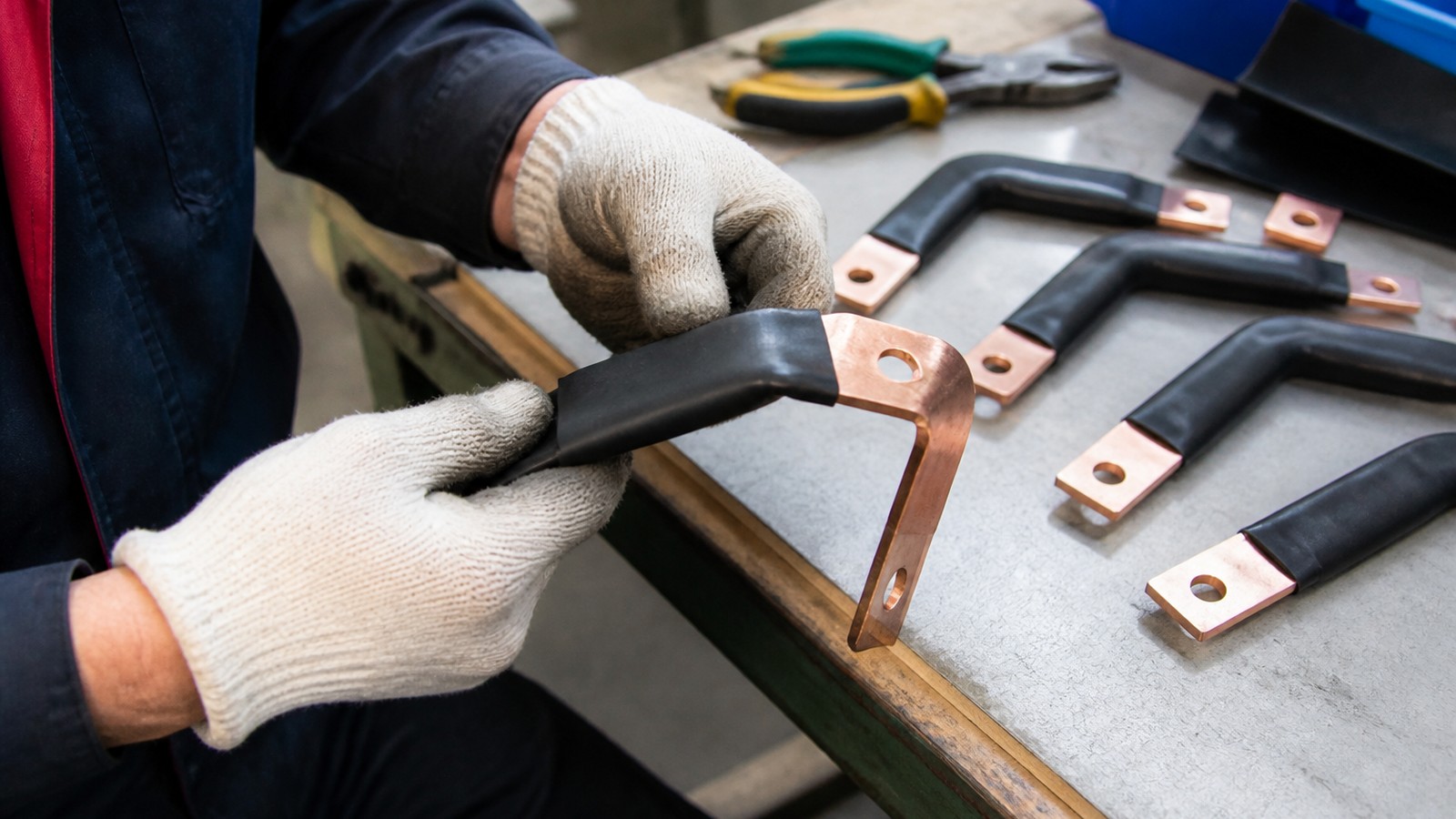
Custom busbar manufacturing
Engineering details are organized around material, tolerance, surface finish, inspection, and production readiness.
Use the inquiry module to send drawings, quantities, standards, and delivery targets for a practical manufacturing review.
Service Details
Engineering-first custom epoxy coated busbars for EV, energy storage, power electronics, charging equipment, switchgear, and industrial power distribution. BusbarMFG manufactures drawing-based copper and aluminum busbars with engineered epoxy insulation to meet packaging, dielectric, and assembly requirements from prototype through repeat production.
What is an Epoxy Coated Busbar?
An epoxy coated busbar is a copper or aluminum conductor finished with an engineered epoxy insulation layer. Epoxy coatings provide durable, uniform insulation for compact assemblies where abrasion resistance, dielectric performance, and clean edges are critical. Compared to heat-shrink sleeving, epoxy coatings support precise masking, color coding, and consistent wall thickness on complex geometries.
Common goals for epoxy insulated busbars:
- Improve dielectric performance and creepage/clearance control in tight packaging
- Increase abrasion, chemical, and moisture resistance
- Enable color identification (e.g., high-voltage orange, DC+/DC–, phase coding)
- Provide clean, uniform coverage with masked interfaces for bolted joints or welded features
- Support repeatable assembly and appearance standards
Coating approach (e.g., epoxy powder coat or liquid epoxy) is selected during engineering review based on geometry, dielectric requirements, surface finish, and application environment.
When to Choose Epoxy Coated Busbars
Epoxy coated busbars are a strong fit when:
- You need compact insulation without excess bulk from sleeving
- You require precise mask windows for fasteners, welds, or sensor interfaces
- Edges, corners, and formed geometries must be consistently insulated
- The assembly will experience abrasion, handling, or chemical exposure
- Color, labeling, and visual standards are part of the build
Consider alternatives for specific needs:
- Heat-shrink insulated busbars: cost-effective for simpler shapes and serviceability
- Laminated busbars: preferred for low-inductance, multilayer DC link or inverter distribution
- Flexible busbars: for vibration, stack-up tolerance, or motion compensation
BusbarMFG can review epoxy coating alongside these insulation options during DFM to match your performance and cost targets.
Materials and Finishes
- Base conductors
- Copper busbars: solid, flat, or formed; optional tin, nickel, or silver plating under insulation when specified
- Aluminum busbars: lightweight option for cost and weight reduction programs
- Insulation
- Epoxy coating engineered to drawing requirements (color, coverage, masking, dielectric targets)
- Color options and gloss/matte finishes reviewed against project needs
- Interfaces and features
- Holes, slots, bends, end forms, countersinks, studs, and other interfaces per drawing
- Masking for bolted joints, weldments, or ground points defined in the model or drawing notes
Note: Coating thickness, dielectric class, and process parameters are confirmed during technical review and reflected in the quotation.
Applications We Support
- EV battery systems: module and pack interconnects, HV distribution, service disconnect pathways
- Energy storage systems (ESS): rack and container DC distribution, PCS interfaces
- Power electronics: inverters, rectifiers, UPS, power supplies, DC link and filter connections
- Charging equipment: DC fast charger distribution, rectifier outputs
- Switchgear and industrial power: distribution panels, transformer connections, motor drives, control cabinets
Customers value epoxy coated busbars where reliable insulation, dimensional consistency, and clean assembly interfaces drive performance and safety.
Engineering and DFM Considerations
We start with your drawing and application requirements, then provide manufacturability feedback to reduce risk before prototype and validation:
- Electrical
- Operating voltage, creepage/clearance, and partial discharge considerations
- Mask windows for bolted joints, welds, and measurement points
- Labeling, color coding, and polarity/phase identification
- Thermal and mechanical
- Current density, expected temperature rise, and conductor cross-section
- Bend radii, edge conditioning, and relief features prior to coating
- Abrasion, vibration, chemical exposure, and environmental sealing needs
- Coating design
- Coverage definition, thickness targets, and corner/edge build-up considerations
- Thread and hardware protection, hang points, and handling fixtures
- Surface preparation and under-plating (e.g., tin/nickel) for corrosion strategy
- Test and quality (as specified on the RFQ)
- Visual and coverage criteria
- Electrical insulation test requirements (e.g., dielectric/withstand) when defined
- Traceability, labeling, and packaging standards
Project-specific requirements are confirmed and documented during the technical review.
From Drawing to Production-Ready Busbars
1. Engineering RFQ
- Provide drawings or models, insulation requirements (color, coverage, masking), quantity, application, and target date.
2. Technical Review and DFM
- We assess manufacturability and propose any drawing or stack-up clarifications.
3. Prototype or Validation Batch
- Build to your drawing for form, fit, and function checks and validation testing.
4. Production Readiness
- After requirements are confirmed, production documentation is finalized for repeat orders.
BusbarMFG does not publish unverified certifications, equipment lists, tolerances, lead times, production capacity, or customer claims. All project-specific needs are addressed during technical review.
RFQ Checklist for Epoxy Coated Busbars
To accelerate an engineering quotation, include:
- 2D drawings and/or 3D models (e.g., STEP, Parasolid, DWG/DXF) with dimensions and notes
- Base material (copper or aluminum), thickness, and any under-plating before epoxy
- Epoxy insulation requirements: color, coverage, mask areas, surface finish, and target dielectric performance
- Application context: EV/ESS/power electronics/switchgear, operating environment, electrical and thermal considerations
- Quantity and build plan: prototype, validation, and anticipated production volumes
- Any required inspections or tests, labeling, and packaging preferences
- Target date or project milestones
If you are transitioning from cable to busbar or from sleeving to epoxy coating, we can highlight design changes that improve manufacturability and assembly.
FAQs
- What’s the difference between epoxy coated and heat-shrink insulated busbars?
- Epoxy coatings provide uniform coverage, precise masking, and durable surfaces for complex geometries. Heat-shrink is flexible and serviceable but can add bulk and variability around edges and corners.
- Can epoxy coated busbars be color-coded?
- Yes. Color requirements (e.g., high-voltage orange, red/black, phase colors) can be reviewed and specified on the drawing.
- Do you support copper and aluminum?
- Yes. Both copper and aluminum epoxy insulated busbars are produced to drawing. Under-plating and surface prep are reviewed by application.
- Can contact pads remain uncoated?
- Yes. Mask windows for bolted joints, welds, and measurement points should be defined on the drawing.
- What about dielectric testing?
- If dielectric or other inspections are required, specify them in the RFQ. Project-specific testing is confirmed during technical review.
- Do you provide laminated busbar alternatives?
- Yes. For low-inductance requirements or multilayer distribution, we also support laminated busbars. We can review tradeoffs between epoxy insulated single-layer and laminated designs.
Request Pricing for Epoxy Coated Busbar
Share drawings, material grade, tolerance, surface finish, quantity, and delivery schedule. BusbarMFG will review the requirement and respond with the next step.
Contact BusbarMFG
Get in touch with our engineering team for custom busbar manufacturing inquiries. We provide precision-engineered solutions for your power distribution needs.
Huali Industrial Park, Xianghe Road, Dalang Town, Dongguan City, Guangdong Province, China