
ESS Battery Busbar
BusbarMFG is an engineering-first, drawing-based manufacturer of custom copper and aluminum busbars and battery interconnect components for energy storage systems (ESS), EV battery platforms, power electronics, charging equipment, switchgear, and industrial po
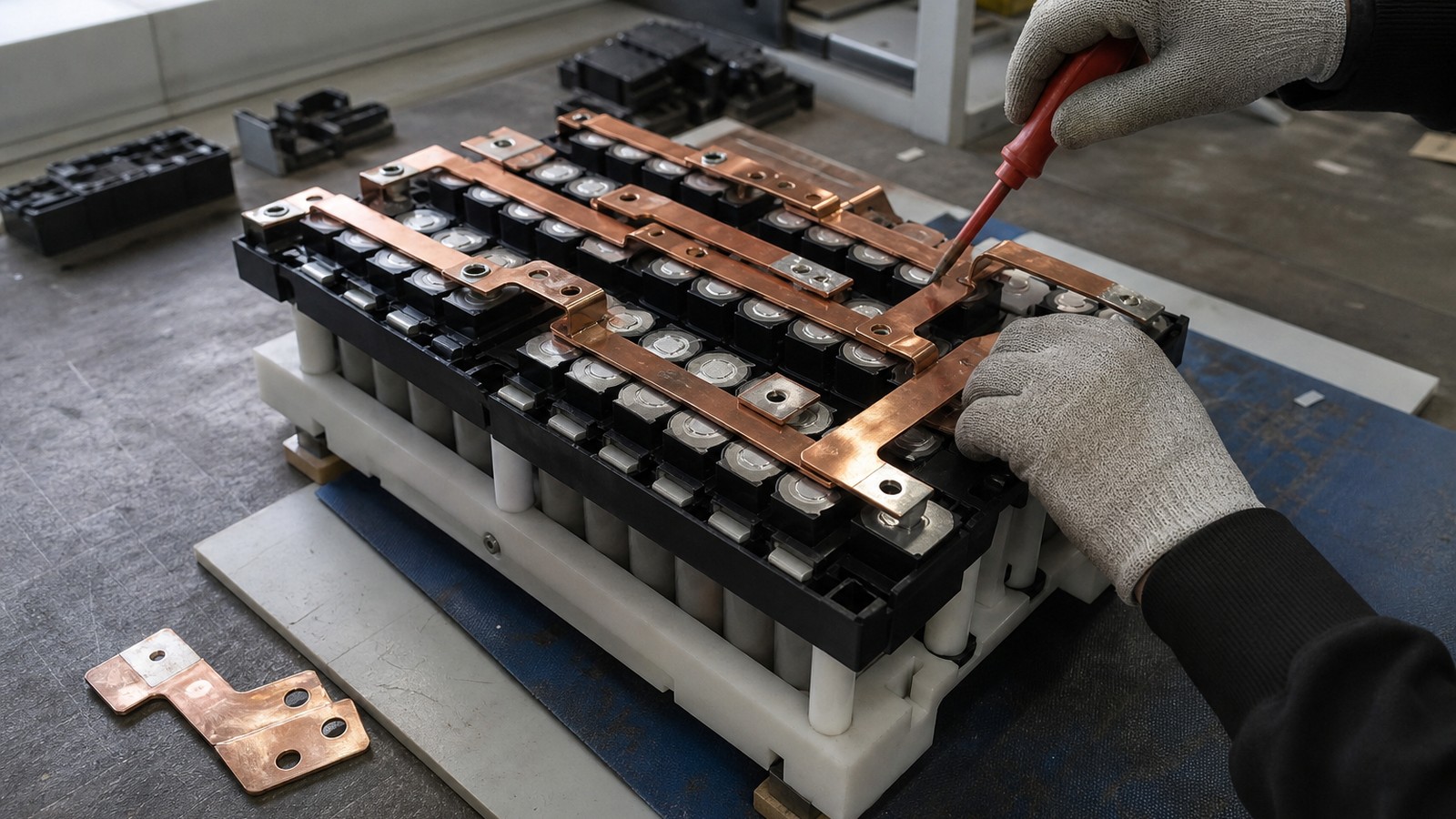
Custom busbar manufacturing
Engineering details are organized around material, tolerance, surface finish, inspection, and production readiness.
Use the inquiry module to send drawings, quantities, standards, and delivery targets for a practical manufacturing review.
Service Details
BusbarMFG is an engineering-first, drawing-based manufacturer of custom copper and aluminum busbars and battery interconnect components for energy storage systems (ESS), EV battery platforms, power electronics, charging equipment, switchgear, and industrial power distribution.
We support engineering-led OEMs moving from concept to validation and repeat production, with a focus on manufacturability, dimensional consistency, plating and insulation quality, and delivery transparency throughout the project lifecycle.
Why BusbarMFG for ESS Battery Busbar Projects
- Engineering-first approach: We start from your drawing and application requirements, then provide DFM feedback on material, thickness, insulation, plating, bends, holes, interfaces, and connection methods.
- ESS-focused experience: We manufacture drawing-based battery busbars for modules, racks, string-to-pack connections, DC combiner bars, inverter/PCS interfaces, and compact low-inductance power distribution inside ESS cabinets and containers.
- Copper and aluminum options: We review copper and aluminum tradeoffs for weight, cost, conductivity, thermal rise, and galvanic compatibility in mixed-metal assemblies.
- Prototype through repeat production: Programs can start with prototypes or validation batches and ramp to ongoing orders after requirements are confirmed.
ESS Battery Busbar Options We Manufacture
- Copper busbars: Solid, flat, or formed parts in bare copper or with specified tin, nickel, or silver plating for low contact resistance and corrosion control.
- Laminated busbars: Multilayer structures for compact packaging and low inductance in high-current ESS power distribution.
- Flexible busbars: Copper foil, braided, or insulated flexible structures to accommodate vibration, assembly variation, and thermal expansion.
- Insulated busbars: Heat-shrink, coated, sleeved, or otherwise insulated configurations for compact assemblies and controlled creepage/clearance.
- Battery busbars: High-current interconnect components for module-to-module, module-to-string, and string-to-pack connections within ESS.
- Aluminum busbars: Lightweight distribution options for programs evaluating copper-to-aluminum transitions to manage weight and cost.
- Custom busbar assemblies: Drawing-based busbar parts and related high-current interconnect components, reviewed against project requirements.
Note: CCS integrated busbars, overmolded products, welding, stamping, forming, and other specialized processes are reviewed against actual project requirements and confirmed capability before they are represented as available production services.
ESS Applications We Support
- Battery module and rack interconnects (module-to-busbar, busbar-to-string)
- DC combiner and distribution bars in containers and cabinets
- Inverter/PCS DC side connections and low-inductance links
- BMS and sense tap integration points on battery busbars (subject to project review)
- High-current links in switchgear, UPS, and industrial power systems used in ESS
Engineering and DFM Review for ESS Battery Busbars
Our technical review aligns busbar design with ESS requirements:
- Material selection: Copper and aluminum suitability, plating choice (tin, nickel, silver), and application-driven corrosion considerations.
- Thickness and geometry: Current density, temperature rise, stiffness, and space constraints; bends, offsets, and formed features for tight packaging.
- Insulation strategy: Heat-shrink, coatings, sleeves, and laminated structures to achieve creepage/clearance, routing, and touch-safe designs.
- Interfaces and connections: Holes, slots, press-fit features, fastener interfaces, terminal pads, and joint surface finish for reliable assembly.
- Low inductance and EMI: Layering and routing approaches for power electronics and ESS systems requiring compact, low-inductance distribution.
- Assembly and serviceability: Repeatable fit-up, vibration tolerance, and maintenance-friendly layouts.
Project-specific requirements are confirmed during technical review.
Prototype-to-Production Support
- Prototyping and validation: Early builds to verify fit, assembly, and electrical performance in ESS modules, racks, and cabinets.
- Iteration and change management: Controlled adjustments to geometry, plating, and insulation as test data is collected.
- Repeat production readiness: Transition to ongoing batches once design, quality, and delivery parameters are confirmed.
BusbarMFG does not publish unverified certifications, equipment lists, tolerances, lead times, production capacity, or customer claims. These items are addressed per project during engineering review.
Ideal Customers
We serve engineering-led B2B buyers at ESS, EV battery, power electronics, charging equipment, switchgear, and industrial power OEMs, typically with internal engineering teams and recurring NPI or production programs. Priority markets include the United States, Canada, Germany and wider Europe, the United Kingdom, and Australia, with secondary focus on Japan, Korea, and internationally oriented Southeast Asian manufacturers.
Common buying triggers for ESS battery busbar projects include:
- New platform launches and localization programs
- Copper-to-aluminum cost or weight reduction
- Cable-to-busbar redesign for tighter packaging or lower inductance
- Prototype maturation into pilot production and volume ramp
RFQ: What to Provide for an ESS Battery Busbar Review
For an efficient technical review, please share:
- Drawings or 3D models (with revision and units)
- Material and thickness; plating and/or insulation requirements
- Quantity and project phase (prototype, validation, or production)
- Application details (ESS module, rack, combiner, inverter DC link, etc.)
- Target date and any special constraints (space, thermal, inductance, assembly)
We use this information to assess manufacturability and prepare an engineering quotation.
Get Started
BusbarMFG manufactures drawing-based ESS battery busbars and interconnect components with an engineering-first approach. Submit an RFQ with your drawings and application requirements to begin technical review and receive a project-specific quotation.
Location: Dongguan, Guangdong, China
Service regions: Global shipments supporting ESS, EV battery, power electronics, charging equipment, switchgear, and industrial power OEM programs
Note: CCS integrated busbars, overmolded products, welding, stamping, forming, and other specialized processes must be reviewed against the actual project and confirmed capability before they are represented as available production services. Project-specific requirements are confirmed during technical review.
Request Pricing for ESS Battery Busbar
Share drawings, material grade, tolerance, surface finish, quantity, and delivery schedule. BusbarMFG will review the requirement and respond with the next step.
Contact BusbarMFG
Get in touch with our engineering team for custom busbar manufacturing inquiries. We provide precision-engineered solutions for your power distribution needs.
Huali Industrial Park, Xianghe Road, Dalang Town, Dongguan City, Guangdong Province, China