
EV Battery Busbar
Engineering-first, drawing-based EV battery busbar manufacturing for OEMs building battery modules, packs, and high-current power systems. BusbarMFG produces custom copper and aluminum EV battery busbars and related interconnect components from customer drawin
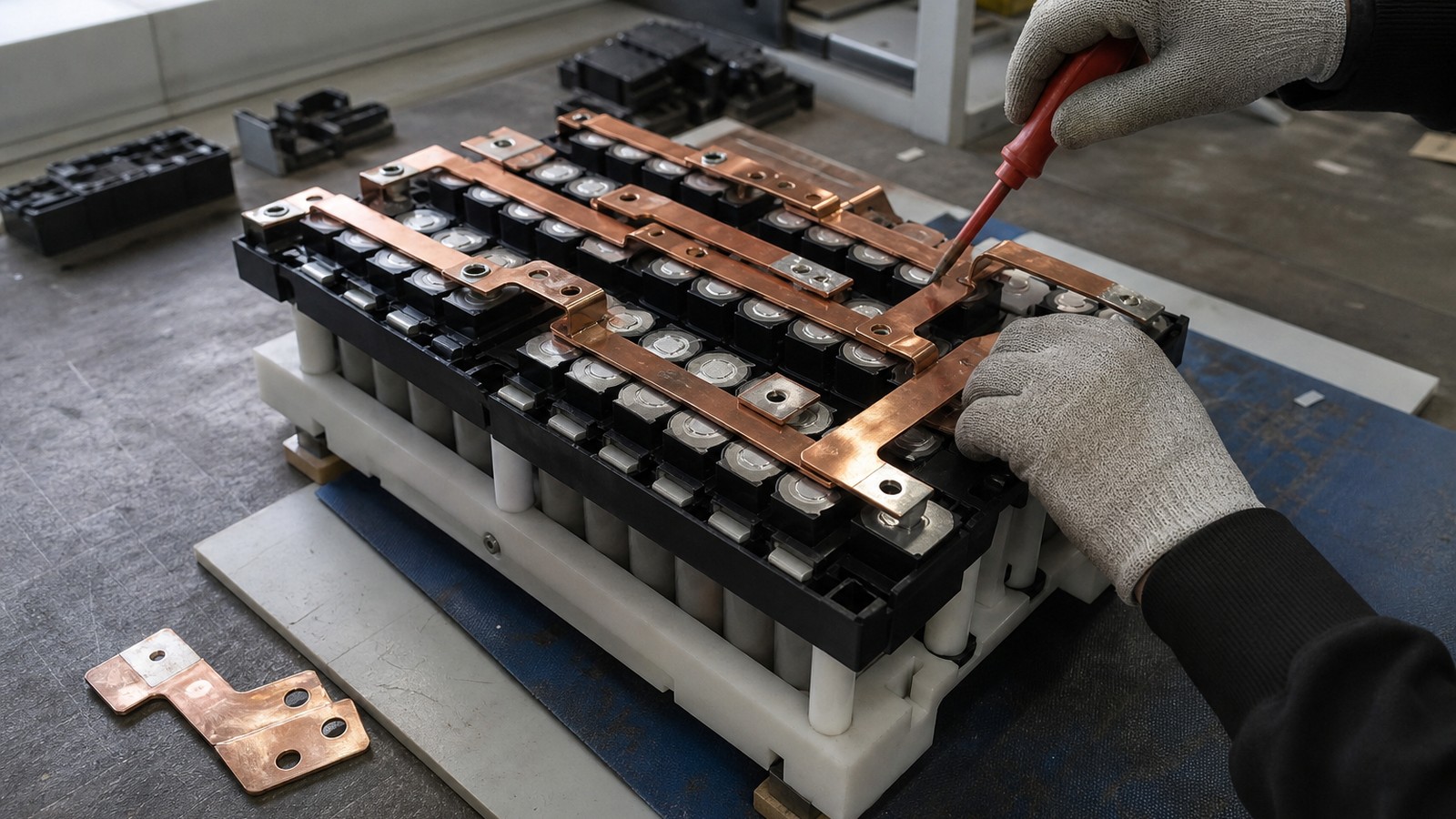
Custom busbar manufacturing
Engineering details are organized around material, tolerance, surface finish, inspection, and production readiness.
Use the inquiry module to send drawings, quantities, standards, and delivery targets for a practical manufacturing review.
Service Details
Engineering-first, drawing-based EV battery busbar manufacturing for OEMs building battery modules, packs, and high-current power systems. BusbarMFG produces custom copper and aluminum EV battery busbars and related interconnect components from customer drawings, progressing from prototypes to production as requirements are confirmed.
Based in Dongguan, Guangdong, China, we support engineering-led buyers across the United States, Canada, Europe, the United Kingdom, Australia, and selected Asia markets.
From Drawing to Production-Ready EV Battery Busbars
Our workflow starts with your drawing and application requirements. We review manufacturability and alignment with your electrical and mechanical targets, covering:
- Material selection: copper or aluminum
- Thickness and stack-up
- Plating: tin, nickel, or silver per specification
- Insulation: heat-shrink, coating, sleeving, or laminated structures
- Holes, slots, and interfaces
- Bends and forming
- Connection methods: bolted, torque-limited fasteners, or customer-specified welded joints
- Assembly and serviceability considerations
Projects commonly begin with prototypes or validation batches, then move to repeat production once specifications and quality requirements are confirmed.
What We Manufacture for EV Battery Systems
- Copper EV battery busbars
- Solid, flat, or formed parts
- Bare copper or plated (tin, nickel, silver as specified)
- Aluminum EV battery busbars
- Lightweight interconnects for mass and cost targets
- Flexible busbars for EV applications
- Copper foil or braided structures for vibration and assembly tolerance
- Insulated flexible links for compact pack layouts
- Insulated busbars for compact assemblies
- Heat-shrink, coated, sleeved, or laminated configurations
- Laminated busbars
- Multilayer, low-inductance distribution for pack controllers and power stages
- Custom battery interconnect components
- Module tabs, cell-to-collector links, pack-level distribution, and BDU connections
Note: CCS-integrated busbars, overmolded products, and certain specialized processes are reviewed against the actual project and confirmed capability before they are represented as available production services.
Applications We Support
- EV battery modules and packs (cylindrical, prismatic, and pouch cell platforms)
- Energy storage systems (ESS) and pack-level distribution
- Power electronics and inverters within battery platforms
- Battery disconnect units (BDU), contactor and fuse panels
- High-current charge/discharge paths and low-inductance interconnects
- Cable-to-busbar conversions and copper-to-aluminum transitions
How We Help Engineering Teams
- Design-for-manufacturing (DFM) review based on your drawings
- Guidance on material, plating, insulation, and thickness tradeoffs
- Considerations for:
- Current density and temperature rise
- Contact resistance and surface finish
- Inductance and loop area in switching environments
- Creepage, clearance, and insulation scheme
- Bend radii and formability
- Hole sizes, slots, and stack-up alignment
- Assembly variation, torque management, and vibration
- Prototype-to-production continuity with consistent fabrication and inspection criteria
Project-specific quality plans, inspection checkpoints, and documentation are defined during technical review.
Why EV Battery OEMs Choose BusbarMFG
- Engineering-led engagement: technical conversation first, quotes built on manufacturability
- Drawing confidentiality and disciplined review process
- Ability to support NPI, redesign, localization, and supplier replacement programs
- Prototype quality and dimensional consistency
- Plating and insulation quality aligned to application needs
- Transparent project communication from sample through repeat orders
BusbarMFG does not publish unverified certifications, equipment lists, tolerances, lead times, production capacity, or customer claims. Project-specific requirements and capability are confirmed during technical review.
Typical EV Battery Busbar Choices and Tradeoffs
- Copper vs. aluminum:
- Copper: higher conductivity, compact size, common with tin plating for bolted joints
- Aluminum: lower weight and cost, requires attention to joints, plating, and galvanic pairing
- Plating:
- Tin: widely specified for bolted connections, stable contact resistance
- Nickel: high-temperature environments and wear resistance
- Silver: specialized interfaces where specified by the customer
- Insulation:
- Heat-shrink or coated surfaces for compact packaging
- Sleeving for abrasion and routing protection
- Laminated structures for low-inductance power distribution
- Flexible elements:
- Foil stacks or braid to manage vibration, assembly tolerance, and thermal expansion
All selections are validated against your application environment and drawings during review.
Engineering RFQ Workflow
For an efficient technical review and quotation, please include:
- Drawings or models (2D/3D) with revision and units
- Material (copper or aluminum) and thickness
- Plating and/or insulation specification
- Quantity by phase (prototype, validation, pilot, production)
- Application context (EV battery module/pack, environment, constraints)
- Target date and any special requirements (packaging, labeling, documentation)
We assess manufacturability, clarify open points, and prepare an engineering quotation. Prototypes and validation builds precede repeat production.
Who We Serve
- Core: EV battery module and pack manufacturers, energy storage integrators, inverter and PCS OEMs, charging equipment, power supplies, and electrical distribution equipment
- Priority buyers: engineering-led organizations (approx. 50–2,000 employees) with active NPI, redesign, or supplier transitions
- Regions: US, Canada, Europe, UK, Australia (secondary: Japan, Korea, and internationally oriented Southeast Asia)
- Typical roles: Electrical/Mechanical/Battery Pack Engineer, Power Electronics Engineer, R&D/NPI Manager, Sourcing/Commodity/Procurement Manager
- Common triggers:
- New platform launch
- Supplier quality or delivery issues
- Copper-to-aluminum transitions for cost/weight
- Cable-to-busbar redesign
- Tight packaging and lower inductance requirements
- Prototype approaching pilot production
Request Pricing for EV Battery Busbar
Share drawings, material grade, tolerance, surface finish, quantity, and delivery schedule. BusbarMFG will review the requirement and respond with the next step.
Contact BusbarMFG
Get in touch with our engineering team for custom busbar manufacturing inquiries. We provide precision-engineered solutions for your power distribution needs.
Huali Industrial Park, Xianghe Road, Dalang Town, Dongguan City, Guangdong Province, China