
Flexible Aluminum Busbar
Engineering-first custom flexible aluminum busbars for EV battery systems, energy storage, power electronics, charging equipment, switchgear, and industrial power distribution.
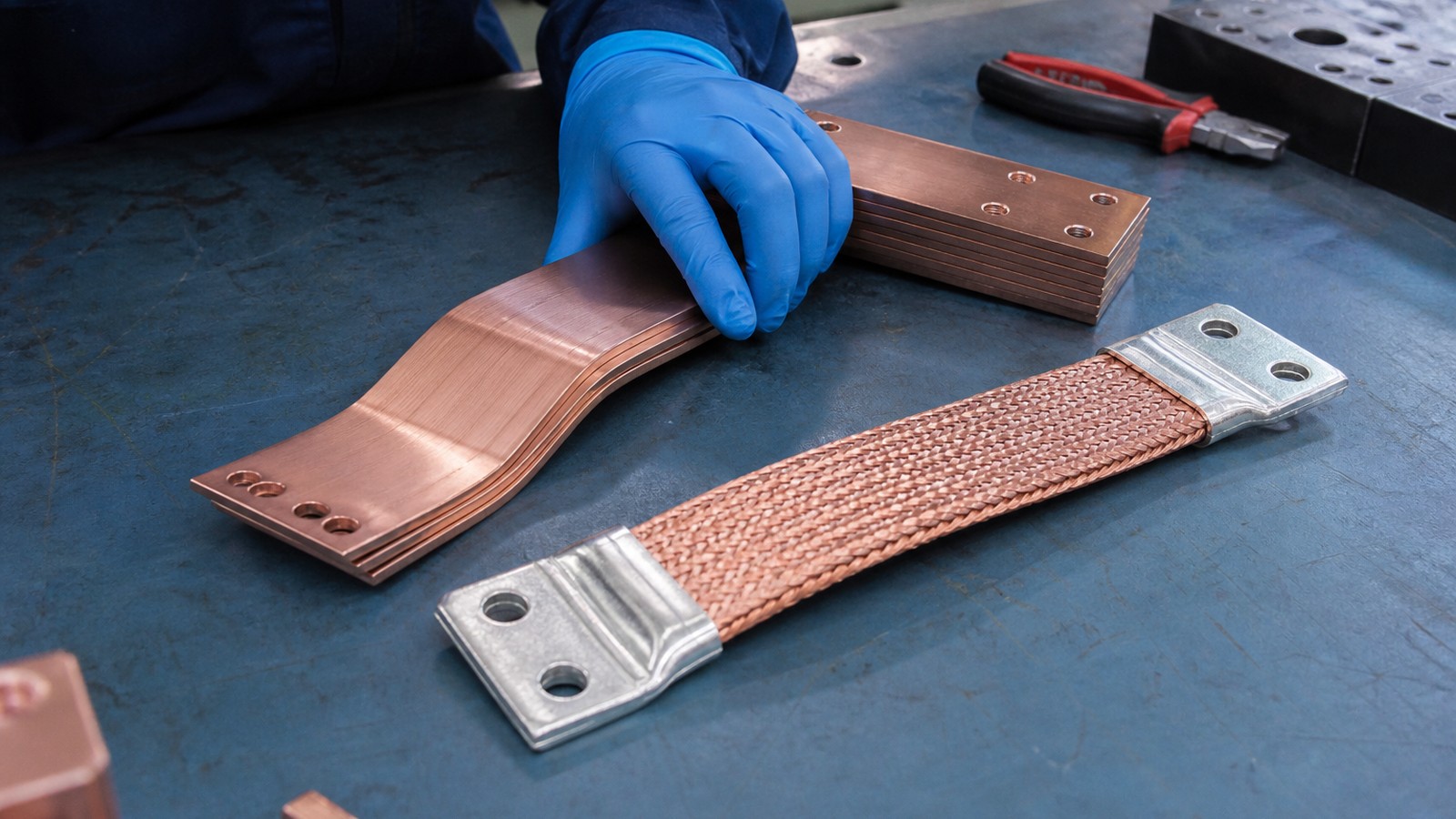
Custom busbar manufacturing
Engineering details are organized around material, tolerance, surface finish, inspection, and production readiness.
Use the inquiry module to send drawings, quantities, standards, and delivery targets for a practical manufacturing review.
Service Details
Engineering-first custom flexible aluminum busbars for EV battery systems, energy storage, power electronics, charging equipment, switchgear, and industrial power distribution.
BusbarMFG is a drawing-based busbar manufacturer in Dongguan, Guangdong, China. We partner with engineering-led OEM teams to design, validate, and produce flexible aluminum busbars and related high-current interconnect components. Projects typically start with a technical review of your drawing and application, followed by prototype or validation builds and, once confirmed, repeat production.
What Is a Flexible Aluminum Busbar?
Flexible aluminum busbars are high-current conductors engineered to accommodate vibration, thermal expansion, assembly variation, and tight packaging. Typical constructions include:
- Foil-based stacks: multiple thin aluminum foils terminated at each end for flexibility through the stack
- Formed or slotted aluminum bars: solid aluminum busbars with engineered flex sections (serpentine, slotted, or bellows-like features) to reduce stiffness in defined directions
- Hybrid assemblies: aluminum conductors with copper or bimetallic interface pads where dissimilar-metal connections or specific surface properties are required
Aluminum offers weight and cost advantages versus copper, making flexible aluminum busbars attractive where mass reduction and material savings are priorities. Engineering must address aluminum’s oxide layer, joining strategy, and surface interfaces to ensure long-term, low-resistance connections.
Who We Serve
- EV battery modules and packs
- Energy storage system integrators
- Inverters, PCS, UPS, and power supplies
- Charging equipment OEMs
- Switchgear and industrial power distribution
- Automation and electrical control cabinets
We focus on engineering-led buyers in the United States, Canada, Europe, the United Kingdom, Australia, and internationally oriented manufacturers in Asia.
When to Choose Flexible Aluminum
- Weight reduction or center-of-gravity improvement over copper
- Cost reduction programs (material savings and cable-to-busbar replacements)
- Vibration and assembly tolerance management with engineered compliance
- Low-inductance layouts with compact packaging
- Platform redesigns or localization where aluminum is standard
Tradeoffs include lower conductivity versus copper, surface oxide management, and joining considerations. Our engineering review will help you evaluate whether flexible aluminum is the right path for your application.
From Drawing to Production-Ready
Our workflow begins with your drawing or 3D model and application requirements. For an efficient RFQ and DFM review, please provide:
- Drawings or models (with revision and units)
- Target material and thickness (aluminum alloys or alternatives)
- Insulation, plating, or surface treatment requirements
- Hardware, hole sizes, slot features, and interfaces
- Quantity (prototype/validation through production) and target date
- Application context and any critical requirements (current, temperature rise, inductance, creepage/clearance)
We assess manufacturability and prepare an engineering quotation. Depending on project needs, we start with prototypes or validation batches and progress toward repeat production as requirements are confirmed.
Engineering Considerations for Flexible Aluminum Busbars
- Material selection:
- Typical aluminum choices are evaluated to meet conductivity, strength, and forming needs.
- Common directions include high-conductivity grades for busbars and formable grades for flex features.
- We can also review hybrid and bimetal options where copper interfaces are required.
- Construction methods:
- Foil stacks for multi-axis flexibility and vibration accommodation
- Solid busbars with features that localize compliance in the desired direction
- Modular assemblies combining aluminum main runs with copper pads or terminals (via validated transition methods)
- Interfaces and joining:
- Bolted connections with surface preparation and appropriate hardware
- Bimetallic transition pads to mitigate galvanic and contact resistance risks
- Welding or mechanical joining methods are assessed case by case for feasibility with aluminum and the mating materials
- Insulation and protection:
- Heat-shrink tubing, coatings, sleeves, or partial masking to meet creepage/clearance
- Edge conditioning and burr control to protect insulation integrity
- Labeling and color coding upon request (to be confirmed in review)
- Thermal and electrical performance:
- Target current and temperature rise analysis informed by geometry, airflow, and installation
- Low-inductance routing and layer stacking strategies in compact power electronics
- Mechanical design:
- Bend radii and slot/serpentine design to reduce stress concentration and fatigue
- Hole-to-edge distances, fastener selection, and assembly repeatability
- Vibration and lifecycle expectations matched with the construction method
- Corrosion and environment:
- Surface protection strategies for aluminum in humid or corrosive environments
- Appropriate interfaces for aluminum-to-copper or aluminum-to-steel connections
All specialized joining methods, CCS integrated busbars, overmolded products, welding, stamping, forming, and related processes are reviewed against the actual project and confirmed capability before they are represented as available production services.
Typical Applications
- Module-to-module and cell-to-bus interconnects in EV and ESS
- DC link and DC bus connections in inverters, PCS, and UPS
- Flexible links for chargers and rectifiers
- Switchgear and distribution panels with limited installation space
- Motor drives and industrial power where vibration and thermal expansion are present
Design Guidance Snapshot
These guidelines help frame early discussions and are verified during technical review based on your specific requirements:
- Flex strategy:
- Foil stacks: best for higher compliance and frequency of movement
- Slotted/serpentine solid bars: controlled flexibility with defined stiffness
- Bend and slot features:
- Larger radii reduce strain in solid aluminum; avoid sharp internal corners
- Slot patterns tuned for directional flexibility and heat dissipation
- Interfaces:
- Use bimetal pads or appropriate fasteners and washers to control contact resistance and galvanic risk when mating to copper
- Surface preparation and torque management are critical for long-term stability
- Insulation:
- Select shrink, sleeve, or coating systems that maintain clearances and withstand temperature, solvents, and abrasion
- Verification:
- Plan for prototype validation to confirm electrical, thermal, mechanical, and assembly performance before volume ramp
We confirm manufacturability, features, and tolerances during the technical review. BusbarMFG does not publish unverified tolerances or standard limits outside of project-specific agreements.
Prototyping to Repeat Production
- Prototype: evaluate fit, function, interface, and assembly
- Validation: confirm performance and refine manufacturability
- Production: repeatable quality and delivery aligned with your program plan
We prioritize drawing confidentiality, DFM responsiveness, prototype quality, dimensional consistency, insulation quality, and delivery transparency.
Request Pricing for Flexible Aluminum Busbar
Share drawings, material grade, tolerance, surface finish, quantity, and delivery schedule. BusbarMFG will review the requirement and respond with the next step.
Engineering RFQ
Upload Your Drawing
Share drawings or models, material, plating or insulation requirements, quantity, application, and target date. We will review the technical requirements before confirming manufacturing options.
Email: info@busbarmfg.com
Address: Huali Industrial Park, Xianghe Road, Dalang Town, Dongguan City, Guangdong Province, China