
Flexible Busbar
Engineering-first custom flexible busbars for EV battery packs, ESS, power electronics, charging equipment, switchgear, and industrial power distribution. BusbarMFG manufactures drawing-based copper flexible busbars and related high-current interconnect compon
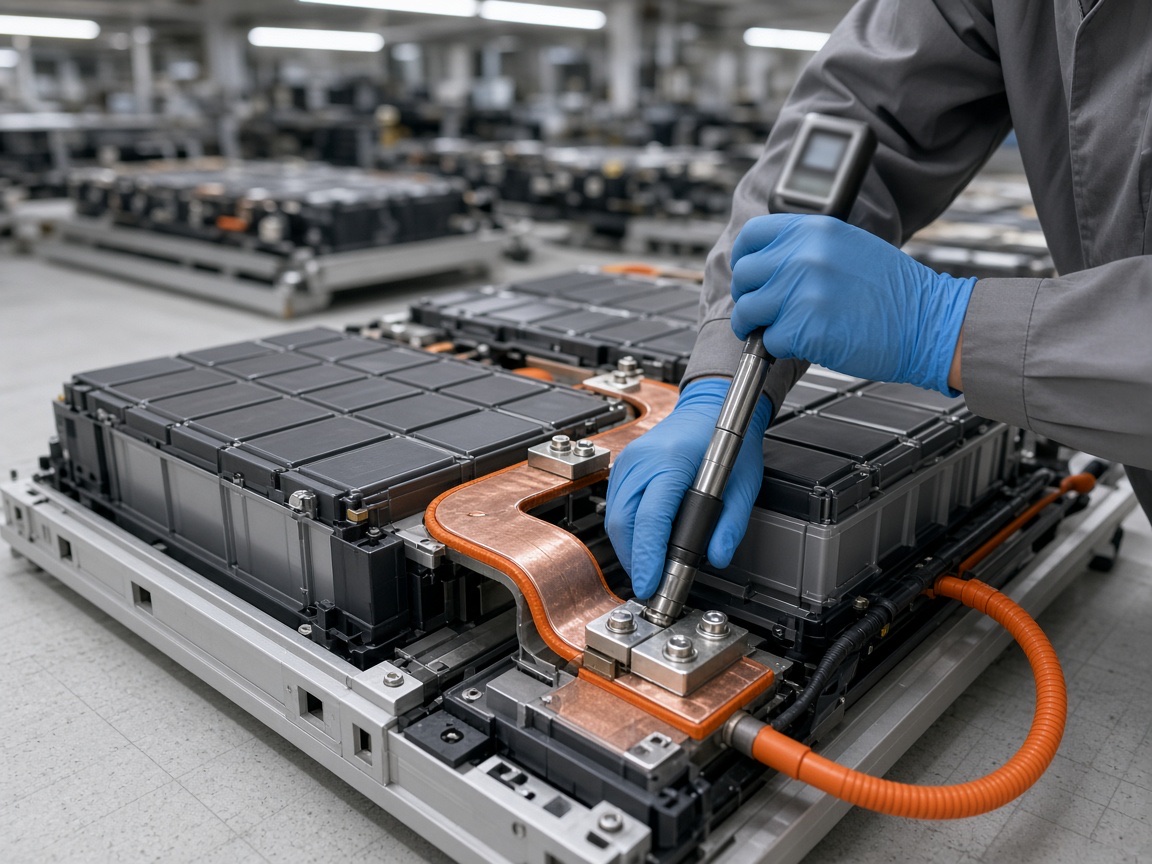
Custom busbar manufacturing
Engineering details are organized around material, tolerance, surface finish, inspection, and production readiness.
Use the inquiry module to send drawings, quantities, standards, and delivery targets for a practical manufacturing review.
Service Details
Engineering-first custom flexible busbars for EV battery packs, ESS, power electronics, charging equipment, switchgear, and industrial power distribution. BusbarMFG manufactures drawing-based copper flexible busbars and related high-current interconnect components from prototype through repeat production.
Located in Dongguan, Guangdong, China, BusbarMFG focuses on engineering-led B2B buyers who prioritize manufacturability, quality, and delivery transparency.
- From drawing to production-ready parts
- Copper foil shunts, braided flexible busbars, and insulated flexible structures
- Tin, nickel, or silver plating on interfaces where specified
- Prototype, validation, and repeat production support
---
What Is a Flexible Busbar?
Flexible busbars are multi-layer copper foil stacks or braided copper conductors designed to accommodate vibration, assembly variation, and thermal expansion while carrying high current with lower resistance than cable. They are commonly used as:
- Expansion joints between rigid conductors
- Battery module-to-module or module-to-pack interconnects
- DC link connections in inverters, PCS, and UPS
- High-current connections in chargers, switchgear, and industrial power systems
Compared with rigid busbars, flexible busbars add mechanical compliance. Compared with cable, they can improve dimensional repeatability, lower inductance, and reduce assembly variation in compact packaging.
---
Applications We Support
- EV battery modules and packs: cell-to-cell and module-to-module interconnects, pack service loops
- Energy storage systems (ESS): rack expansion links, module jumpers, DC bus connections
- Power electronics: inverter and converter DC links, rectifiers, power supplies, drives
- Charging equipment: high-current DC connections and compliance loops
- Switchgear and distribution: vibration/thermal expansion joints, transformer connections
- Industrial power and automation: MCCs, UPS, and high-current distribution panels
---
Flexible Busbar Configurations
BusbarMFG manufactures flexible busbars to customer drawings. Typical configurations include:
- Copper foil flexible shunts
- Stacked copper foil laminations with fused, welded, or pressed ends for rigid terminations
- Optional plating at terminations: tin, nickel, or silver per specification
- Optional insulation on flexible sections or selective areas
- Braided flexible busbars
- Tinned or bare copper braid with crimped or welded lugs or pressed ends
- Suitable where multi-axis flexibility and vibration damping are priorities
- Optional sleeves, heat-shrink, or coatings for insulation
- Insulated flexible busbars
- Heat-shrink, coated, or sleeved flexible sections for compact, protected assemblies
- Selective insulation for creepage/clearance management and assembly handling
- Hybrid rigid–flex assemblies
- Rigid copper busbar sections with integrated flexible shunts to combine alignment and compliance
- Useful in tight packaging where both positional accuracy and flexibility are required
Aluminum is available for rigid busbar projects evaluating weight and cost tradeoffs; flexible constructions are typically copper-based and reviewed case-by-case.
---
Engineering Options and Considerations
- Materials and plating
- Copper: ETP (C110) or oxygen-free (C102) per specification
- Interface finishes: tin, nickel, or silver plating; selective plating available
- Recommend plating interfaces for corrosion performance and torque repeatability
- Layering and geometry
- Foil thickness and layer count tailored to current and thermal requirements
- Termination geometry: flat pads, offsets, formed ends, or integrated hardware interfaces
- Slots, holes, and studs per drawing; countersinks/counterbores as required
- Insulation and protection
- Heat-shrink, coatings, sleeves, or laminated insulation per application needs
- Creepage and clearance controlled by geometry and insulation scheme
- Mechanical and thermal
- Flexible section length, width, and stack designed for target movement, vibration, and temperature rise
- Design to avoid twisting of foil stacks; align movement axis with expected displacement
- Assembly and interfaces
- Define contact surface area, torque requirements, and hardware stack-ups
- Provide surface finish/plating requirements on contact pads
- Note any selective plating and masking requirements
All specialized or integrated processes (e.g., CCS integrated busbars, overmolded products, complex welding sequences, stamping/forming beyond standard operations) are reviewed against the actual project and confirmed before they are represented as available services.
---
Design-for-Manufacturing (DFM) Guidance
- Keep holes and edges in flexible terminations at safe distances to maintain strength
- Avoid plating on the flexible zone unless required; plate only the interface pads when possible
- Specify minimum bend radii for any formed rigid ends; do not form the flexible stack
- Provide insulation callouts with creepage/clearance requirements and selective coverage, if needed
- Define allowable movement and vibration directions; note any constraints or fixtures
- Include duty-cycle current, ambient conditions, and temperature-rise targets for right-sizing
BusbarMFG reviews drawings for manufacturability, interfaces, insulation, and finishes, then proposes adjustments if needed to meet electrical, thermal, and assembly goals.
---
From Drawing to Production-Ready Flexible Busbars
1. RFQ and technical data
- Provide drawings or models, material and plating, insulation, quantity, application, and target date
- Include current, duty cycle, ambient conditions, and allowed temperature rise if available
2. Engineering review and quotation
- We assess manufacturability, clarify interfaces, and propose options
- An engineering quotation is prepared based on the agreed scope
3. Prototypes and validation
- Projects typically begin with prototypes or validation batches
- Dimensional, plating, and insulation checks per the agreed requirements
4. Repeat production
- As requirements are confirmed, programs progress toward repeat production
- Any changes are incorporated through controlled drawing updates
BusbarMFG does not publish unverified certifications, equipment lists, tolerances, lead times, production capacity, or customer claims. Project-specific requirements are confirmed during technical review.
---
What to Include in Your Flexible Busbar RFQ
- Drawings or 3D models with:
- Flexible length/width, termination pad sizes, hole sizes and locations, slots, offsets
- Insulation zones, creepage and clearance targets
- Selective plating or masking, if required
- Electrical and thermal:
- Nominal and peak current, duty cycle, allowable temperature rise, ambient conditions
- Materials and finishes:
- Copper grade, plating (tin/nickel/silver), surface finish requirements
- Assembly details:
- Mating hardware, torque specifications, surface pressure targets
- Quantities and timing:
- Prototypes, validation lots, and anticipated ramp volumes with target dates
- Application notes:
- Vibration, movement constraints, environmental considerations, compliance needs
If you do not yet have complete data, share what is available—our engineering team can discuss options and DFM considerations under your confidentiality expectations.
---
Why BusbarMFG for Flexible Busbars
- Engineering-first approach tailored to EV, ESS, and power electronics OEMs
- Drawing-based manufacturing with DFM feedback
- Prototype-to-production support aligned with NPI and validation workflows
- Focus on dimensional consistency, plating and insulation quality, and delivery transparency
- Respect for drawing confidentiality and buyer decision processes
---
Request Pricing for Flexible Busbar
Share drawings, material grade, tolerance, surface finish, quantity, and delivery schedule. BusbarMFG will review the requirement and respond with the next step.
Contact BusbarMFG
Get in touch with our engineering team for custom busbar manufacturing inquiries. We provide precision-engineered solutions for your power distribution needs.
Huali Industrial Park, Xianghe Road, Dalang Town, Dongguan City, Guangdong Province, China