
Flexible Copper Busbar
Engineering-first custom flexible copper busbars for EV batteries, energy storage, power electronics, charging equipment, switchgear, and industrial power distribution.
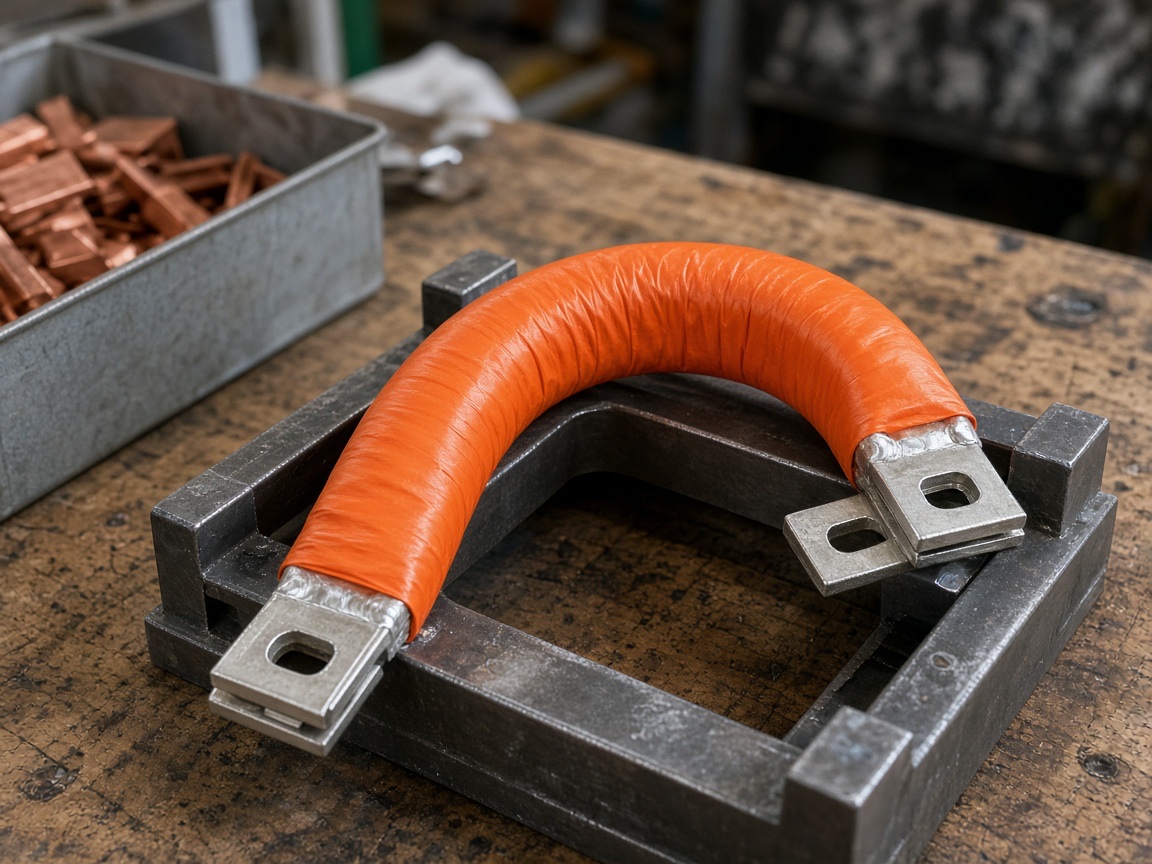
Custom busbar manufacturing
Engineering details are organized around material, tolerance, surface finish, inspection, and production readiness.
Use the inquiry module to send drawings, quantities, standards, and delivery targets for a practical manufacturing review.
Service Details
Engineering-first custom flexible copper busbars for EV batteries, energy storage, power electronics, charging equipment, switchgear, and industrial power distribution.
BusbarMFG manufactures drawing-based flexible copper busbars that accommodate vibration, assembly variation, and thermal expansion while delivering repeatable low-inductance, high-current connections. Projects can begin with prototypes or validation batches and progress toward repeat production as requirements are confirmed during technical review.
What Is a Flexible Copper Busbar?
A flexible copper busbar is a high-current conductor designed to allow controlled flexibility in the joint. Common constructions include:
- Copper foil flexible busbars: stacked thin copper foils edge-welded or press-welded at the ends to form solid, drillable terminations while retaining flexibility through the body.
- Braided copper straps: woven or braided strands with compressed, soldered, or welded terminations for high flex-life and vibration accommodation.
- Insulated flexible busbars: flexible conductors covered by heat shrink, sleeves, coatings, or other insulation to support compact, safe assembly.
Flexible busbars are used where cables lack dimensional repeatability or where lower inductance, lower profile, or improved thermal performance is required.
Where Flexible Copper Busbars Fit
- EV battery modules and packs: cell-to-cell, module-to-module, and pack interconnects
- Energy storage systems and PCS/UPS: low-inductance DC links and stack connections
- Inverters, rectifiers, and power supplies: flexible DC bus links and AC phases
- Charging equipment and DC fast charging: compact, repeatable high-current connections
- Switchgear and industrial power: vibration-tolerant, space-efficient bus connections
Why Choose Flexible Copper Busbars
- Lower inductance compared to cables (especially with foil stacks)
- Consistent geometry for repeatable assembly and torque
- Reduced joint heating from highly conductive, broad contact surfaces
- Improved tolerance to vibration and thermal expansion
- Simplified routing and reduced space claim vs. equivalent cable assemblies
- Straightforward insulation strategies for compact layouts
Engineering-First, Drawing-Based Manufacturing
BusbarMFG works from your drawings and application requirements. We review manufacturability and confirm project-specific capability before production. Flexible copper busbar projects commonly include:
- Materials: electrolytic tough pitch (ETP) copper or oxygen-free high-conductivity (OFHC) copper as specified
- Plating at terminations: tin for bolted joints and corrosion resistance; nickel for higher-temperature environments; silver for elevated conductivity and contact performance (when specified)
- Insulation: heat shrink, sleeves, or coatings per drawing; insulation selection considers creepage/clearance, bend zones, and assembly method
- Terminations:
- Foil flexible busbar ends: welded/pressed solid ends for holes, studs, or threaded inserts
- Braided straps: compressed, solder-tinned, or welded ends for bolted joints
- Holes and interfaces: round or slotted holes, press-fit hardware, and designed interfaces aligned with customer drawings
- Form and flexibility: designed bend regions and reliefs to accommodate assembly tolerances and vibration
- Packaging and part identification: project-defined labels, kits, and packaging
CCS integrated busbars, overmolded products, welding processes, stamping, forming, and other specialized methods must be reviewed against the actual project and confirmed capability before they are represented as available production services.
Flexible Copper Busbar Design Options
- Copper foil flexible busbar
- Foil count and thickness chosen to meet current, thermal rise, flexibility, and stiffness targets
- Edge-welded or press-welded ends forming rigid, drillable terminals
- Often preferred for low-inductance DC links and tight packaging
- Braided copper strap
- Fine-strand weave for high flex-life and vibration environments
- Compressed/tinned ends for bolted interfaces
- Useful for equipment subject to frequent thermal cycles or motion
- Insulated flexible configurations
- Heat-shrink tubing, sleeves, or coatings
- Masking of end contact surfaces and bend zones addressed during design
- Plating and contact strategy
- Tin for galvanic and corrosion management in bolted joints
- Nickel where temperature exposure is elevated
- Silver for contact-critical applications when specified
Final dimensions, plating/insulation selections, and interface details are confirmed during technical review of each project.
DFM Checkpoints for Flexible Copper Busbars
- Electrical and thermal
- Continuous and peak current requirements, duty cycle, and target temperature rise
- Ambient conditions and cooling path (convection, conduction, forced air)
- Inductance sensitivity and loop geometry
- Mechanics and interfaces
- Mounting hole size, pattern, and allowable tolerances
- Bend zones, minimum bend radii, and installation clearances
- Stack-up variation, slotted holes, and compliance to torque specs
- Materials and finishes
- Copper grade selection vs. environment and joining method
- Plating compatibility with mating hardware and environment
- Insulation thickness, creepage and clearance distances, and routing constraints
- Assembly and service
- Fastener grade, torque, and washer strategy
- Accessibility for installation, rework, and field service
- Identification, packaging, and handling to protect flexible sections and finishes
Quality Considerations
- Dimensional consistency of terminals and hole locations
- Welded or compressed ends with stable contact resistance
- Plating adhesion and coverage in non-contact regions
- Insulation integrity at edges, holes, and bend transitions
- Traceability and controlled handling to prevent surface damage
Project acceptance criteria are established during engineering review.
From Drawing to Production-Ready Flexible Busbars
- Submit RFQ with drawing or model, material/plating/insulation requirements, quantity, application, and target date.
- Engineering review for manufacturability, interfaces, and risks; DFM notes provided when applicable.
- Prototype or validation batch manufactured to confirm requirements.
- Transition to repeat production upon approval and confirmation of specifications.
BusbarMFG does not publish unverified certifications, equipment lists, tolerances, lead times, production capacity, or customer claims. Project-specific requirements are confirmed during technical review.
Request Pricing for Flexible Copper Busbar
Share drawings, material grade, tolerance, surface finish, quantity, and delivery schedule. BusbarMFG will review the requirement and respond with the next step.
Contact BusbarMFG
Get in touch with our engineering team for custom busbar manufacturing inquiries. We provide precision-engineered solutions for your power distribution needs.
Huali Industrial Park, Xianghe Road, Dalang Town, Dongguan City, Guangdong Province, China