
Heat Shrink Busbar
Engineering‑first, drawing‑based insulated busbars for EV battery systems, energy storage, power electronics, charging equipment, switchgear, and industrial power distribution.
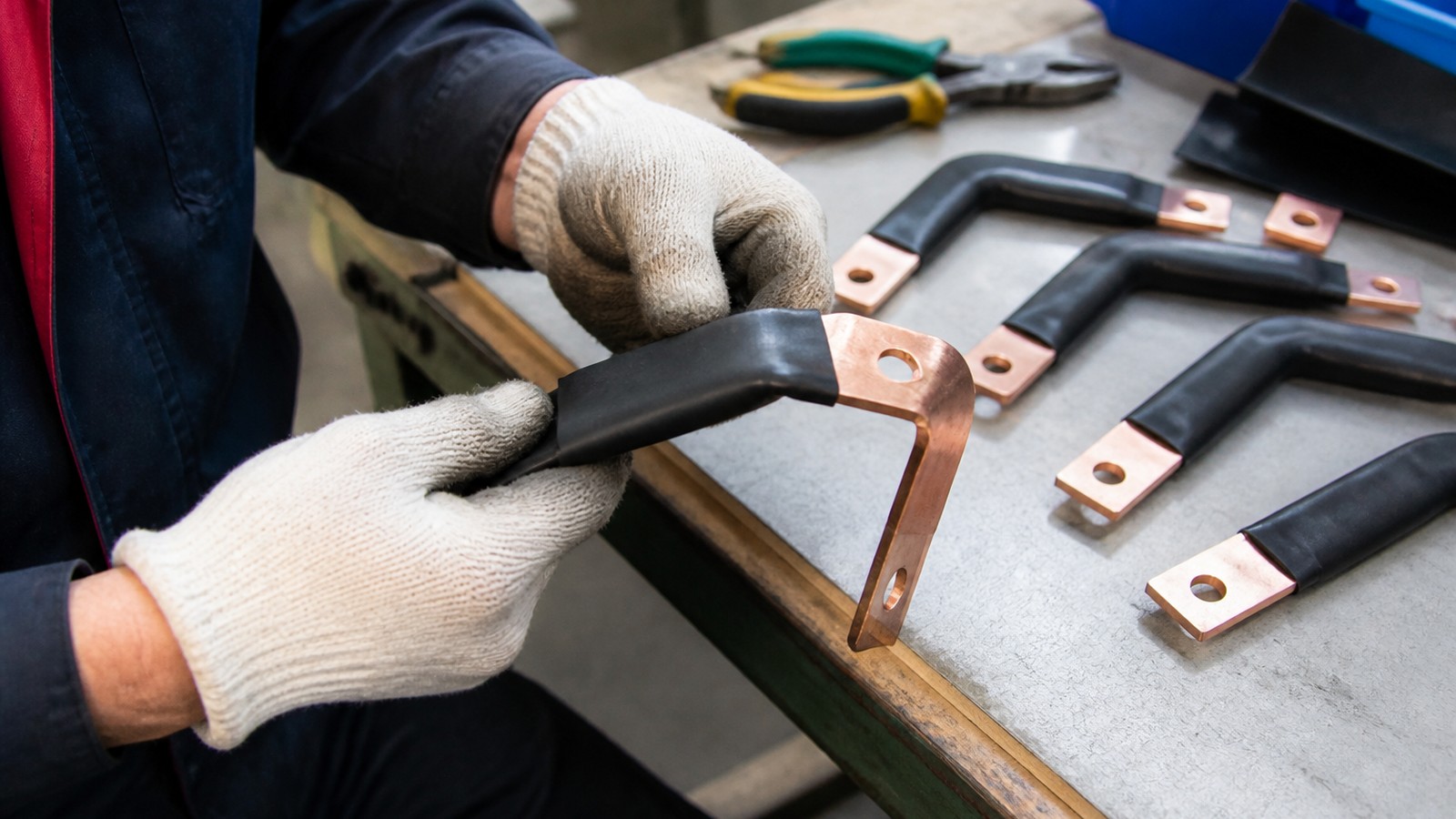
Custom busbar manufacturing
Engineering details are organized around material, tolerance, surface finish, inspection, and production readiness.
Use the inquiry module to send drawings, quantities, standards, and delivery targets for a practical manufacturing review.
Service Details
Engineering‑first, drawing‑based insulated busbars for EV battery systems, energy storage, power electronics, charging equipment, switchgear, and industrial power distribution.
BusbarMFG manufactures custom copper and aluminum busbars wrapped with application‑specific heat‑shrink insulation. We start from your drawing and technical requirements, review manufacturability with your engineering team, and support you from prototypes and validation batches through repeat production as requirements are confirmed.
What is a Heat Shrink Busbar?
A heat shrink busbar is a copper or aluminum conductor that is insulated with heat‑shrink tubing or sleeves after fabrication and surface finishing. Heat‑shrink insulation is commonly selected for:
- Compact assemblies requiring clearances and creepage control
- Color coding and polarity identification
- Field‑serviceable or rework‑friendly insulation compared to permanent coatings
- Programs balancing cost, protection, and build flexibility
Heat‑shrink insulated busbars are used in EV modules and packs, ESS racks, inverters, chargers, rectifiers, UPS, drives, and switchgear where robust, repeatable high‑current connections are needed.
From Drawing to Production‑Ready Busbars
- Engineering review: material selection (Cu/Al), thickness and cross‑section, plating, insulation, bends, holes/slots, interfaces, and connection methods
- Prototype and validation: quick technical feedback, pilot lots for fit/thermal verification, and design refinements
- Repeat production: documentation, revision control, packaging, and delivery aligned with your build plan
Project‑specific capabilities and requirements are confirmed during technical review.
What We Manufacture
- Copper heat‑shrink busbars: solid, flat, or formed; bare copper or plated (tin, nickel, silver per spec)
- Aluminum heat‑shrink busbars: weight‑ and cost‑optimized alternatives for suitable applications
- Flexible and semi‑flex busbars with shrink insulation: copper foil stacks or braided/flexible elements where vibration or assembly tolerance is a concern
- Battery busbar interconnects: cell, module, and pack links with insulation windows or cutbacks as specified
- Insulated assemblies: heat‑shrink, coated, sleeved, or combined insulation approaches for compact layouts
Note: CCS‑integrated busbars, overmolded products, welding, stamping, forming, and other specialized processes are reviewed against the actual project and must be confirmed as available production services.
Heat‑Shrink Insulation Options
We apply heat‑shrink based on your specification or help you select suitable options during review:
- Shrink type: general‑purpose, flame‑retardant, abrasion‑resistant, high‑temperature, halogen‑free
- Adhesive‑lined (dual‑wall) vs. non‑adhesive sleeves
- Common shrink ratios: e.g., 2:1, 3:1; selected to match bar geometry and insulation thickness targets
- Colors and coding: black, red, blue, yellow/green, orange for high‑voltage, and other project‑specified colors
- Cutbacks and windows: insulation relief around hole patterns, contact pads, and measurement points
- Labeling and marking: print, sleeves with text, or tag solutions for position and revision control
Insulation thickness, dielectric requirements, and test criteria are validated during technical review.
Design and DFM Guidance for Heat‑Shrink Busbars
We support engineering‑led buyers with manufacturability input while keeping your intent intact.
- Geometry and clearances
- Provide 2D drawings and/or 3D models with bend states
- Define creepage/clearance targets at operating voltage; call out insulation cutbacks at interfaces
- Align slot and hole locations with joint hardware and assembly tools
- Edges and surfaces
- Specify deburr and edge breaks/radii to reduce insulation cut‑through
- Define plating and surface finish at contact areas vs. insulated spans
- Holes, slots, and pads
- Mark press‑fit, threaded, or hardware‑through interfaces
- Indicate torque, washer stackups, and required pad size for current density and temperature rise
- Bends and formed features
- Call out bend radii, angle tolerances, and sequence (pre‑plate or post‑plate, pre‑shrink)
- Provide keep‑out around bends to accommodate shrink coverage
- Thermal and current
- Specify continuous and transient current targets and ambient/ducting context
- Consider cross‑section and plating for temperature rise and joint resistance
- Insulation specifics
- Shrink type, color, shrink ratio, target wall after recovery, and adhesive/no‑adhesive
- Requested dielectric withstand or insulation integrity checks
- Identification and packaging
- Part and revision marking, kit/position IDs, ESD and protective packaging, and tray or cell packing for line‑side flow
We can collaborate early on tradeoffs such as copper vs. aluminum, plating stackups, insulation approaches (heat‑shrink vs. coated), and assembly interfaces to minimize risk and total installed cost.
Materials, Plating, and Finishes
- Conductor materials
- Copper: common grades for power distribution per drawing
- Aluminum: lightweight alternatives evaluated for conductivity, joints, and corrosion management
- Surface finishes
- Tin, nickel, or silver plating as specified
- Bare copper or aluminum where appropriate
- Insulation
- Heat‑shrink sleeves per program requirements
- Alternative insulated busbars (coated, sleeved, laminated) can be reviewed when relevant
All selections are confirmed during technical review of your drawing and application.
Typical Applications
- EV battery modules and packs: inter‑module links, sense and service windows, color‑coded HV bars
- Energy storage systems: rack and tray distribution, string interconnects, DC bus links
- Power electronics: inverter DC link, rectifier/charger buswork, UPS DC rails, drives and soft starters
- Switchgear and distribution: compact insulated feeders and cross‑connects inside enclosures
Quality and Verification
We tailor inspection and verification to your program:
- Dimensional checks against drawing and bend models
- Visual inspection of plating and insulation coverage
- Insulation integrity verification (e.g., dielectric withstand) as specified
- Traceability, labeling, and packaging controls for line‑side assembly
Specific criteria, sampling plans, and test methods are set during technical review.
Request Pricing for Heat Shrink Busbar
Share drawings, material grade, tolerance, surface finish, quantity, and delivery schedule. BusbarMFG will review the requirement and respond with the next step.
Contact BusbarMFG
Get in touch with our engineering team for custom busbar manufacturing inquiries. We provide precision-engineered solutions for your power distribution needs.
Huali Industrial Park, Xianghe Road, Dalang Town, Dongguan City, Guangdong Province, China