
Insulated Busbar
Engineering-first custom insulated busbars for EV battery systems, energy storage, power electronics, charging equipment, switchgear, and industrial power distribution.
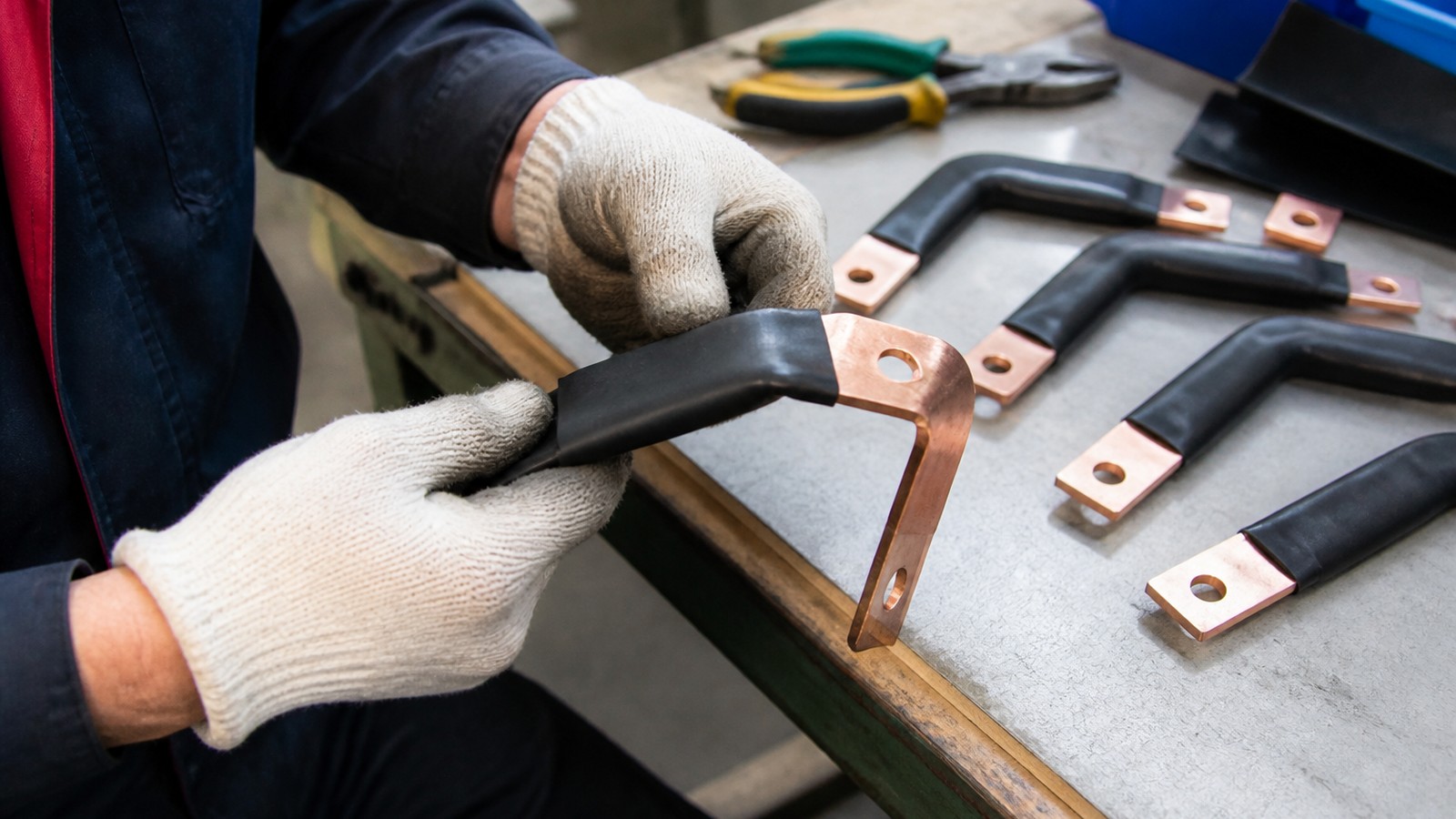
Custom busbar manufacturing
Engineering details are organized around material, tolerance, surface finish, inspection, and production readiness.
Use the inquiry module to send drawings, quantities, standards, and delivery targets for a practical manufacturing review.
Service Details
Engineering-first custom insulated busbars for EV battery systems, energy storage, power electronics, charging equipment, switchgear, and industrial power distribution.
BusbarMFG manufactures drawing-based insulated busbars in copper and aluminum. We start with your drawing and application requirements, perform an engineering review, and support you from prototype through repeat production once requirements are confirmed.
What We Deliver
- Drawing-based insulated copper and aluminum busbars
- Target applications: EV and ESS battery interconnects, inverter/PCS DC links, rectifier and UPS DC buses, charging equipment, switchgear, and industrial power distribution
- Prototype, validation, and production support after technical confirmation
- DFM feedback on insulation, creepage/clearance, bends, holes, interfaces, plating, and assembly methods
Note: CCS-integrated busbars, overmolded products, welding, stamping, forming, and other specialized processes are reviewed against the actual project and must be confirmed as available before they are represented as production services.
Insulated Busbar Options
We build insulated busbars to your specification and application needs. Typical configurations include:
- Heat-shrink insulated busbars
- Polyolefin or PVC heat-shrink sleeves and wraps
- Color coding per phase or function
- Adhesive-lined options and multi-layer wraps for enhanced dielectric and environmental protection
- Masked contact pads, threaded areas, and bolt interfaces
- Coated insulated busbars
- Dip coating or sprayed coatings to specified thickness
- Epoxy and other coatings subject to application review
- Masking plans for exposed conductive areas and grounding points
- Sleeved insulated busbars
- PVC, PA, or fabric-reinforced sleeves for straight or mildly bent sections
- Glass-fiber/silicone sleeves for temperature and abrasion considerations
- Film-wrapped and laminated busbars
- PET (polyester), polyimide, Nomex, and other dielectrics
- Single-layer film wraps or multilayer laminated busbar structures where low inductance and compact packaging are required
- Window and slot features for fasteners and terminals with defined creepage/clearance
- Partial or selective insulation
- Localized insulation for proximity to conductive structures
- Exposed pads for bolted joints, welds, or compression terminations
Overmolded or potted insulation options can be reviewed on a project-specific basis and must be confirmed for availability.
Applications
- EV/ESS battery busbars: cell, module, and pack interconnects; HV distribution; service disconnects; contactor and fuse interfaces
- Power electronics: inverter/PCS DC link busbars, rectifier/UPS buses, power supply distribution, low-inductance laminated busbars
- Charging equipment and switchgear: feeders, inter-panel jumpers, transformer and breaker connections, compact insulated assemblies in cabinets and racks
- Industrial power and automation: drives, control cabinets, high-current distribution in limited space with vibration and temperature-rise constraints
Design and DFM Considerations
To accelerate review and improve manufacturability, include insulation details in your drawing or specification. Our engineering review can cover:
- Electrical and insulation
- Dielectric system selection (heat-shrink, coating, sleeve, film/laminate)
- Creepage and clearance distances for the operating voltage and pollution degree
- Insulation thickness targets, color, and surface finish
- Hi-pot and insulation resistance requirements, partial discharge considerations
- Masking for contact pads, grounding points, and measurement ports
- Mechanics and geometry
- Bend radii and sequence to prevent insulation damage
- Edge deburring and corner radiusing to avoid cut-through
- Hole sizes, slot geometry, and fastener interfaces with insulation reliefs
- Assembly access for torqueing, inspection windows, labels, and markings
- Materials and interfaces
- Base metals: copper and aluminum busbars per drawing
- Plating options: tin, nickel, silver per specified interface and environment
- Contact pad requirements: exposed or plated, with defined surface preparation
- Joint methods and compatible insulation windows for bolts, press fits, or welds
- Thermal and environment
- Temperature rise under load and thermal path through insulation
- Vibration and shock: selection of flexible sections or compliant insulation
- Moisture, chemicals, and salt-mist considerations for insulation type
Materials and Finishes
- Copper busbars: solid, flat, or formed parts; bare or plated per specification (tin, nickel, silver)
- Aluminum busbars: for weight and cost tradeoffs; plating and joint strategy reviewed per application
- Insulation systems: heat-shrink, coatings, sleeves, films, and laminated structures defined by drawing and standards
- Masking and exposed interfaces: designed into the drawing for repeatable production
Prototyping and Production
Projects typically begin with prototypes or validation batches. As requirements are confirmed, we align on repeat production. Dimensional consistency, plating and insulation quality, and clear communication of design intent are emphasized during review.
BusbarMFG does not publish unverified certifications, equipment lists, tolerances, lead times, production capacity, or customer claims. Project-specific requirements are confirmed during technical review.
Validation and Testing (Project-Specific)
We can review test requirements and align methods with your standards. Common requests include:
- Dielectric withstand (hi-pot) and insulation resistance testing
- Visual and dimensional inspection, coverage verification, and insulation thickness checks
- Adhesion and edge cut-through risk assessments
- Thermal cycling, vibration, and environmental exposure tests relevant to the application
Testing scope and documentation are confirmed during RFQ and prototype planning.
RFQ: What to Send for Engineering Review
For an efficient technical review and quotation, please share:
- Drawings or models (PDF and STEP/IGES where available)
- Base material and thickness
- Plating requirements (if any)
- Insulation type, color, thickness, dielectric rating, and any masking callouts
- Quantity and build plan (prototype, validation, production estimates)
- Application context (voltage/current, environment, standards)
- Target date or program timeline
BusbarMFG uses this information to assess manufacturability and prepare an engineering quotation.
Request Pricing for Insulated Busbar
Share drawings, material grade, tolerance, surface finish, quantity, and delivery schedule. BusbarMFG will review the requirement and respond with the next step.
Contact BusbarMFG
Get in touch with our engineering team for custom busbar manufacturing inquiries. We provide precision-engineered solutions for your power distribution needs.
Huali Industrial Park, Xianghe Road, Dalang Town, Dongguan City, Guangdong Province, China