
Laminated Busbar
Engineering-first laminated busbars for EV battery systems, energy storage, power electronics, charging equipment, switchgear, and industrial power distribution.
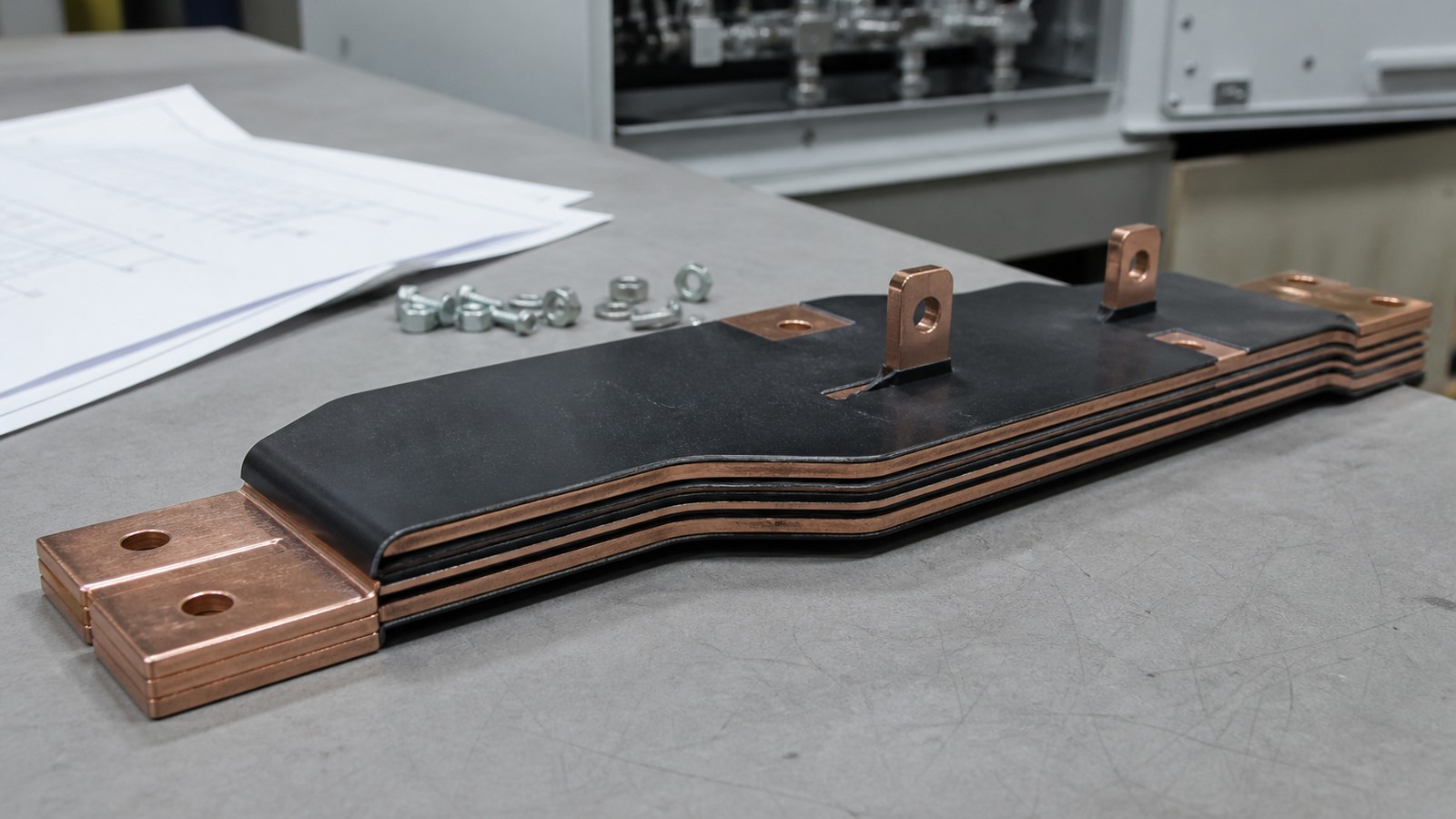
Custom busbar manufacturing
Engineering details are organized around material, tolerance, surface finish, inspection, and production readiness.
Use the inquiry module to send drawings, quantities, standards, and delivery targets for a practical manufacturing review.
Service Details
Engineering-first laminated busbars for EV battery systems, energy storage, power electronics, charging equipment, switchgear, and industrial power distribution.
BusbarMFG is a drawing-based busbar manufacturer in Dongguan, Guangdong, China. We turn your laminated busbar design into production-ready components through an engineering-led review, rapid prototyping, and controlled repeat production. We work with electrical and mechanical engineering teams at OEMs to meet current, thermal, insulation, inductance, and assembly requirements.
From Drawing to Production-Ready Laminated Busbars
- Engineering review first: We evaluate your drawing/model and application requirements, including stack-up, copper or aluminum selection, thickness, insulation film, plating, holes, bends (if applicable), interfaces, and connection methods.
- Prototype to production: Projects typically begin with prototypes or validation batches and progress toward repeat production as requirements are confirmed.
- Confidentiality: We handle customer drawings and data with care and review under NDA when required.
Project-specific requirements are confirmed during technical review. BusbarMFG does not publish unverified certifications, equipment lists, tolerances, lead times, production capacity, or customer claims.
What Is a Laminated Busbar?
A laminated busbar is a multilayer conductor structure insulated with bonded dielectric films. Compared with cables or single-layer busbars, laminated busbars offer:
- Lower inductance and improved switching performance for inverters, DC links, and power converters.
- Compact, repeatable assembly and routing in tight spaces.
- Controlled creepage/clearance and integrated insulation for higher working voltages.
- Defined thermal paths and predictable temperature rise.
What We Manufacture
- Custom laminated busbars: Multilayer copper or project-reviewed aluminum constructions with specified insulation films and bonding.
- Battery and DC link busbars: Pack interconnects, module links, and inverter DC link busbars designed for low inductance and repeatable assembly.
- Insulated busbar assemblies: Partial lamination windows for bolted joints, plated terminals, and integration with brackets or hardware as defined in your drawing.
- Related high-current interconnects: Solid copper busbars, flexible busbars (foils or braided), and insulated busbars for hybrid assemblies.
CCS-integrated busbars, overmolded products, welding, stamping, forming, and other specialized processes must be reviewed against the actual project and confirmed capability before they are represented as available production services.
Engineering-Led Capabilities (Confirmed Per Project)
- Conductor materials: Electrical-grade copper; aluminum options when weight or cost drives a copper-to-aluminum redesign.
- Plating for interfaces: Tin, nickel, or silver plating specified on terminal or contact areas to suit mating hardware and environment.
- Insulation systems: Bonded films (e.g., polyester, polyimide, or application-driven alternatives), coatings, sleeves, or heat-shrink for local features if required.
- Stack-up design: Parallel layer routing and overlap for inductance reduction; interlayer interconnects per drawing (e.g., riveted, welded, or fastened, subject to review).
- Mechanical features: Holes, slots, embossed features, windows for bolted joints, and fixtures or hardware as defined by your drawing.
- Electrical testing: Dielectric withstand (hi-pot), insulation resistance, and continuity/phase verification per the project’s control plan.
Exact process windows and dimensional tolerances are established during the technical review for each part and application.
Design and DFM Guidance for Laminated Busbars
Our engineering team provides DFM feedback aligned with EV, ESS, and power electronics use cases:
- Current and thermal performance
- Define continuous, peak, and duty-cycle currents with allowable temperature rise.
- Use conductor width, thickness, and copper utilization to meet thermal and voltage drop targets.
- Consider thermal paths to mounting surfaces or heat spreaders.
- Inductance and switching behavior
- Overlap opposing polarities and minimize loop area to reduce inductance.
- Use parallel return paths and compact stack-ups for DC link and inverter layouts.
- Dielectric selection and voltage
- Choose insulation film type and thickness based on working voltage, surge events, ambient temperature, and environmental exposure.
- Specify creepage and clearance goals for the application and standards you design to.
- Interfaces and plating
- Define mating hardware, torque, and contact area plating (tin, nickel, silver) to manage corrosion, fretting, and conductivity.
- Provide surface finish requirements and any mask-off areas.
- Geometry, holes, and assembly
- Call out holes, slots, and windows for bolted joints; define tolerances on critical interfaces.
- Indicate any formed or 3D geometry early; lamination may constrain bend locations and radii.
- Plan strain relief in high-vibration locations and consider flexible links where needed.
- Environment and protection
- Note moisture, dust, chemicals, altitude, and temperature ranges.
- Identify additional insulation or coating needs for edges, through-features, or abrasion-prone zones.
We provide manufacturability comments and alternatives when the design benefits from adjustment prior to prototyping.
Typical Applications
- EV and hybrid: Battery module and pack busbars, DC link busbars for inverters, on-board chargers, and DCDC converters.
- Energy storage systems: Rack-level laminated busbars for PCS/UPS, battery strings, and DC distribution.
- Power electronics: Inverters, rectifiers, power supplies, motor drives, and converters requiring low-inductance distribution.
- Charging and distribution: Fast chargers, switchgear, distribution panels, and compact high-current assemblies.
Copper vs. Aluminum Laminated Busbars
- Copper advantages: Higher conductivity and compact cross-sections, widely used contact plating systems, and robust thermal performance.
- Aluminum advantages: Lower weight and material cost for some programs. Requires careful plating/interface design and galvanic management with fasteners and mating parts.
- Recommendation: Share your current, envelope, environment, and cost/weight goals so we can review copper-to-aluminum tradeoffs for your stack-up.
Quality and Testing Approach
- Drawing-based manufacturing and inspection plans focused on critical interfaces, insulation integrity, and dimensional consistency.
- Material and finish controls aligned with your stack-up, plating, and insulation specifications.
- Prototype through validation builds with measurement and test reports as requested in your RFQ.
- Application-specific test plans (for example, dielectric withstand and insulation resistance) are confirmed during technical review.
BusbarMFG does not publish unverified certifications, equipment lists, tolerances, lead times, production capacity, or customer claims.
Request Pricing for Laminated Busbar
Share drawings, material grade, tolerance, surface finish, quantity, and delivery schedule. BusbarMFG will review the requirement and respond with the next step.
Contact BusbarMFG
Get in touch with our engineering team for custom busbar manufacturing inquiries. We provide precision-engineered solutions for your power distribution needs.
Huali Industrial Park, Xianghe Road, Dalang Town, Dongguan City, Guangdong Province, China