
LiFePO4 Busbar
Engineering-first, drawing-based LiFePO4 (LFP) battery busbars for EV and energy storage systems. BusbarMFG manufactures custom copper and aluminum battery interconnects, insulated and laminated busbars, and flexible shunts that fit your pack architecture, cur
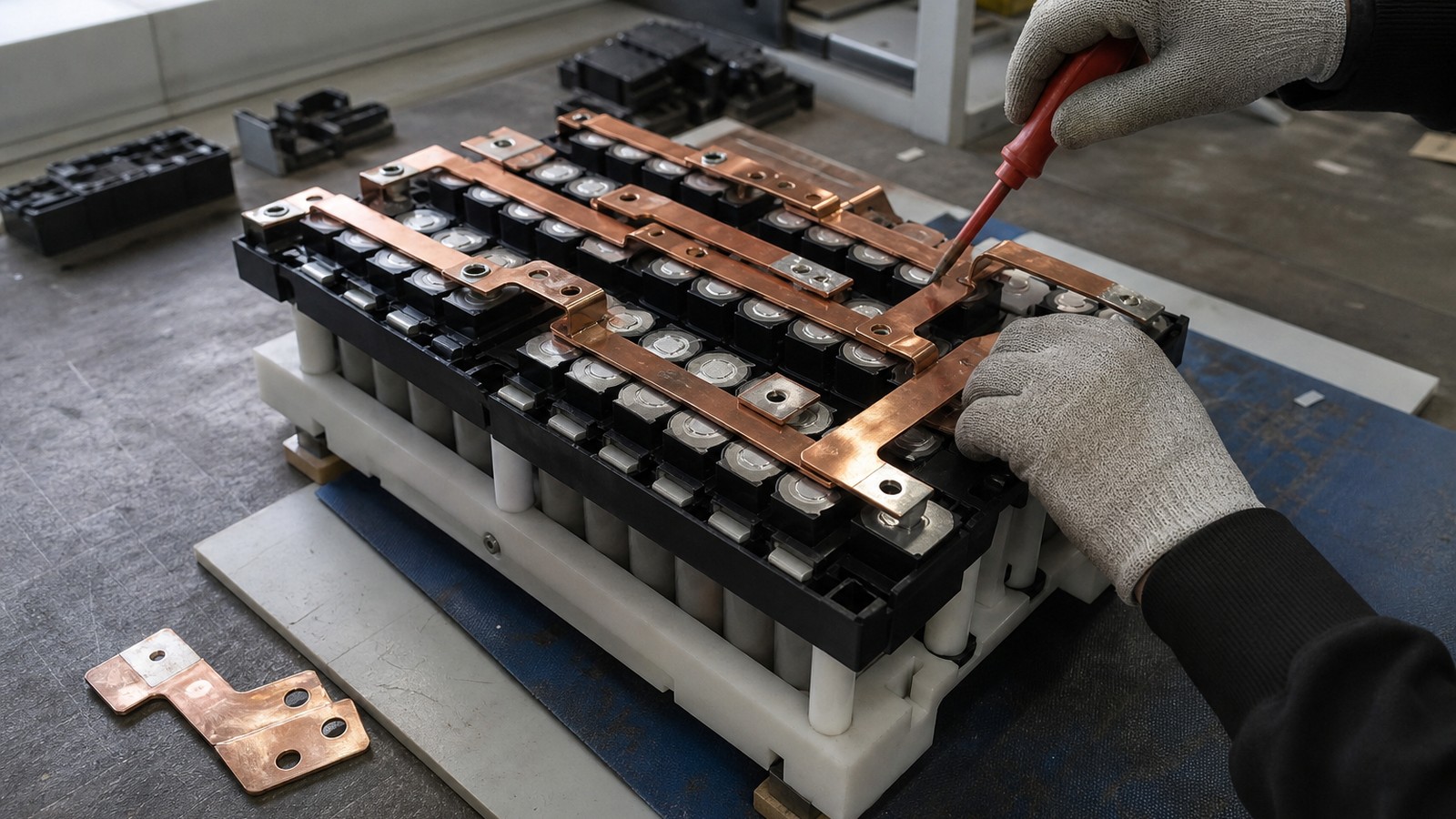
Custom busbar manufacturing
Engineering details are organized around material, tolerance, surface finish, inspection, and production readiness.
Use the inquiry module to send drawings, quantities, standards, and delivery targets for a practical manufacturing review.
Service Details
Engineering-first, drawing-based LiFePO4 (LFP) battery busbars for EV and energy storage systems. BusbarMFG manufactures custom copper and aluminum battery interconnects, insulated and laminated busbars, and flexible shunts that fit your pack architecture, current and thermal requirements, and assembly constraints.
- Applications: EV modules and packs, residential and commercial ESS, PCS/UPS/inverters, power distribution and charging equipment
- Materials: copper and aluminum, with tin, nickel, or silver plating per drawing
- Formats: solid and formed busbars, insulated busbars, laminated busbars, flexible copper shunts and braided links
- Engagement model: from drawing review and prototypes to validation builds and repeat production
BusbarMFG is based in Dongguan, Guangdong, China and supports engineering-led OEMs in North America, Europe, the UK, Australia, and select APAC programs.
From Drawing to Production-Ready LFP Busbars
Our workflow starts with your drawing or 3D model and application data. We perform an engineering review covering:
- Material and thickness selection (copper vs aluminum, weight/cost tradeoffs)
- Current density, temperature rise targets, and thermal margin
- Contact surfaces, plating, and interface hardware
- Hole sizes, slotting, bends, and assembly tolerances
- Insulation method, voltage class, creepage and clearance
- Pack-level inductance and EMC considerations (laminated options)
- Prototyping and validation plan
We support prototype and pilot quantities while requirements are refined, then transition to repeat production once the design is validated.
Note: CCS integrated busbars, overmolded parts, and other specialized processes are subject to project review and explicit capability confirmation before being offered as production services.
Why BusbarMFG for LiFePO4 Busbars
- Engineering-first engagement focused on manufacturability and repeatability
- Battery-grade plating and insulation quality for consistent torque and resistance
- Flexible production path: prototypes, validation batches, and volume ramp
- Drawing confidentiality and transparent technical communication
- Alignment with EV, ESS, and power electronics OEM development cycles
Design Considerations for LiFePO4 Battery Busbars
LiFePO4 chemistry favors long cycle life and safety, often at high currents and moderate voltages. Typical design drivers:
- Current and thermal performance
- Size cross-section for steady-state and peak currents with acceptable temperature rise
- Evaluate duty cycle, ambient, and cooling to avoid hot spots under compression joints and bends
- Interfaces and galvanic compatibility
- Choose compatible materials and plating for cell terminals, studs, and busbars
- For mixed-metal stacks (e.g., aluminum terminal to copper busbar), consider tin plating, bi-metal transition joints, and appropriate washers
- Assembly repeatability
- Tolerate module stack-up variation with flexible links where necessary
- Place bends and slots to ease alignment and reduce assembly stress
- Electrical insulation and clearances
- Define insulation class, partial discharge risk, and creepage/clearance targets for pack voltage
- Use selective insulation to maintain serviceability at contact points
- Inductance and EMC (for high di/dt power electronics)
- Laminated busbars or tightly coupled forward/return paths to reduce loop inductance
- Service and reliability
- Coatings, edge deburring, and controlled surface finish to protect insulation and maintain low contact resistance
Materials and Plating
- Copper busbars
- High conductivity and compact cross-sections
- Common platings: tin (low contact resistance, corrosion resistance), nickel (hardness, temperature), silver (specialized)
- Aluminum busbars
- Weight and cost advantages for ESS and large-format packs
- Surface preparation and plating strategy to manage oxide and contact resistance
- Bi-metal transitions
- Cu–Al transition pads or explosion-welded joints help bridge dissimilar metals
- Reviewed and confirmed per project requirements
We recommend defining contact surface plating in the drawing to align with terminal materials and assembly torque specifications.
Insulated and Laminated LiFePO4 Busbars
- Insulated busbars
- Options: heat-shrink sleeving, powder coating, epoxy/polymer coatings, or film wrapping
- Define dielectric strength, thickness, color, and keep-out at contact pads and hardware
- Laminated busbars
- Multilayer copper or aluminum conductors separated by insulation for compact, low-inductance distribution
- Useful in high-power inverters, PCS/UPS, and fast-charge systems
- Flexible links
- Copper foil stacks or braided shunts to accommodate vibration, tolerance stack-up, and differential movement
Insulation and lamination stack-ups are tailored to your voltage, creepage/clearance, and routing constraints.
Typical Features We Manufacture
- Flat and formed battery busbars with deburred edges
- Slotted and oversized holes to accommodate assembly tolerance
- Selective plating for contact regions
- Identification marks, polarity color coding on insulation, and lot traceability
- Press-fit hardware, riveted joints, and auxiliary tabs where specified on drawings
- Flexible foil stacks, braided jumpers, and inter-row connectors for modules
Dimensions, tolerances, and special features are produced to your drawing and validated during the engineering review.
Quality and Validation
Project-specific control plans are defined during technical review. Common checkpoints include:
- Dimensional inspection against drawing and critical-to-fit features
- Plating thickness and adhesion verification per callout
- Insulation integrity, thickness, and dielectric/hipot tests per specification
- Surface finish, burr control, and edge quality
- Resistance checks and torque-to-turn trends on representative joints when applicable
Lead times, capacity, and any program-specific testing are confirmed during RFQ.
EV and ESS Use Cases
- LFP prismatic cell modules: cell-to-cell links, series jumpers, and end-bus bars
- Pack main busbars: positive/negative rails, contactor interfaces, and service disconnects
- PCS/inverter/UPS DC link busbars with laminated, low-inductance structures
- ESS cabinets: insulated distribution bars, tap-offs, and copper-to-aluminum transitions
- Charging equipment and power electronics: compact, insulated busbar assemblies
Request Pricing for LiFePO4 Busbar
Share drawings, material grade, tolerance, surface finish, quantity, and delivery schedule. BusbarMFG will review the requirement and respond with the next step.
Contact BusbarMFG
Get in touch with our engineering team for custom busbar manufacturing inquiries. We provide precision-engineered solutions for your power distribution needs.
Huali Industrial Park, Xianghe Road, Dalang Town, Dongguan City, Guangdong Province, China