
Nickel Plated Copper Busbar
BusbarMFG is an engineering-first custom busbar manufacturer based in Dongguan, China. We build drawing-based nickel plated copper busbars and battery interconnect components for EV battery systems, energy storage, power electronics, charging equipment, switch
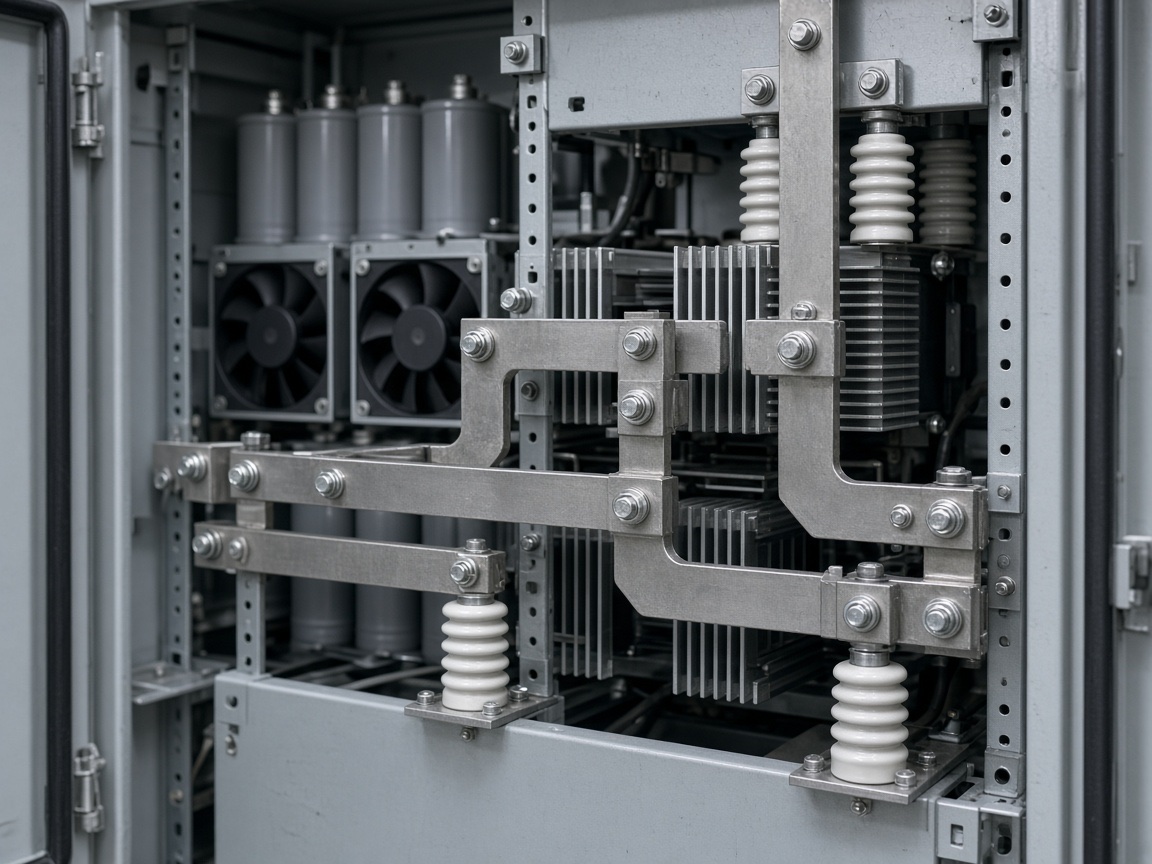
Custom busbar manufacturing
Engineering details are organized around material, tolerance, surface finish, inspection, and production readiness.
Use the inquiry module to send drawings, quantities, standards, and delivery targets for a practical manufacturing review.
Service Details
BusbarMFG is an engineering-first custom busbar manufacturer based in Dongguan, China. We build drawing-based nickel plated copper busbars and battery interconnect components for EV battery systems, energy storage, power electronics, charging equipment, switchgear, and industrial power distribution. Projects typically start with prototypes or validation batches and progress into repeat production once requirements are confirmed.
Why Nickel Plated Copper Busbars
Nickel plating on copper busbars is often selected by engineering teams when:
- High-temperature oxidation resistance is required beyond tin’s capability
- Improved wear resistance, hardness, and fretting performance are needed in bolted joints
- Stable contact performance is desired in harsh or corrosive environments
- Solder-resistance or controlled wettability is part of the assembly strategy
- Aesthetic consistency and surface protection are needed during long service life
Nickel plated copper busbars deliver robust mechanical surfaces, consistent electrical performance in elevated temperature ranges, and resistance to fretting and abrasion commonly seen in EV and ESS modules, inverters, PCS, UPS, and industrial power equipment.
Where Nickel Plated Busbars Fit
Typical applications include:
- EV and ESS battery modules and pack interconnects
- Inverters, rectifiers, PCS, UPS and power supplies
- DC link and low-inductance distribution in power electronics
- Charging equipment (DC fast charging) and high-current interfaces
- Switchgear, distribution panels, transformer connections, and motor drives
- Industrial power cabinets with vibration and assembly repeatability requirements
Engineering Options We Support
All specifications are confirmed against your drawing and application requirements during technical review:
- Base material: copper busbars in solid, flat, or formed configurations
- Plating: nickel plating per drawing; matte or bright finishes; selective plating or masking for weld pads and insulative zones
- Geometry: bends, offsets, standoffs, slots, countersinks, tapped holes, and interfaces defined by your model
- Insulation: heat-shrink, coated, sleeved, or other insulated configurations for compact assemblies
- Laminated structures: multilayer busbars for low inductance and tight packaging
- Flex elements: copper foil or braided flexible sections to accommodate vibration and assembly variation
- Connection methods: bolted joints, press-fit features, busbar-to-cable transitions, and defined interface surfaces
- Battery interconnects: module-to-module and cell-to-collectors with plating, insulation, and weld considerations reviewed for each platform
Note: CCS integrated busbars, overmolded products, welding, stamping, forming, and other specialized processes are reviewed against the actual project and confirmed capability before they are represented as available production services.
Nickel Plating Considerations for Busbars
During DFM and technical review, we typically address:
- Plating thickness: specified on the drawing; different zones can be defined for contact vs. non-contact areas
- Finish and stress: nickel chemistry selection to balance ductility, adhesion, and surface hardness
- Selective plating and masking: weld pads, grounding areas, and measurement points may be kept bare or plated differently
- Contact performance: nickel’s hardness improves fretting resistance; if ultra-low contact resistance is critical, note if silver or other finishes are being considered
- High-temperature environments: nickel plating maintains surface stability better than tin in elevated temperatures typical of EV/ESS and power electronics
- Post-form plating: formed busbars are often plated after bending to avoid micro-cracking; this is confirmed by part geometry
- Insulation compatibility: define insulation materials and processes (heat-shrink, coating, sleeving) to avoid adhesion or clearance issues with plated surfaces
- Corrosion environment: confirm exposure to electrolytes, humidity, condensation, and service temperature to tune plating strategy
- Assembly method: for welded joints or ultrasonic connections, specify masked bare copper zones or process sequencing to maintain joint quality
Battery and Power Electronics DFM Tips
For EV, ESS, and power electronics teams:
- Define interface surfaces: torque-bearing pads, washer paths, and current-carrying contact areas should have clear plating and finish notes
- Specify insulation boundaries: maintain creepage/clearance in compact layouts, especially around nickel plated edges
- Thermal rise targets: provide current, duty cycle, ambient, and allowable temperature rise for engineering review
- Inductance and loop routing: consider laminated busbar options if switching speeds and EMI are key design constraints
- Vibration and service life: use flexible sections or mounting strategies; nickel plating can reduce fretting at bolted joints
- Quality checkpoints: request plating thickness verification (e.g., XRF), adhesion checks, surface finish inspection, and dimensional consistency
Procurement and Program Support
BusbarMFG supports engineering-led procurement for NPI, redesigns, localization, and supplier replacement programs:
- Prototype-to-production: sample, validation, and ramp with engineering feedback at each step
- MOQ and price breaks: aligned with program milestones and order potential
- Delivery transparency: project-specific schedules established after technical review
- Risk reduction: manufacturability assessment and controlled transitions to repeat production
Note: BusbarMFG does not publish unverified certifications, equipment lists, tolerances, lead times, production capacity, or customer claims. Project-specific requirements are confirmed during technical review.
RFQ Checklist for Nickel Plated Copper Busbars
For an efficient engineering quotation, please include:
- Drawings or 3D models with material, plating, and insulation notes
- Plating requirements: nickel thickness, finish, selective/overall plating, masked areas
- Quantity and program stage: prototype, validation, pilot, or planned production
- Application context: EV/ESS, inverter/PCS/UPS, charger, switchgear, industrial power
- Interfaces and assembly methods: bolted joints, weld pads, insulation boundaries
- Target date and any critical constraints (space, inductance, thermal)
Who We Serve
Our focus is engineering-led B2B buyers:
- EV and ESS: battery module and pack manufacturers, system integrators
- Power electronics: inverter, PCS, UPS, power supply OEMs
- Charging equipment OEMs and electrical distribution manufacturers
- Switchgear, industrial power, and automation equipment builders
Priority markets include the United States, Canada, Germany and wider Europe, the United Kingdom, and Australia, with secondary focus on Japan, Korea, and internationally oriented Southeast Asian manufacturers.
Request Pricing for Nickel Plated Copper Busbar
Share drawings, material grade, tolerance, surface finish, quantity, and delivery schedule. BusbarMFG will review the requirement and respond with the next step.