
Overmolded Busbar
Engineering-led review of insert-molded, insulated busbars for EV, ESS, and power electronics applications
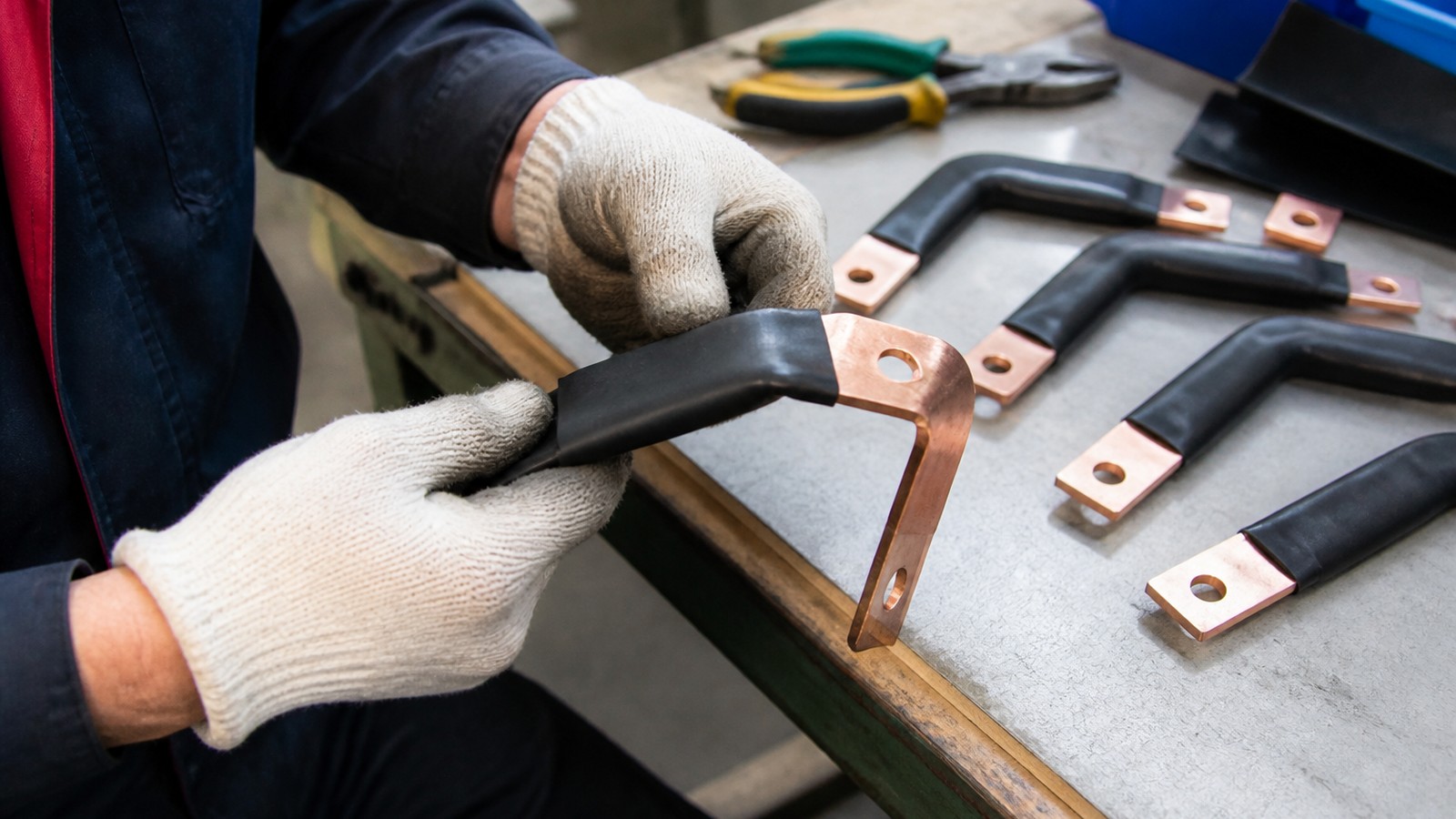
Custom busbar manufacturing
Engineering details are organized around material, tolerance, surface finish, inspection, and production readiness.
Use the inquiry module to send drawings, quantities, standards, and delivery targets for a practical manufacturing review.
Service Details
Engineering-led review of insert-molded, insulated busbars for EV, ESS, and power electronics applications
BusbarMFG is an engineering-first custom busbar manufacturer in Dongguan, China. We focus on drawing-based copper and aluminum busbars and battery interconnect components for EV battery systems, energy storage, power electronics, charging equipment, switchgear, and industrial power distribution.
Overmolded busbars combine a precision-formed copper or aluminum conductor with a molded insulating body to achieve compact routing, repeatable assembly, and controlled creepage and clearance in high-voltage environments. These structures are used where integrated insulation, mounting features, and packaging efficiency are priorities—commonly in battery modules and packs, power conversion equipment, chargers, and distribution assemblies.
Note: Overmolded products are specialized and must be reviewed against the actual project and confirmed capability before acceptance. Final production availability is confirmed during technical review.
What We Offer: From Drawing to Production-Ready Overmolded Busbars
- Engineering-first review. We begin with your drawings/models and application requirements to assess manufacturability of the conductor and the overmolded insulation.
- Prototype and validation. Projects can start with prototypes or validation batches and progress toward repeat production as requirements are confirmed.
- Alternatives when appropriate. When overmolding is not the best fit, we support insulated busbars (heat-shrink, coatings, sleeving), laminated busbars, flexible busbars, and conventional copper or aluminum busbars.
Why Choose an Overmolded Busbar
- Integrated insulation: Encapsulates live conductors to control creepage/clearance and simplify high-voltage insulation design.
- Packaging efficiency: Enables tight routing and integrated routing features that reduce total installed volume.
- Assembly repeatability: Molded features such as locating bosses, cable guides, and fastening points improve consistency.
- Vibration and handling: Rigid insulation body provides mechanical protection and improved handling compared to loose insulators or wraps.
- System cost: Reduces separate insulation and bracket parts where appropriate, potentially lowering assembly time.
When overmolding may not be ideal:
- Elevated continuous temperatures beyond polymer capability
- Very large cross-section conductors requiring excessive shot volume
- Frequent design iteration where tooling changes would be cost-prohibitive
- Applications better served by laminated busbars for very low inductance or by flexible busbars for high compliance
Typical Applications
- EV battery modules and packs: High-voltage interconnects, sense/low-voltage routing integration
- Energy storage systems (ESS): Module and rack busbars with integrated insulation
- Power electronics: Inverters, DC links, UPS, PCS, rectifiers, and high-current DC assemblies
- Charging equipment: High-voltage distribution inside DC chargers
- Switchgear and industrial power distribution: Compact insulated conductors in confined enclosures
Base Metals, Plating, and Insulation Options
- Base conductors:
- Copper busbars: Solid, flat, or formed conductors for high-current applications
- Aluminum busbars: Lightweight options when weight and cost tradeoffs are prioritized
- Surface finish (as specified): Bare copper or tin, nickel, or silver plating per project requirements
- Overmold materials: Engineering thermoplastics commonly used for electrical insulation in HV assemblies (e.g., glass-filled PA, PBT, and project-specified resins). Material selection, flammability rating targeting, and color are confirmed during engineering review.
All materials and finishes are specified by the customer or agreed during the technical review to align with the application’s electrical, thermal, and environmental requirements.
Design and DFM Guidance for Overmolded Busbars
We support early DFM discussions to help align your design with manufacturable overmolding and conductor forming practices. Typical topics include:
- Electrical and insulation
- Creepage and clearance distances based on system voltage
- Target insulation thickness and local reinforcements near sharp edges or corners
- Hi-pot test strategy and insulation verification approach (defined during project)
- Conductor design
- Copper or aluminum selection, thickness, bends, holes, slots, and interfaces
- Radii and bend strategies to minimize work-hardening and springback
- Stamping, machining, or forming sequence prior to molding
- Overmold design features
- Draft angles, wall thickness, ribs, and bosses for structural integrity and mold release
- Gate and knit-line planning away from critical surfaces
- Encapsulation features to control resin flow and reduce voids
- Interfaces and assembly
- Fastening interfaces, clearances for connectors, and mounting bosses
- Plating strategy before or after molding depending on design and exposure of terminals
- Labeling, marking, and inspection features as needed
- Thermal and environment
- Ambient and hotspot temperatures, expected duty cycle, and airflow
- Chemical exposure and environmental sealing needs (if any: potting, seals, or gaskets may be considered)
Final tolerances, material grades, and process parameters are confirmed through the engineering review and prototype validation phases.
Alternatives to Overmolding We Also Support
- Insulated busbars: Heat-shrink, coatings, sleeving, or partial encapsulation for compact assemblies
- Laminated busbars: Multilayer structures where low inductance and tight packaging are critical
- Flexible busbars: Foil, braided, or insulated flexible structures for vibration and assembly variation
- Custom busbar assemblies: Drawing-based parts and high-current interconnect components
If an overmolded busbar proves unsuitable due to thermal, dimensional, or cost constraints, we can recommend and support an alternative approach.
Quality and Validation Considerations
- Dimensional consistency of the conductor and molded body
- Surface integrity and insulation continuity in critical zones
- Electrical verification (e.g., hi-pot, continuity) defined per project requirements
- Visual and functional checks tied to application-specific acceptance criteria
Inspection plans and test methods are aligned with your specifications during technical review. BusbarMFG does not publish unverified certifications, equipment lists, tolerances, lead times, production capacity, or customer claims; project-specific requirements are confirmed during engineering review.
Engineering RFQ Workflow
For an efficient review and quotation, please include:
- Drawings or 3D models of the conductor and overmold (STEP/IGES/PDF)
- Base material and thickness (copper or aluminum)
- Plating requirements (e.g., tin, nickel, silver) or bare finish
- Insulation/overmold resin preference, color, and any compliance targets
- Quantity and build plan (prototype, validation, pilot, repeat production)
- Application details (voltage, current, temperature environment, constraints)
- Target dates (prototype and initial builds), and any special testing or inspection notes
We evaluate manufacturability, propose any DFM feedback, and prepare an engineering quotation tailored to your project.
Request Pricing for Overmolded Busbar
Share drawings, material grade, tolerance, surface finish, quantity, and delivery schedule. BusbarMFG will review the requirement and respond with the next step.
Contact BusbarMFG
Get in touch with our engineering team for custom busbar manufacturing inquiries. We provide precision-engineered solutions for your power distribution needs.
Huali Industrial Park, Xianghe Road, Dalang Town, Dongguan City, Guangdong Province, China