
Tin Plated Aluminum Busbar
BusbarMFG is an engineering-first, drawing-based manufacturer of custom tin plated aluminum busbars and high-current interconnects. Based in Dongguan, Guangdong, China, we review requirements for EV battery systems, ESS, power electronics, charging equipment,
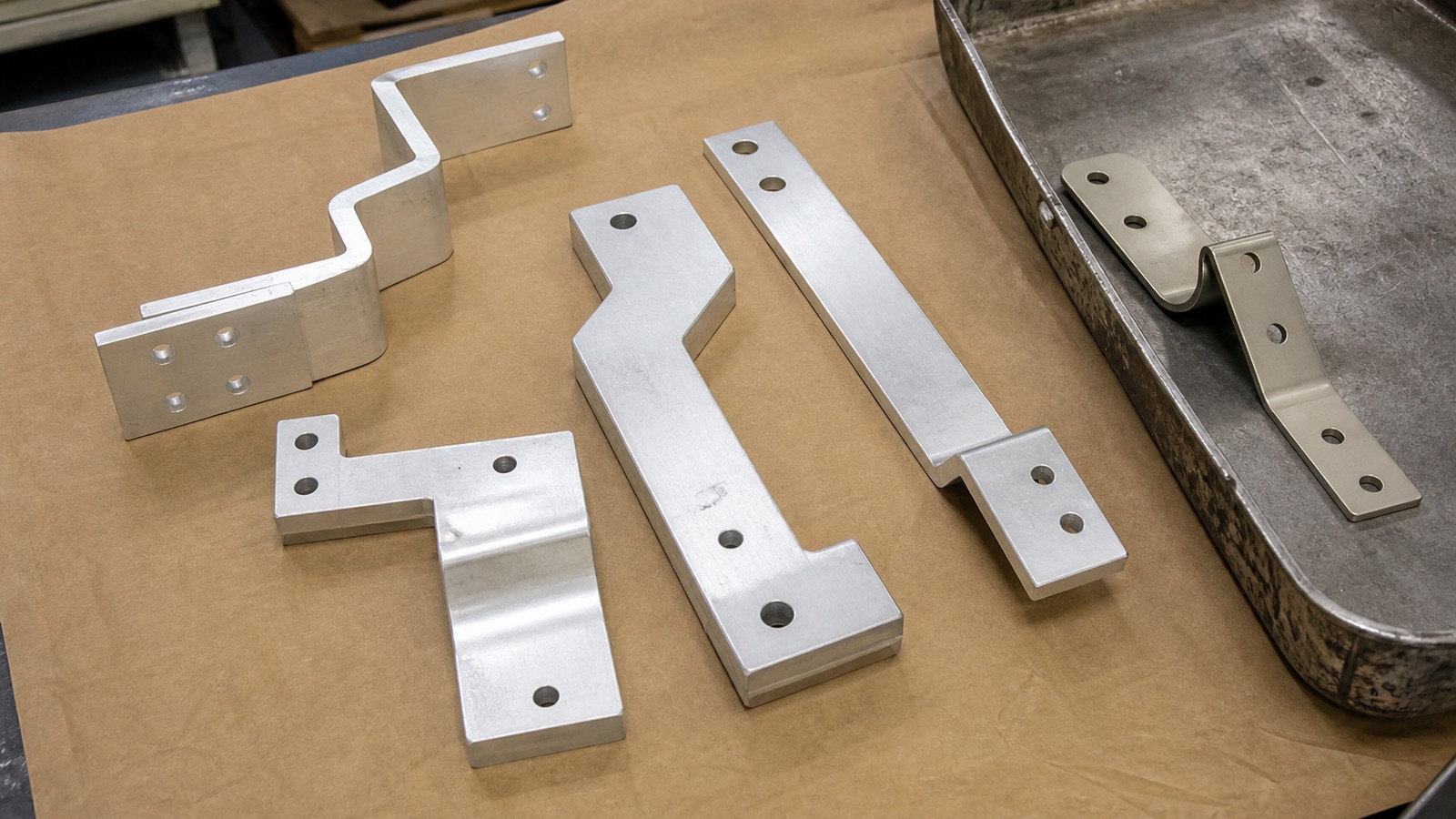
Custom busbar manufacturing
Engineering details are organized around material, tolerance, surface finish, inspection, and production readiness.
Use the inquiry module to send drawings, quantities, standards, and delivery targets for a practical manufacturing review.
Service Details
BusbarMFG is an engineering-first, drawing-based manufacturer of custom tin plated aluminum busbars and high-current interconnects. Based in Dongguan, Guangdong, China, we review requirements for EV battery systems, ESS, power electronics, charging equipment, switchgear, and industrial power distribution.
We start from your drawings and application requirements, provide focused DFM feedback, build prototypes or validation lots, and support repeat production once your requirements are locked in.
- Engineering-led RFQ workflow
- Drawing confidentiality and clear technical communication
- Prototype, validation, and production support
- Aluminum busbars with tin plating, insulation, and assembly integration reviewed against your use case
Note: BusbarMFG does not publish unverified certifications, equipment lists, tolerances, lead times, production capacity, or customer claims. Project-specific requirements are confirmed during technical review.
Why Tin Plated Aluminum Busbars
- Weight and cost: Aluminum reduces mass and material cost versus copper for many high-current applications.
- Connection compatibility: Tin plating improves contact performance and helps when mating aluminum busbars to tin-plated copper terminals, studs, or lugs.
- Corrosion management: Properly specified tin plating and joint design can mitigate oxide formation and galvanic effects at dissimilar-metal interfaces.
- Assembly consistency: A plated, controlled surface finish supports repeatable bolted-joint resistance and torque-to-tension behavior.
Common use cases:
- EV battery module and pack interconnects
- Energy storage racks and DC bus links
- Inverters, PCS/UPS DC links, and rectifiers
- DC fast charging cabinets
- Switchgear, distribution panels, and industrial power equipment
What We Build
- Custom tin plated aluminum busbars: Solid, flat, or formed parts manufactured to your drawings and tin plating specification.
- Insulated tin plated aluminum busbars: Heat-shrink, coated, sleeved, or other insulation options for compact assemblies.
- Battery and power busbar assemblies: Drawing-based interconnects, hole patterns, and interfaces per your stack-up.
- Flexible and hybrid configurations: Foil or braided elements and mixed-material solutions when vibration or tolerance absorption is required (confirmed during review).
CCS integrated busbars, overmolded products, welding, stamping, forming, and other specialized processes must be reviewed against your actual project and confirmed before they are represented as available production services.
From Drawing to Production-Ready
1. RFQ submission
- Provide 2D/3D drawings or models, material, plating and insulation requirements, quantity, application, and target date.
2. Engineering review and DFM
- We assess manufacturability and critical interfaces: material and thickness, plating type and masking, bends and flatness near joints, holes and slots, insulation and creepage/clearance, and assembly methods.
3. Prototype or validation lots
- Build-to-print with feedback on any risk areas observed in fabrication or assembly fit-up.
4. Production readiness
- Requirements are finalized for repeat builds with consistent quality and delivery transparency.
Design Considerations for Tin Plated Aluminum Busbars
- Conductor sizing
- Aluminum typically requires a larger cross-section than copper for equivalent ampacity. Define allowable temperature rise and duty cycle to guide thickness/width decisions.
- Plating specification
- Tin plating type and thickness are per your specification. Define any masking, selective plating, or post-plate forming requirements.
- Joint design
- For aluminum-to-copper interfaces, specify tin-plated contact surfaces, appropriate fasteners and washers, and joint pressure considerations to control contact resistance and corrosion.
- Hole and slot features
- Provide tolerances and surface finish requirements for contact landings. Call out any countersinks, threads, or special fit conditions.
- Bends and forming
- Define bend orientations, critical planes, and protected areas. For stable joints, maintain flatness and planarity around bolted interfaces.
- Insulation and spacing
- Specify insulation type, color, thickness or functional requirement, and keep-out zones. Provide creepage/clearance requirements and marking needs.
- Identification and packaging
- Marking, traceability, and packaging conditions (e.g., surface protection for plated parts) can be defined to suit your assembly line.
All manufacturability and process choices are confirmed during technical review.
Materials and Plating
- Aluminum grades
- Commonly specified electrical- and structural-grade aluminums (e.g., 1xxx/6xxx series) based on conductivity, formability, and mechanical needs, as defined in your drawing.
- Tin plating
- Tin plating options per spec (e.g., matte/bright/reflow), with masking or selective plating where required for assembly. Details are confirmed during review.
If aluminum laminated busbars or mixed-material laminates are being considered for low-inductance distribution, engage our engineering team early to evaluate feasibility and tradeoffs.
Insulation Options
- Heat-shrink sleeving
- Coatings or paints
- Tubing or custom sleeves
- Other insulation approaches per your drawing
We align insulation methods with your creepage/clearance, thermal, and assembly requirements.
Quality and Validation
- Build-to-print execution with DFM feedback
- Dimensional checks and finish verification aligned to your drawings
- Plating and insulation acceptance criteria per your specification
- Prototype to validation builds to de-risk assembly and functional performance
Inspection checkpoints and documentation are set according to your project’s requirements during technical review.
Who We Serve
Engineering-led OEMs and integrators:
- EV battery modules/packs, ESS integrators
- Inverters, PCS, UPS, and power supplies
- DC fast charging equipment
- Switchgear, distribution panels, transformer connections, motor drives, and industrial power systems
Priority markets include the United States, Canada, Germany and wider Europe, the UK, and Australia, with support for internationally oriented Asia-Pacific customers.
Request Pricing for Tin Plated Aluminum Busbar
Share drawings, material grade, tolerance, surface finish, quantity, and delivery schedule. BusbarMFG will review the requirement and respond with the next step.
Engineering RFQ
Upload Your Drawing
Share drawings or models, material, plating or insulation requirements, quantity, application, and target date. We will review the technical requirements before confirming manufacturing options.
Email: info@busbarmfg.com
Address: Huali Industrial Park, Xianghe Road, Dalang Town, Dongguan City, Guangdong Province, China