
Busbar Plating Guide
A practical engineering guide to selecting and specifying busbar plating for EV batteries, energy storage, power electronics, charging equipment, switchgear, and industrial power distribution.
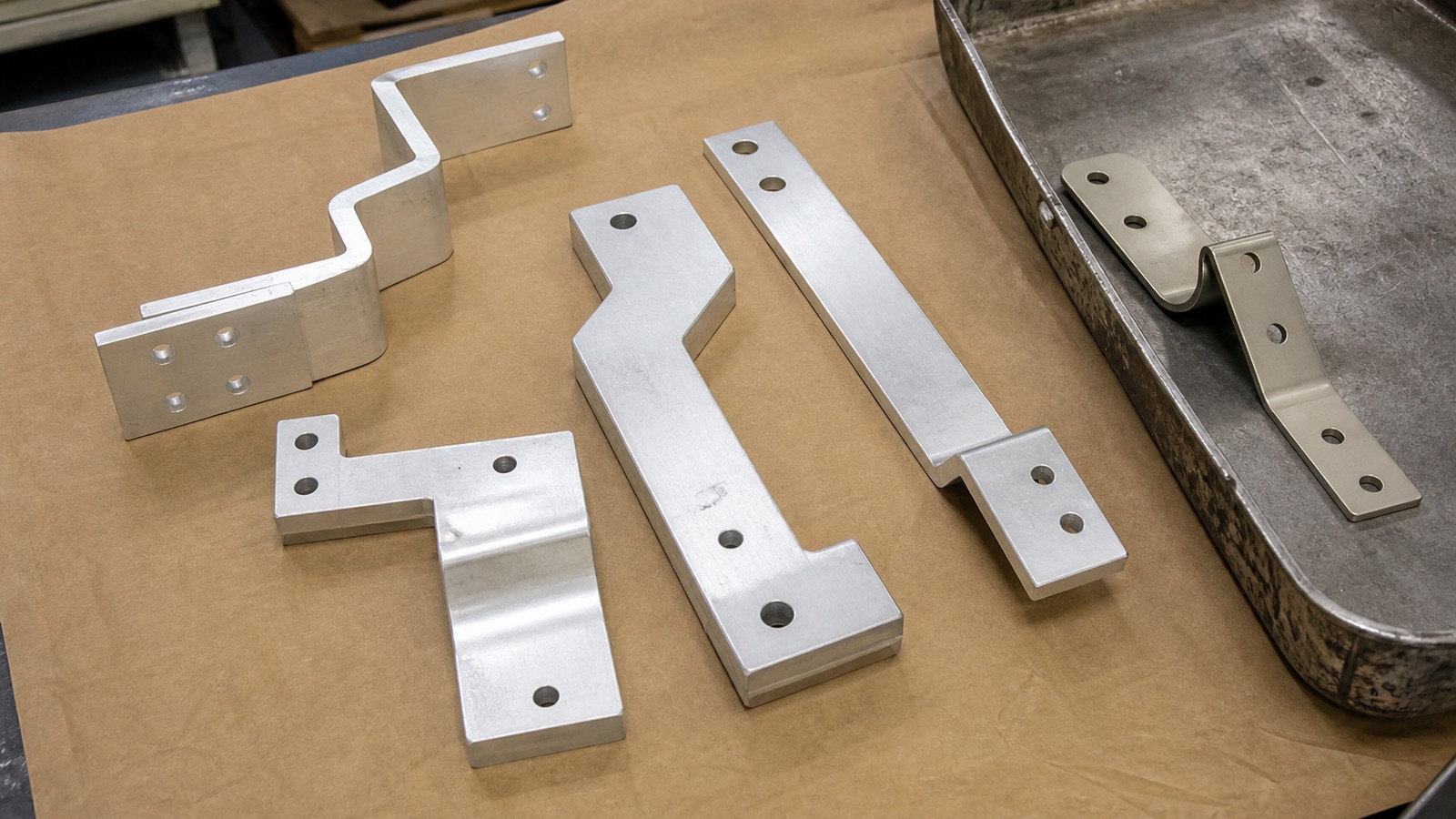
Custom busbar manufacturing
Engineering details are organized around material, tolerance, surface finish, inspection, and production readiness.
Use the inquiry module to send drawings, quantities, standards, and delivery targets for a practical manufacturing review.
Service Details
A practical engineering guide to selecting and specifying busbar plating for EV batteries, energy storage, power electronics, charging equipment, switchgear, and industrial power distribution.
BusbarMFG is an engineering-first, drawing-based busbar manufacturer in Dongguan, Guangdong, China. We supply copper and aluminum busbars, flexible and laminated structures, insulated busbars, and battery interconnect components. This guide helps engineering-led OEM teams make informed plating decisions and prepare RFQs for efficient technical review.
Note: Project-specific capability and feasibility are confirmed during engineering review. BusbarMFG does not publish unverified certifications, equipment lists, tolerances, lead times, production capacity, or customer claims.
Who this guide is for
- Battery module and pack engineers (EV/ESS)
- Power electronics, inverter, PCS, UPS, and charging equipment teams
- Switchgear and industrial power OEMs
- R&D, NPI, sourcing and commodity managers supporting prototypes through repeat production
Why plate a busbar?
Plating protects and optimizes the current-carrying interface of a busbar. Properly selected finishes can:
- Reduce contact resistance and power loss at bolted joints
- Improve corrosion resistance in humidity, salt, sulfur, or industrial atmospheres
- Enable stable torque and long-term reliability under vibration and thermal cycling
- Provide solderability or welding-friendly conditions where required
- Limit copper migration into mating parts and maintain surface integrity
- Support assembly repeatability and lower total installed cost
Base materials and plating behavior
- Copper (C110/C101 and equivalents): Excellent conductivity and formability. Oxidizes readily; plating mitigates oxide growth and stabilizes contact resistance.
- Aluminum (1xxx/6xxx series): Lightweight and cost-effective. Requires special surface preparation and often a barrier layer for durable plating. Alternatives include bimetal transition joints when aluminum-to-copper connections are required.
Confirm alloy, temper, and forming sequence during review to align plating with manufacturability and performance.
Common busbar plating options
Below are widely used finishes for power busbars. Selection depends on environment, mating hardware, temperature, assembly method, and cost.
- Tin (Sn)
- Advantages: Cost-effective, good bolted-joint behavior, widely used in EV/ESS, strong galvanic compatibility with tinned hardware.
- Considerations: Oxidizes over time but remains relatively soft for good micro-conformity. Use matte or reflowed tin to mitigate whisker risk; manage high-temperature exposure (>125–150°C) carefully. Tin over a nickel barrier can reduce copper diffusion and extend life.
- Typical use: General power connections, battery module/pack busbars, switchgear.
- Nickel (Ni)
- Advantages: Hard, wear-resistant, high-temperature stable, effective diffusion barrier.
- Considerations: Higher contact resistance than tin or silver; often used as an underlayer beneath tin or silver, or as a standalone finish where high temperature or abrasive wear dominates.
- Typical use: Barrier layer under tin/silver; standalone in harsh/high-temp environments with appropriate hardware strategies.
- Silver (Ag)
- Advantages: Very low contact resistance, excellent conductivity, strong current density support, stable under moderate temperatures.
- Considerations: Tarnishes in sulfur-rich atmospheres; consider anti-tarnish treatments, protective packaging, or controlled environments. Higher material cost; selective plating can help manage cost.
- Typical use: High-current compact joints in inverters/PCS/UPS, low-inductance laminated busbar interfaces, critical battery/ESS connections with low voltage drop targets.
- Gold (Au)
- Advantages: Exceptional corrosion resistance and stable low contact resistance.
- Considerations: Costly; typically limited to selective, small contact pads or mixed signal-power interfaces. Not commonly required for power-only joints.
- Typical use: Selective pads interfacing with sensitive contacts or where corrosion control is paramount.
- Bare copper (no plating)
- Advantages: Lowest cost; highest base conductivity.
- Considerations: Oxide growth increases contact resistance; performance depends on controlled environments, surface prep, and compatible hardware. Often reserved for internal connections with environmental protection or for welded joints where plating is removed.
- Duplex and selective configurations
- Tin over nickel: Common stack for improved durability and diffusion control.
- Selective plating: Apply plated finish only on pads/holes while leaving non-contact areas bare or differently finished to reduce cost and maintain process flexibility.
Note: If plating aluminum, surface preparation (e.g., zincate processes) and nickel barrier layers are typically required. In some cases, a bimetal transition or mechanical joint may be preferable to direct plating. These choices are confirmed during technical review.
Selecting the right plating: practical guidance
Consider the following when choosing a busbar finish:
- Electrical/thermal:
- Target contact resistance and allowable voltage drop
- Current density and temperature rise limits
- Thermal cycling profile and lifetime expectations
- Mechanical/assembly:
- Joint type: bolted, clamped, soldered, or welded
- Torque requirements, hardware coatings, and washer strategy (e.g., Belleville/spring or serrated washers)
- Vibration exposure and assembly variation
- Environment:
- Humidity, condensation, and contaminants (salt spray, sulfur, industrial pollutants)
- Service temperature (steady-state and transient)
- Storage/handling conditions pre-assembly
- Materials compatibility:
- Mating hardware materials and finishes (tinned, silvered, stainless, aluminum)
- Galvanic pairing risks; match finishes when feasible (e.g., Sn-to-Sn or Ag-to-Ag)
- Cost and risk:
- Use selective plating to control cost
- Balance material cost (e.g., silver/gold) with performance gains
- Plan inspection and validation appropriate to project criticality
Typical engineering defaults and ranges
These are common engineering starting points; final values are confirmed during review based on drawings and application requirements.
- Tin: ~5–15 μm overall or selective; matte or reflowed tin preferred for power joints
- Nickel (as barrier): ~5–10 μm under tin/silver
- Silver: ~2–10 μm, often selective on pads and through-holes
- Coverage: Full-coverage or selective pads/holes; define side(s) and extents from datum edges
- Surface prep: Clean, deoxidize, and activate; define masking of weld/solder zones if required
- Inspection: XRF thickness spot checks per lot; additional tests by agreement
Plating and joint design details
- Holes and pads:
- Define which holes require plating and whether inner diameters should be selectively plated (pad and wall)
- Specify countersink/counterbore plating needs
- Consider edge radii and deburring to support plating adhesion
- Bends and formed regions:
- Coverage can thin on sharp edges; consider radius and form sequence
- For formed parts, plating typically after forming; confirm sequencing for dimensional control
- Masking and keep-out:
- Identify weld/solder zones and masked areas
- Define selective boundaries with clear dimensions or CAD layers
- Fasteners and hardware:
- For tinned busbars, use tinned or compatible hardware; maintain matched finishes where possible
- Consider spring washers for torque retention under thermal/vibration loads
- Define lubricants or dry assembly requirements if they affect friction coefficients and torque
- Soldering and welding:
- For welded joints, plating is often removed locally; specify keep-out zones
- For soldered joints, tin or silver finishes can aid wetting; nickel-only finishes may require additional flux or different processes
- Storage and handling:
- Silver: protect from sulfur exposure; use anti-tarnish packaging if necessary
- Tin: manage shelf life and avoid contamination that increases contact resistance
- Maintain cleanroom or controlled handling practices as needed for critical interfaces
Validation and testing options
Define test plans aligned with your risk and compliance strategy. Common options include:
- Thickness verification: XRF sampling per lot
- Adhesion: bend or tape tests per agreed method
- Contact resistance: bolted-joint resistance and stability under torque-vibration-thermal cycling
- Environmental: temperature/humidity aging, sulfur exposure, salt fog, or mixed flowing gas (as applicable)
- Mechanical: torque retention and fretting wear evaluations
Standards and test references can be used as guidance; final acceptance criteria are set during project review.
Request Pricing for Busbar Plating Guide
Share drawings, material grade, tolerance, surface finish, quantity, and delivery schedule. BusbarMFG will review the requirement and respond with the next step.
Engineering RFQ
Upload Your Drawing
Share drawings or models, material, plating or insulation requirements, quantity, application, and target date. We will review the technical requirements before confirming manufacturing options.
Email: info@busbarmfg.com
Address: Huali Industrial Park, Xianghe Road, Dalang Town, Dongguan City, Guangdong Province, China