
Copper vs Aluminum Busbar
BusbarMFG is an engineering-first custom busbar manufacturer based in Dongguan, China. We build drawing-based copper and aluminum busbars and battery interconnect components for EV battery systems, energy storage, power electronics, charging equipment, switchg
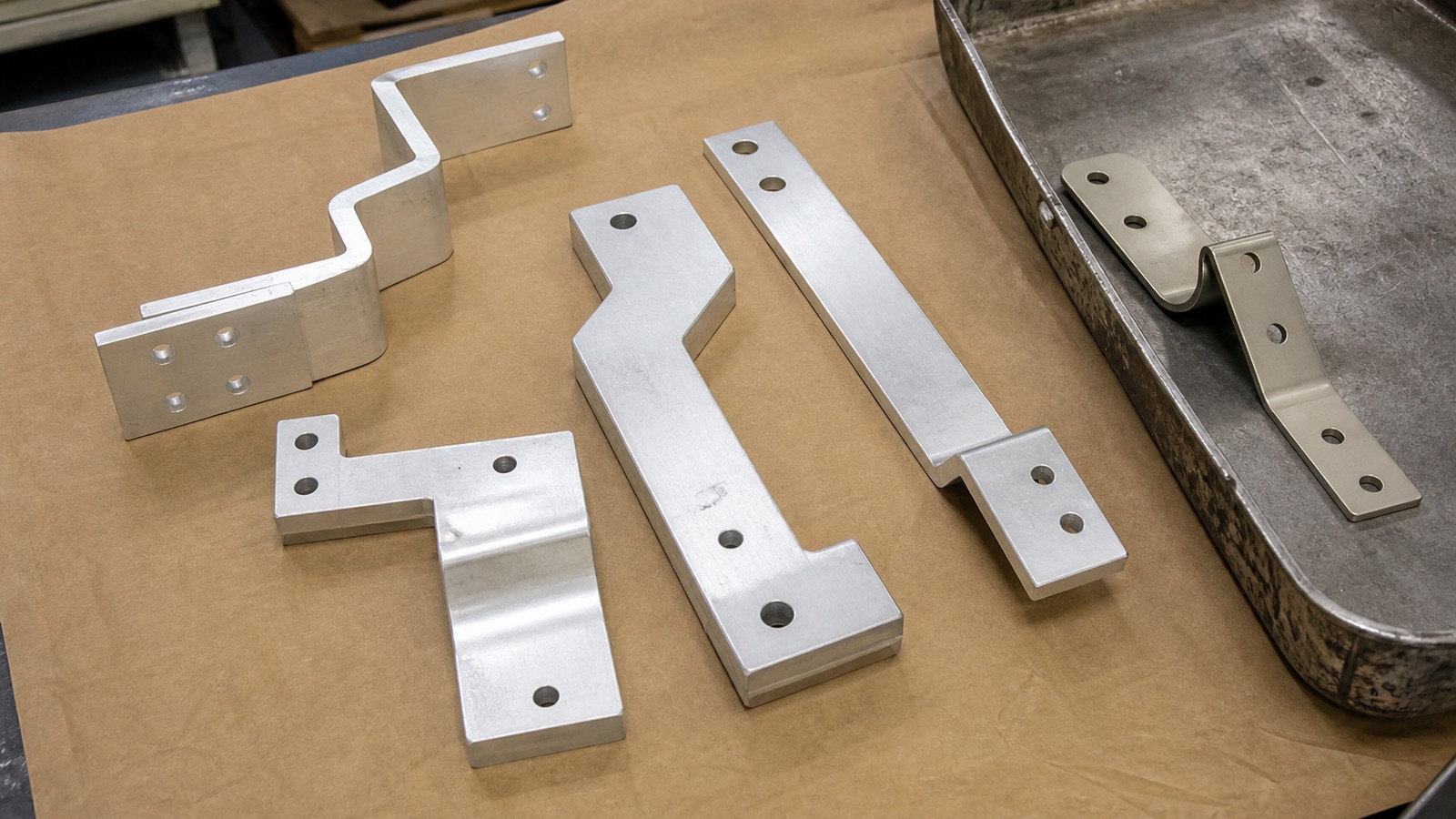
Custom busbar manufacturing
Engineering details are organized around material, tolerance, surface finish, inspection, and production readiness.
Use the inquiry module to send drawings, quantities, standards, and delivery targets for a practical manufacturing review.
Service Details
BusbarMFG is an engineering-first custom busbar manufacturer based in Dongguan, China. We build drawing-based copper and aluminum busbars and battery interconnect components for EV battery systems, energy storage, power electronics, charging equipment, switchgear, and industrial power distribution.
This page helps engineering-led OEM buyers compare copper vs aluminum busbars and define project requirements for a technical RFQ and prototyping.
Who Should Read This
- Electrical, Mechanical, Battery Pack, and Power Electronics Engineers
- R&D, NPI, Sourcing, Commodity, and Procurement Managers
- OEMs in EV, ESS, inverter/PCS/UPS, charging equipment, and industrial power distribution
Why Copper vs Aluminum Matters
Choosing between copper and aluminum affects electrical performance, thermal behavior, packaging, weight, cost, joining methods, plating, insulation, and long-term reliability. The best choice depends on current, voltage, environment, geometry, interfaces, and assembly processes.
Quick Comparison: Copper vs Aluminum Busbar
| Attribute | Copper (Cu) | Aluminum (Al) | Engineering Implications |
|---|---|---|---|
| Electrical conductivity (IACS) | ~100% | ~61% | Al requires ~1.6× cross-sectional area to match DC resistance of Cu |
| Resistivity (Ω·m at 20°C) | ~1.68e-8 | ~2.82e-8 | Higher Al resistivity impacts voltage drop and heat rise |
| Density (g/cm³) | ~8.96 | ~2.70 | Al is ~3.3× lighter; even with larger cross-section, weight often drops |
| Thermal conductivity (W/m·K) | ~400 | ~235 | Cu dissipates heat better; Al can compensate with surface area |
| Stiffness (Young’s modulus, GPa) | ~110 | ~69 | Cu is stiffer; Al needs geometry support to limit deflection |
| Oxide behavior | Cu oxide is conductive enough for pressure joints | Al2O3 is hard, insulating | Al joints require oxide-breaking and controlled interfaces |
| Plating | Tin, nickel, silver on copper | Requires special preparation (e.g., nickel strike); project-specific | Cu has broader, simpler plating options |
| Joining to Cu | Common: bolting, braze, resistance/laser weld | Dissimilar metal joints require bimetal transitions | Galvanic risk must be managed with barriers/coatings |
| Cost per kg | Higher | Lower | System-level cost depends on area, process, and interfaces |
| Weight-critical systems (EV/rail/aerospace) | Good | Often preferred | Al can reduce mass and total cost-of-ownership |
| Low-inductance laminated busbars | Common | Possible but depends on process validation | Cu laminates are standard; Al laminates require project review |
Values are typical references; final selection, geometry, and performance are confirmed during engineering review.
When to Choose Copper Busbars
- Tight packaging with high current density where cross-section cannot increase
- Low inductance laminated busbars for fast-switching power electronics
- Complex formed parts with fine features, tighter bend radii, and small hole patterns
- Broad plating options (tin/nickel/silver) and well-established insulation workflows
- Dissimilar metal joining and mixed terminal interfaces in battery modules/packs
- Applications needing superior thermal conduction or stiffness in compact assemblies
Common use cases:
- EV battery cell/group interconnects and module busbars
- Inverters, PCS, UPS DC links and low-inductance laminates
- Charging equipment rectifier and contactor connections
- Switchgear and industrial power distribution where size is constrained
When to Choose Aluminum Busbars
- Weight reduction priorities combined with high current runs and ample routing space
- Cost-sensitive platforms balancing conductor mass against performance
- Long spans where mass and support structure design can be optimized
- Main HV distribution in EV and ESS if interfaces and joining are engineered correctly
Common use cases:
- EV pack-level HV distribution and module-to-pack interconnects
- ESS rack distribution bars and cabinet-level feeders
- Industrial power where larger form factors are acceptable and weight matters
Design and DFM Considerations
1) Electrical and Thermal
- Define continuous and peak current, duty cycle, allowable temperature rise, and ambient conditions.
- Size Al busbars at ~1.6× Cu cross-sectional area to match DC resistance; confirm with thermal modeling and validation testing.
- Consider inductance for fast-switching converters; copper laminated busbars are common for low-inductance requirements.
2) Geometry, Bends, Holes
- Confirm minimum bend radii and forming approach based on thickness and alloy temper.
- Manage tolerance stack-ups at interfaces; avoid sharp transitions and stress risers.
- For flexible elements, copper foil stacks and braided assemblies accommodate vibration and assembly variation.
3) Interfaces and Joining
- Copper: bolted joints, brazing, resistance/laser welding, and plating are well-understood.
- Aluminum: joint integrity depends on oxide control, surface preparation, serrated/oxide-breaking washers, and proper torque strategies.
- Copper-to-aluminum transitions: use bimetallic interfaces (e.g., explosive-welded transition pads, nickel-plated sections, solid-state welded coupons) or insulative barriers to mitigate galvanic corrosion.
4) Plating and Surface Treatments
- Copper: tin, nickel, silver plating based on contact resistance, corrosion, and assembly requirements.
- Aluminum: plating is project-specific; may require nickel strike or specialized processes. Alternatives include conversion coatings and polymer barriers.
- Contact resistance and environmental protection must be validated at the joint level.
5) Insulation and Assembly
- Insulated busbars can be heat-shrink, coated, sleeved, or otherwise insulated for compact assemblies.
- Define creepage/clearance, dielectric strength, and environmental exposure.
- Overmolded or CCS-integrated products require project-specific capability confirmation.
6) Materials and Alloys
- Copper: ETP (C11000) and oxygen-free (C10200) are common; selection depends on conductivity and process.
- Aluminum: electrical grades (e.g., 1350) for conductivity; structural grades (e.g., 6101/6061) balance strength and formability. Final alloy choice is confirmed in engineering review.
Application Notes
- EV battery systems: Cell-level interconnects are typically copper due to terminal metallurgy and joining; pack-level distribution can benefit from aluminum for weight reduction. Define dissimilar metal strategies early.
- Energy storage (ESS): Cabinet and rack buses can use either copper or aluminum; consider serviceability and torque retention for aluminum joints.
- Power electronics (inverter/PCS/UPS): Laminated copper busbars are preferred for low inductance and thermal performance. Aluminum may be feasible for larger, lower-frequency distribution.
- Charging equipment and switchgear: Copper is common in compact assemblies; aluminum is viable for feeders where space and geometry allow.
Quality and Reliability Considerations
- Dimensional consistency, plating and insulation quality, and connection methods must be validated from prototype through pilot.
- Aluminum joints should be designed to break oxide layers during assembly and maintain contact pressure over life; consider vibration, thermal cycling, and creep.
- For both materials, define torque specs, fastener systems, and inspection criteria in the drawing/package.
Request Pricing for Copper vs Aluminum Busbar
Share drawings, material grade, tolerance, surface finish, quantity, and delivery schedule. BusbarMFG will review the requirement and respond with the next step.
Engineering RFQ
Upload Your Drawing
Share drawings or models, material, plating or insulation requirements, quantity, application, and target date. We will review the technical requirements before confirming manufacturing options.
Email: info@busbarmfg.com
Address: Huali Industrial Park, Xianghe Road, Dalang Town, Dongguan City, Guangdong Province, China